


Of all the occasions that breathe life into Gaza, Ramadan is the most awaited and needed. It is a holy month that offers spiritual healing yet reopens wounds too deep to close.
For families who lost loved ones, Ramadan is a seat left empty at the Iftar table. For survivors, it is a lingering guilt, the unbearable weight of being the ones left behind. It is a gutting pain for grieving mothers whose children were killed over a loaf of bread, starved to death, or slaughtered in massacres. Children who once filled the Iftar table with their mischievous demands, their chatter about what they liked and disliked, now silenced forever. It is an aching season for orphans, who once had a simple life, a home, and parents who made sure they never went to bed hungry. Now, they are left only with memories, and even those feel fragile, slipping away like sand between their fingers.
Ramadan carries echoes of last year’s suffering — famine, destruction, death. Stories written in our own blood. And yet, amid all that loss, resilience remains. The displaced become returners. They clear the wreckage of what was once home, pitch tents over the ruins, decorate the rubble, and welcome Ramadan with whatever they have. Because last year, they were starving, displaced, and on the verge of death. And this year, despite everything, they are still here.

One of the most painful lessons this genocide has taught me is to cherish every moment of safety, to treasure every blessing I once took for granted before October 7. And so have Gazans. We decided to embrace life again, to open our hearts to it, to breathe in every moment of Ramadan as if it were our last. It is a sorrowful joy, a joy laced with grief. Memories layered upon memories, rituals forever tarnished by genocide.
As a family, we always marked the start of Ramadan with my grandmother’s feast. She used to cook all the traditional dishes, but the main dish was always mloukhiyyeh, that green leafy stew that was her way of wishing the month to be evergreen for all. She would gather us with her warmth, her laughter, and her hands working tirelessly over the pots. My grandmother never failed to bring us together.
But this year, we have lost our compass.
She was killed last year, leaving us with hollow beginnings. The silence she left behind is deafening, her absence an ache that does not fade. There is no longer her voice reciting al-Tarawih duaa, the night prayer, in the background of our lives.
I always wondered how Iftar could clash with another family’s massacre. I couldn’t fathom it until I lived it.
On the tenth of Ramadan 2024, just weeks after returning home from our first displacement, I spent the day in the kitchen, grateful to have one again. During displacement, cooking was a luxury we couldn’t afford. That day, I made pizza for Iftar. It was no small thing—pizza, in a war zone, was an elusive dream. Ingredients were scarce and expensive. But I managed.
Then, a brutal shelling shook the ground beneath me. I paused. Which house was hit? Which family was erased just before the maghbrib call to prayer? No one knew for sure. So I continued cooking, pushing the thought aside.
Minutes before Iftar, I finally picked up my phone. Thousands of messages flooded my screen. I froze.
It was my best friend, Buthaina.
She had just returned from Rafah two days earlier, clinging to the hope of a better tomorrow, eager to resume her online university courses. But she was gone. Killed while fasting. Wiped out, along with her family.
I remember sitting there, staring at my untouched plate. How could I break my fast when my friend had been so ruthlessly taken?
Ramadan is supposed to be the month of shared humanity. Yet, in Gaza, it has become a season of loss, a time when even the sacred is desecrated. The rules of war, the sanctity of this holy month — none of it mattered. Blood was spilled in the streets, families were starved into submission, the simplest necessities — food, water, gas, flour — turned into distant, unattainable dreams.
I counted down the days to Eid, foolishly hoping that it would bring a ceasefire and that it would be different. But on the eve of Eid, the air strike came.
It hit my neighbor’s house.
More than 50 people were trapped beneath the rubble.
To the world, they were just another statistic, another casualty in the endless tally of death. But to us, they were dreamers. They were life-lovers. They had plans. They had names.
I could have been them.
And yet, the war that doesn’t kill you forces you to live.
My nieces and nephews decided that if we couldn’t have the Ramadan we once knew, they would make a new one. They blindfolded me, their tiny hands guiding me outside. When they uncovered my eyes, I gasped. They had decorated our space with makeshift decorations—nylon, cardboard, anything they could find. Nothing like the lavish lanterns we once bought, but somehow, even more beautiful. They had climbed olive trees to hang bunting, taking care of each other as they worked, their voices rising in song, “Ramadan Kareem, Ya Wahawi… Iaha!“

In the markets, Ramadan decorations — lanterns, gowns, dates, carob juice, sour pickles, Qamar al-Din sweets, and incense burners — have returned. Supermarkets are brimming with products we had been deprived of for 16 months. I found myself standing there, overwhelmed, not knowing where to start. This genocide had dictated our diet for too long.
Though many mosques were destroyed, they are finding ways to rebuild — makeshift prayer spaces are emerging where walls once stood. Families are once again able to invite each other for Iftar, share dishes, and embrace tradition. The mu’azzin’s call will rise over the ruins. Tarawih prayers will drown out the drones, and the msahharati will safely roam the streets, beating his drum to wake people for suhur.
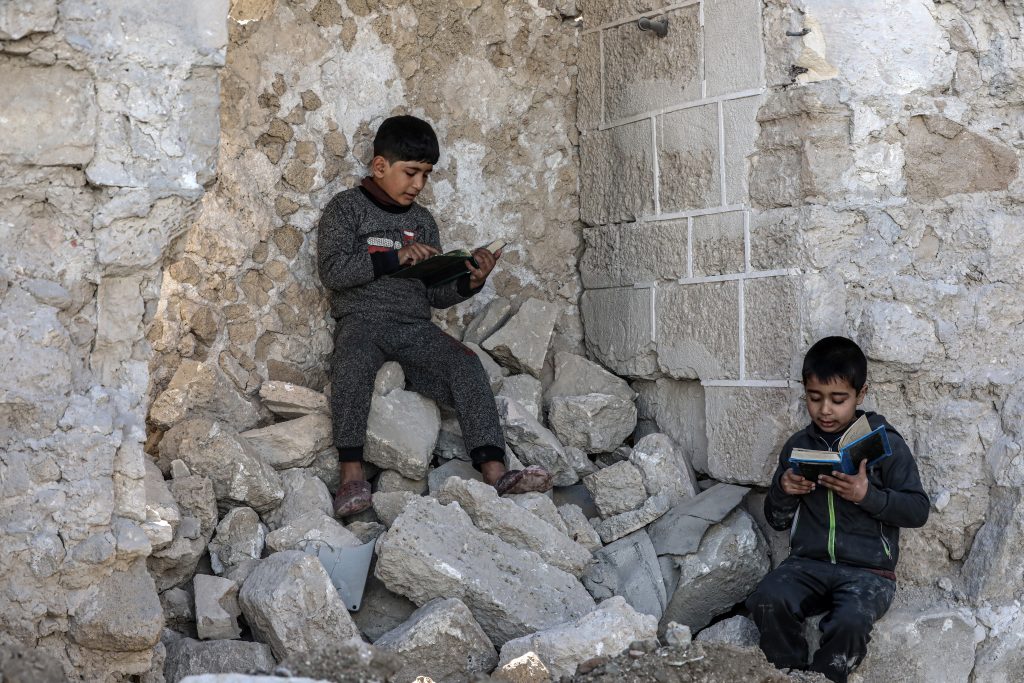
We will have food, not scraps of it.
We will live the moment, cherish it — not just as a memory of what once was, but as proof that we are still here. That we carry the legacy of those we lost within us.
And now, more than ever, I understand my mother’s prayer:
“Oh God, let us reach Ramadan without losing anyone or being lost.”
But this time, I whisper it differently.
Oh God, let us reach Ramadan… without losing anyone else.
And without being lost.

Israel in Crisis: IDF Syria Ops, Gaza Ceasefire & Economic Turmoil with Alon Mizrahi
Tonight on State of Play we discuss the current state of the Gaza Ceasefire, chaotic Israeli actions in Syria, and the current state of the Israeli economy and society. We are joined by Alon Mizrah, and ex-Israeli author, dissident, and disaffected former IDF soldier.
https://www.youtube.com/live/VAeGy9HnKKg?si=aiNCQW2V8ZYxyoCU