In my many conversations with family members and friends in the Gaza Strip, they talk to me about their daily lives and how they have changed, from a situation that used to have some problems, but was, in the end, to some extent safe and joyful. A place where the family would gather at the end of the day in one home around the dinner table, chatting, drinking tea, eating some sweets, and then going to sleep.
When I speak with friends and relatives, I recall the days I spent with them when these rituals were available in Gaza. When I used to sit in the middle of those gatherings, people’s conversations revolved around someone’s marriage, someone building a home, someone’s education, and various other occasions. Of course, sad news would be part of it, because Gaza can never be free of sad news, but joy and happiness always prevailed and dominated the atmosphere.
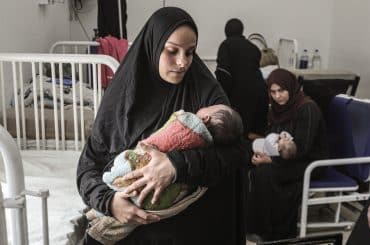
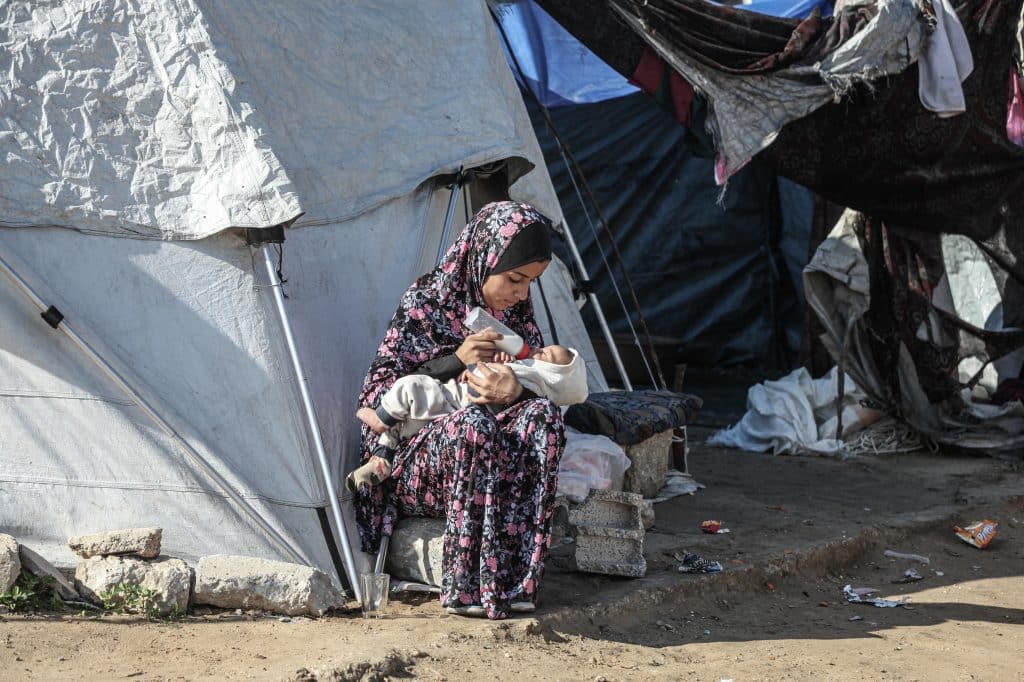
Now, many of my family and friends are displaced from their homes, living in tents and other shelters across the Gaza Strip. I ask my sister about the days we used to spend gathered at her home in our neighborhood of al-Shuja’iyya, in eastern Gaza City. As we recall them, I ask her whether, even in the displacement camps, the family still gathers after dinner; whether they laugh, socialize, and chat over tea.
She says everything has changed for people – even the conversations they have. Most conversations revolve around finding food to eat, searching for clean water, or wondering when they will get to go back home. Even when I talk to my sister, these things dominate our conversation.
She tells me that the camp they live in distributes food aid to families, but she laments that her married son who lives separately with his wife, does not receive any aid because they are just two people and not a large family.
My sister jokes with me and asks, “because they are two, a husband and wife, does that mean they don’t eat or drink?”
As for her younger children, ages nine and six, they spend their days in long lines obtaining food and filling water jerrycans for the family. I ask about their school; she says they now go two to three days a week. This is the current situation for all children, not only her own.
My sister’s house, which was home to nine people, is not only inside the so-called “yellow line,” but on the eastern border of Gaza City, in the Shuja’iyya neighborhood—areas that, even if residents of the yellow-line areas are allowed to return, will most likely no longer be reachable because they border Israel.
She always asks me, since I work in journalism, “isn’t there any good news about returning to our homes?” But before I can answer, she answers herself, saying, “I know that even if people return, I will not be able to return to my home.”
When I used to visit her in her home, before we were all displaced, I remember how she always decorated the house with flowers and blossoms. She had space outdoors to grow fruit-bearing plants such as tomatoes, potatoes, onions, cabbage, eggplant, watermelon, and squash. She would always be bringing home new things to plant, and whenever I visited her, I would always find something fresh and ready to taste.
As we speak, she tells me how, even in displacement, she plants a number of small trees around her tent, letting them grow, hoping to eat from them – hoping that their fruits will help feed her family. I saw some photos she sent me, and when I looked at them, I saw one of the secrets of the survival of my great people: even in ruin and loss, and in a displacement tent, we try by every possible means to create some form of life—to make life possible, and to live on what is available.