
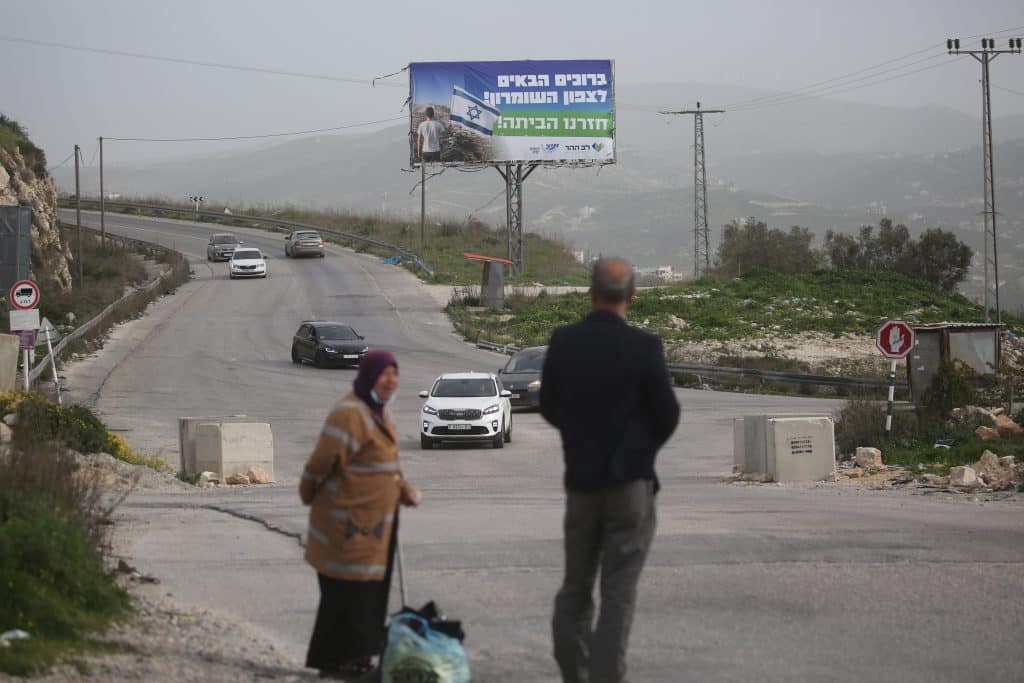
Today, a quiet transformation is advancing in the West Bank. It isn’t the same spectacular form of violence that once commanded the global news cycle in Gaza, but it is more methodical and durable — and more difficult to interrupt.
It unfolds in three seemingly unrelated processes: financial warfare against Palestinian economic life, state-backed settler terror, and the legalization of annexation. What binds these processes together isn’t simply their occurrence in the same territory at the same time, but their shared architecture: they are part of a regime of compression that doesn’t outright destroy Palestinian life, but systematically constrains it.
Each mechanism operates through a different register — one through liquidity, one through violence, one through law — but all converge on the same objective: to narrow the field for Palestinian life to continue.
All of this takes place under the radar, as the world appears to be moving away from Palestine. The global movements were, after all, convoked by the horror of daily massacres, yet everything in the West Bank appears unchanging on the surface. The daily passage through checkpoints has hardened into a ritual. Over 42,000 Palestinian refugees from the camps in Jenin and Tulkarem remain displaced, inhabiting a suspended tension that refuses resolution.
As the massacres in Gaza change form and lose their most spectacular force, the movements protesting them falter, and solidarity reveals its dependence on blood and catastrophe. When horror becomes less televisable, attention disperses — a grim reflection of the state of the global attention economy.
This endless churn has done more than exhaust attention: it is laying the groundwork for other violence to proceed in the West Bank unnoticed.
This is how the Israeli regime of compression continues to erode the conditions for Palestinian existence.
Financial blockages
The West Bank is facing a severe banking and liquidity crisis driven by long-standing Israeli limits on currency exchanges under the 1994 Paris Protocol. For nearly three decades, Israel has informally capped the annual conversion of shekels from Palestinian banks at NIS 18 billion, a figure that has not kept pace with Palestinian economic growth. The result is that Palestinian banks have accumulated large surpluses of Israeli shekels they are unable to convert into foreign currencies such as U.S. dollars or Jordanian dinars. In May of 2024, the Palestinian Monetary Authority halted banks from accepting additional shekels, leading to widespread disruptions: individuals have struggled to deposit checks, businesses have been unable to deposit revenues, and some residents have been pushed into overdraft.
The shortage of convertible currency has also fueled a black market where shekels are exchanged at rates significantly below the official rate. The crisis has been compounded by reduced Palestinian labor access to Israel since October 2023, which has curtailed the flow of wages that once provided a steady source of foreign currency.
In recent months, Israeli Finance Minister Bezalel Smotrich has taken additional steps that Palestinians view as attempts to further weaken economic coordination: he has opposed increasing the shekel conversion cap and ordered the cancellation of an Israeli government bank guarantee (an “indemnity” letter of sorts) that protects Israeli banks when working with Palestinian banking institutions. Although this revocation has not yet formally taken effect, it reflects a broader shift in Israeli policy aimed at limiting financial cooperation with the Palestinian Authority and creating the conditions for a sustained crisis in the Palestinian banking system.
What the manufactured banking crisis reveals is not an aberration but a governing logic: blockage as method. The threatened withdrawal of correspondent banking safeguards was not simply a financial maneuver; it exposed the structural chokehold embedded in the Palestinian economy. Because Palestinian banks rely on Israeli counterparts to clear shekels and process cross-border transactions, the entire monetary system remains externally mediated. The refusal to absorb surplus shekels, the freezing or delay of clearance mechanisms, and the periodic threat to sever indemnified banking ties together form a regime of controlled interruption. Like physical checkpoints, this system establishes financial ones.
Blockage operates by constricting the circulation of currency, liquidity, and credit, until economic life slows to the edge of asphyxiation. This is not a collapse in the dramatic sense, but something more calculated. Financial systems depend on confidence: the expectation that deposits are secure, that liquidity will be available, that correspondent channels will remain open. By repeatedly threatening to terminate safeguards and disrupt clearance processes, Israel injects uncertainty into the bloodstream of Palestinian finance. Banks continue operating, but under permanent duress. Depositors remain, but with mounting anxiety. The Palestinian Monetary Authority reassures, yet reassurance itself becomes part of the crisis management cycle.
Blockage thus produces chronic precarity rather than immediate implosion. It hollows institutions from within, eroding trust while maintaining the façade of normalcy. As a settler-colonial strategy, blockage precedes demolition. It prepares the ground. The Palestinian banking sector — once portrayed as a pillar of relative stability — becomes the site where sovereignty’s absence is felt most acutely.
The capacity to restrict circulation transforms economic dependency into political leverage. Blockage is the first movement in a sequence aimed at dismantling the Palestinian world: not by spectacular destruction alone, but by quietly closing the channels through which that world sustains itself. It pushes Palestinians — traders, merchants, businesses, and laborers alike — toward the brink, where economic life narrows into mere survival and the edge becomes not an exception, but a condition.
Settler terror
What began as the solitary steps of a settler descending from the Nahal Adasha farm into Khirbet al-Halawa unfolded into a coordinated spectacle of domination across Masafer Yatta in the southern West Bank. After an altercation with residents, the settler summoned reinforcements; dozens arrived, some armed, soon joined by Israeli soldiers. For hours, according to Palestinian eyewitnesses, settlers beat residents, stole dozens of sheep, torched property and firewood reserves, shattered windows and sprayed homes with pepper spray. Men were detained and forced to sit on the ground, women and children assaulted, and ambulances obstructed.
In nearby Khirbet al-Fakhit, a 48-year-old man was left hospitalized with a fractured skull and cerebral hemorrhage as his elderly mother was injured beside him. Sheep were driven toward outposts and settlements as night fell, the violence stretching from one hamlet to the next in what residents described as a pre-planned raid.
Throughout much of the six-hour episode, Israeli forces were present. Villagers recount soldiers standing by as livestock were taken and, at points, restricting the movement of medics attempting to reach the wounded. Two Palestinian women were arrested and later released without charge. What Palestinians experienced was not merely mob violence, but a choreography of impunity in which the architecture of occupation — civilian outposts, armed settlers and uniformed soldiers — converged to produce dispossession in real time.
This scene is not new. It is the grammar of life in Area C, the 60 percent of the West Bank under full Israeli control. In these marginal expanses, Palestinian construction is reduced to the minimum, and permanence is treated as provocation. Life follows seasonal rhythms: the olive harvest, the tending of flocks, the slow movement across open land. These are not empty spaces. They are lived geographies, sustained by grazing routes, footpaths, and inherited care. Yet their openness makes them vulnerable. They are exposed to encroachment and choreographed intimidation, to a regime that reads mobility itself as a claim.
The violence is multi-directional. The settler both mimics the Palestinian and burns the land; he imitates the grazing even as he slaughters the flock; he sets fire to the olive trees and tears up the very soil from which they draw their stubborn life. The attack on Masafer Yatta was not an isolated eruption. Similar incidents have been documented across the West Bank with increasing frequency since October 2023: in al-Tuwani, where settlers blocked farmers from accessing their land during the olive harvest; in Susiya, where outpost expansion has pushed families off grazing areas they’ve used for generations; in Jinba, where military “firing zone” designations have been weaponized to facilitate displacement. The pattern is consistent: violence creates facts on the ground that administrative measures then consolidate.
But more than anything, settler terror is meant to confine, to demolish, and to render life unlivable — to compress existence into ever-narrower enclosures where departure begins to appear as the only remaining horizon. What distinguishes the current moment is not the invention of these tactics but their intensification and coordination.
Settler terror has always been a feature of the occupation, but it now operates with a brazenness that also means official sanction. Israeli ministers openly celebrate attacks. Police investigations are perfunctory or nonexistent. The message is clear: Palestinian presence is provisional, subject to revocation through a combination of legal restriction and physical intimidation.
Annexation and legalization
What has unfolded is not a dramatic proclamation of sovereignty, but something far more insidious: a quiet tightening of the grip. In recent months, the Israeli government has advanced a series of measures that function as instruments of territorial absorption. In January, the Knesset passed legislation effectively legalizing dozens of settlement outposts built on private Palestinian land, retroactively granting them official status. The law allows settlers to claim ownership of land they have occupied, often for years, by asserting that their presence was authorized, even when no such authorization existed. Palestinian landowners are entitled to compensation in theory, but the mechanism for securing it is cumbersome, requires navigating Israeli courts, and offers no guarantee of success.
Simultaneously, the government has moved to ease restrictions on settlement expansion. Planning committees that once required coordination with the Civil Administration — the Israeli military body that governs Area C — can now approve construction more rapidly. Environmental review processes have been streamlined. Archaeological assessments, which previously delayed some projects, are now fast-tracked or waived. The cumulative effect is to remove bureaucratic friction that had, at times, slowed settlement growth. What was once incremental becomes accelerated.
These measures are presented as administrative adjustments, yet they function as instruments of territorial absorption. Annexation here is not declared; it is sedimented — layer by layer, permit by permit, registry by registry.
By opening land records and stripping away safeguards, the state transforms the landscape into a marketplace in which power, capital, and coercion converge. The violence is bureaucratic, its language technical, but its effect unmistakably political: the steady erasure of Palestinian spatial presence in favor of a sovereign claim that advances without ever naming itself.
These measures also hollow out what remains of Palestinian administrative autonomy. The Oslo framework — already fractured and unequal — rested on the fiction of delegated authority in designated areas of the West Bank, what are called Areas A and B. Now, even that fiction is being methodically dismantled.
By extending Israeli enforcement powers into spheres once managed by Palestinian institutions — planning, environmental regulation, heritage — the architecture of limited self-rule collapses inward. The Palestinian Authority is not confronted in open rupture, but bypassed, rendered irrelevant, and quietly displaced by a regime of direct oversight. What appears to be governance reform is, in fact, the reconfiguration of sovereignty on the ground.
The seriousness of these steps lies not only in their immediate impact but in their temporal ambition. This is not policy as reaction, but policy as permanence. It seeks to foreclose the future by reshaping the present — embedding Israeli control so deeply into the territory’s legal and administrative fabric that reversal becomes unimaginable.
The Western backers of Israel may issue condemnations, but the machinery of consolidation proceeds with procedural calm. Each regulatory adjustment, each planning approval, each land registration incrementally transforms the status quo into something international law no longer has the vocabulary to challenge.
The logic of compression
Blockage constricts economic circulation. Terror renders physical space dangerous and uncertain. Law forecloses legal recourse and administrative autonomy. The banking crisis means that even those with capital cannot reliably access it. Settler violence means that even those with land cannot safely work it. Legal annexation means that even those with title cannot defend it.
Together, they produce a condition in which protection recedes, and exposure becomes ordinary.
The aim here is not to eliminate the Palestinian population yet—such a project would invite international condemnation and organized resistance—but to manage it at the threshold of viability. Palestinians remain, but their capacity for autonomous social, economic, and political reproduction continues to contract. Businesses operate, but under conditions that prevent expansion. Farmers cultivate, but on ever-smaller parcels. Institutions function, but without the resources or authority to serve their populations effectively. Life continues, but in narrowed corridors.
What makes this regime particularly effective is its diffusion of responsibility. No single actor bears sole accountability. The correspondent bank cites regulatory compliance. The settler claims self-defense or biblical entitlement. The planning committee invokes zoning regulations. The soldier follows orders. Each decision is defensible within its own domain, justified by precedent or necessity or external pressure. Yet the pattern, invisible at the level of individual actions, becomes legible in aggregate. What appears as administrative friction, security imperative, or market risk reveals itself, over time, as organized constriction.
The experiential reality for those subjected to this regime is one of chronic adjustment. The merchant in Ramallah who once planned five years ahead now calculates in quarters, uncertain whether his bank will honor withdrawals or whether new restrictions will sever his supply chain. The shepherd in Masafer Yatta who once grazed across hillsides his family has worked for generations now confines his flock to valleys within sight of the village, his children learning caution before they learn confidence. The municipal planner in Bethlehem who once designed expansions now spends his time navigating permit rejections and negotiating demolition orders, his professional training reduced to crisis management. Time becomes reactive rather than projective. Planning extends only as far as the next permit.
This logic is not unique to the West Bank. Across disparate geographies, we encounter similar patterns: the scaling down of rights, the shrinking of public goods, the contraction of political possibility, the normalization of emergency as structure. In Gaza, the blockade has operated for nearly two decades as a laboratory of controlled diminishment, maintaining a population above the threshold of humanitarian catastrophe while preventing economic development or political autonomy. And with the destruction of Gaza, life is diminished into narrower space and managed calorie intakes.
Shock politics and bureaucratic attrition are not opposites; they are complementary tempos within a single order. Spectacle destabilizes perception, announcing transformation and rupture, while administrative measures quietly recalibrate what is livable. The Trump administration’s executive blitz—orders issued in rapid succession, policies reversed and reinstated, norms violated and defended in the same breath—generates disorientation. Attention scatters. What seemed outrageous yesterday becomes backdrop today. Meanwhile, the less visible work proceeds: regulations rewritten, courts reshaped, enforcement discretion expanded. The spectacular and the procedural collaborate, one exhausting the capacity for outrage, the other embedding constraint into institutional architecture.
What is being constructed, then, is not a temporary crisis but a durable condition. The banking blockage in the West Bank is not designed to be resolved, but managed. Settler violence is not an aberration to be corrected, but calibrated. Legal annexation is not a deviation from international norms, but part of it is the new normal.
The question is not whether these processes will intensify—they already are intensifying—but whether those subjected to them will recognize the pattern in time to interrupt it, whether global attention can be sustained in the absence of spectacular violence, whether solidarity can attach itself to the slow grind of compression as fiercely as it once responded to the sudden shock of massacre.
For now, the logic of compression proceeds with the confidence of a project that has calculated the limits of resistance. It bets that populations kept below the threshold of rupture will adapt rather than revolt, will exhaust themselves in navigation rather than organize for transformation.
Whether this wager holds depends not on the ingenuity of the mechanisms — those are already operational — but on the capacity of those subjected to it to refuse the terms, to find in the very condition of compression the grounds for collective refusal.
Abdaljawad Omar
Abdaljawad Omar is a writer and Assistant Professor at Birzeit University, Palestine. Follow him on X @HHamayel2.

The same point but said in a British accent:
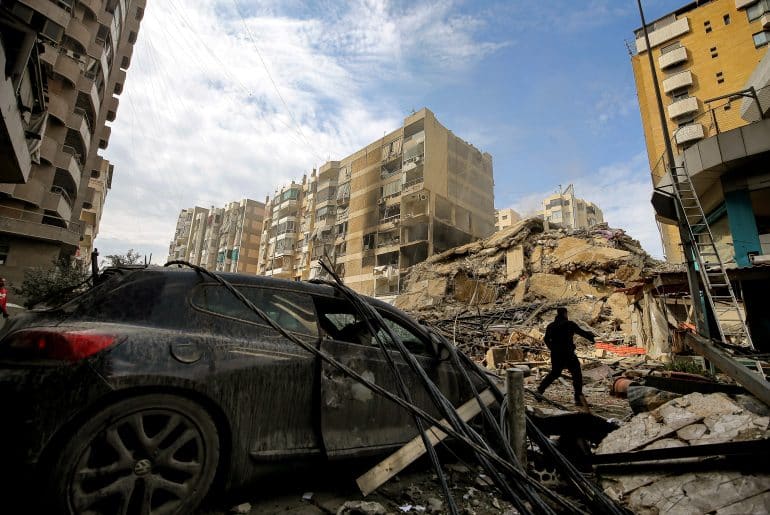
Protecting archaeological sites. Preventing water theft. The streamlining of land purchases. If anyone doubted the real purpose of the motley collection of new administrative and enforcement measures for the illegally occupied West Bank, Israel’s defence minister spelt it out: “We will continue to kill the idea of a Palestinian state,” Israel Katz said in a joint statement with the finance minister, Bezalel Smotrich….While the world’s attention was fixed upon the annihilation in Gaza, settlers in the West Bank intensified their campaign of ethnic cleansing. More than 1,000 Palestinians have been killed there since October 2023; a fifth of them were children. Many more have been driven from their homes by relentless harassment and the destruction of infrastructure, with entire Palestinian communities erased across vast swathes of land….The Israeli state is not merely complicit in these acts. In addition to the economic suffocation and increased military raids in the West Bank, the Guardian reported last month that settler-only units of the army are acting as “vigilante militias”. Haaretz newspaper reports that the military has ordered soldiers to prevent Palestinians from ploughing their land at the behest of settlers – not only threatening them with destitution, but paving the way for land seizure….
The Guardian view on Israel and the West Bank: the other relentless assault upon Palestinians | Editorial | The Guardian
If Israel is a “Jewish state” then what kind of Judaism is this?
The author describes toxic conditions genocide — the crime, which Nazi Germany committed against German Jews before Nazi Germany evolved to mass murder genocide (the Nazi Holocaust) during the invasion of the Soviet Union. Lemkin attempted to cover both types of genocide in the definition of genocide in the CPPCG.
During an occupation, demographic reengineering of a territory is a crime without a requirement of specific intent physically to destroy a group per se. In the Indictment of the Nuremberg International Tribunal, this crime is called Germanization. The name is unfortunate because Zionist Judaization meets the definition of the crime as the crime is described in customary international law and in international caselaw as well as in US military caselaw. See United States of America v. Ulrich Greifelt, et al., Military Tribunal I, Case No. 8, Judgment (10 Mar. 1948), in Trials of War Criminals Before the Nuremberg Military Tribunals under Control Council Law No. 10, vol. V, at ___ (U.S. Govt. Print. Off. 1949).