

Liberal institutions are designed to recognize the violence that structures Palestinian life without destabilizing the systems that produce it. Within liberal systems, the genocide in Gaza can be acknowledged—catalogued, footnoted, condemned. What remains far harder to absorb are Palestinian claims that require undoing Israeli settler colonialism itself.
Two recent episodes make this clear. In January, Doctors Without Borders (MSF) initially agreed to share the names of Palestinian staff with Israeli authorities as a condition for continuing its work in Gaza. The response was immediate and furious. Palestinians know too well what lists become: instruments of surveillance, detention, erasure. Only after sustained public pressure did MSF reverse course and refuse to comply.
Around the same time, researchers at Human Rights Watch resigned after leadership blocked a report on the Palestinian right of return. The problem was not the research. It was what the research implied. The right of return does not simply describe injustice; it insists on undoing it. As Omar Shakir noted in a recent interview following his resignation, senior leadership expressed “concern about being seen as challenging the Jewishness of the Israeli state.”
In both cases, the institutions involved have done indispensable work on Palestine. Their archives matter. Their staff are not indifferent. And yet both encountered a limit that suddenly tightened. Not a rule written down. Not a prohibition announced. A boundary sensed—felt—internalized.
That boundary is built into liberalism’s legal foundations.
Human Rights Watch is anchored in international human rights law; Doctors Without Borders in international humanitarian law. Both frameworks emerged from the wreckage of the Second World War, animated by the Holocaust. The Universal Declaration of Human Rights and the Genocide Convention were adopted in 1948, followed by the Geneva Conventions in 1949, forming the basis of the modern international legal order.
But 1948 is also the year Palestinians mark as the Nakba—the catastrophe. As rights were being universalized in law, more than 700,000 Palestinians were violently displaced from their homes. Villages were emptied. Return was foreclosed. A settler state was consolidated with international recognition. In the same year, far from Palestine, South Africa formally instituted apartheid, transforming centuries of racial domination into a codified legal system. Racial hierarchy was not an aberration of the postwar order; it was legalized alongside it.
1948 marks the birth of a two-tier liberal world order. In one tier, European suffering generated binding norms, and enforceable obligations. In the other, colonial violence and apartheid were rendered administratively necessary.
International law did not fail to see colonial violence; it learned to manage it. The postwar legal architecture was designed to regulate atrocity without dismantling domination, to civilize violence without undoing conquest. It promised universality while quietly accommodating racial hierarchy, territorial seizure, and permanent displacement—so long as these could be narrated as security, necessity, or history.
Palestine sits precisely at this fault line.
MSF’s initial decision to comply with Israel’s demands was not an anomaly. It was humanitarian liberalism operating within its permissible range. Neutrality sets the terms of engagement: care may continue, provided it does not disturb the political conditions that necessitate it. Gaza is rendered a humanitarian emergency rather than the predictable outcome of siege and settler rule. When that boundary is pushed—when neutrality itself is exposed as consequential—it must be renegotiated.
Human rights organizations face a parallel constraint. They can name apartheid, collective punishment, and unlawful killing. But when analysis edges toward liberation—toward futures incompatible with the present order—the boundary tightens. Reports stall. Timing becomes inconvenient. This is not crude censorship. It is anticipatory adjustment, learned over time.
Donors help determine where that boundary sits. Large liberal institutions rely on funding streams concentrated in the Global North, where governance structures often amplify donor influence over institutional direction. At Human Rights Watch, for example, wealthy donors make up much of the board, giving them disproportionate leverage over decision-making. In some instances, staff members known for their public support of Palestine were quietly removed from donor meetings, reflecting how reputational risk is managed internally. Certain words—settler colonialism, decolonization, return—trigger these calculations. What can be said in one political moment becomes unsayable in another.
None of this makes these institutions malicious. It situates them historically. Liberal institutions have never been engines of liberation. They measure injustice; they do not rupture it.
A boundary that shifts is not the same as one that disappears. The liberal limit moves—but it always moves in relation to power. When reaction rises, it contracts. When empire feels threatened, it snaps shut.
Palestinian liberation will not come from waiting for that boundary to stretch far enough. It will come from movements that force it outward—or make it irrelevant altogether. Liberal institutions may follow. They may assist. They will often arrive late.
They may bend under pressure, but they will not break from the order that sustains them.

“Liberal institutions are designed to acknowledge Palestinian oppression but not end it”
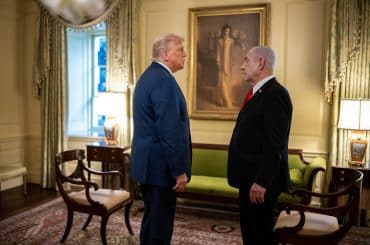
There’s one aspect of western liberalism that isn’t touched on in this piece, namely that economic development is a substitute for human rights. ‘We’ll give you lots of stuff and you won’t need to govern yourselves!” Trump practically screams. This is commentary from the Lemkin Institute for Genocide Prevention and Human Security” ( Rafael Lemkin is the Polish-Jewish lawyer who coined the term ‘genocide’ ):
Over the past year, United States President Donald Trump has pursued “peace-making” all across the world. A prominent feature of his efforts has been the belief that economic threats or rewards can resolve conflicts. Most recently, his administration has put forward economic development plans as part of peace mediation for Israel’s genocidal war on Gaza, the war in Ukraine and the conflict between Israel and Syria….. The flawed conviction that economic development can resolve conflicts has been a regular feature of Western neoliberal peace initiatives in the Global South for the past few decades. Occupied Palestine is a good example…In the early 1990s, when the “peace process” was initiated, Israeli Foreign Minister Shimon Peres started advocating for “economic peace” as part of it. He sold his vision of the “New Middle East” as a new regional order that would guarantee security and economic development for all....His argument was that economic development and cooperation would foster stability and mutual interest between Israelis and Palestinians. But that did not happen. Instead, as the occupation continued to entrench itself after the US-brokered Oslo Accords and the establishment of the Palestinian Authority (PA), anger in the Palestinian streets grew and eventually led to the outbreak of the second Intifada.
OPINION: Why neoliberalism can’t build peace
Also from the Lemkin Institute:
Campaign to boycott Israel looks to future after Gaza ‘ceasefire’
“Palestinian liberation will not come from waiting for that boundary to stretch far enough. It will come from movements that force it outward….”
_____________________________________________________________
Saeb Erekat’s “Plan B” was a movement for “equal citizenship”.
!0-7 strengthened greater Israel. “Plan B” would mature it.