
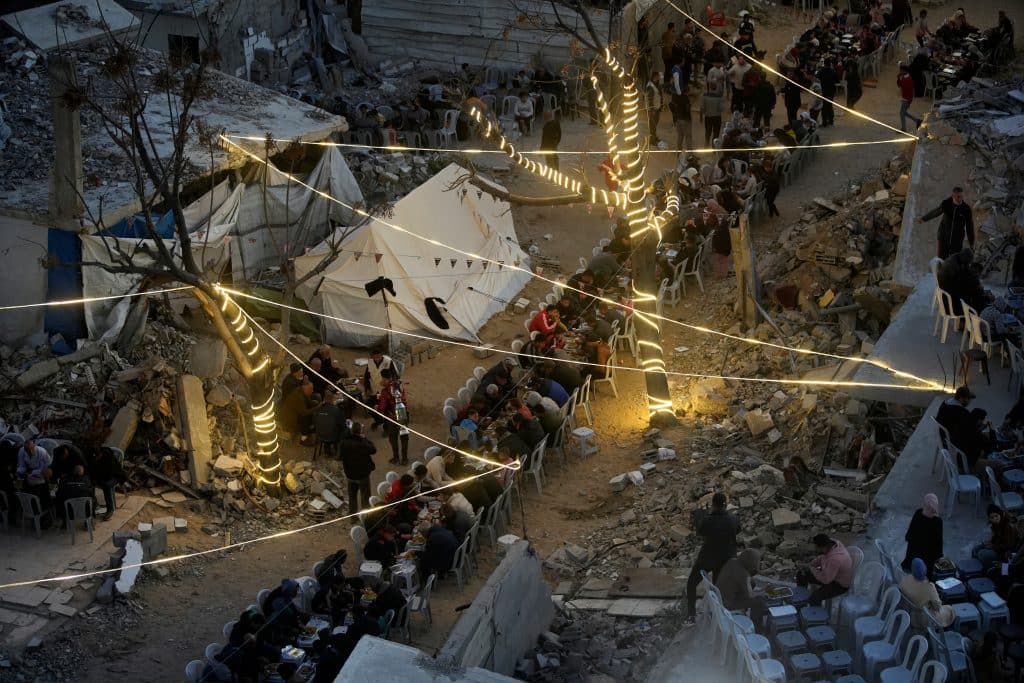
The month of Ramadan is considered one of the most important occasions celebrated by Palestinians in the Gaza Strip, like any Muslim community in the world. The month is shaped by family visits, gatherings with friends, the familiar. The community’s coming together becomes a daily ritual.
Although the genocide in Gaza has changed everything for the worse, people still hold onto those rituals. It’s people’s way of clinging to the world before.
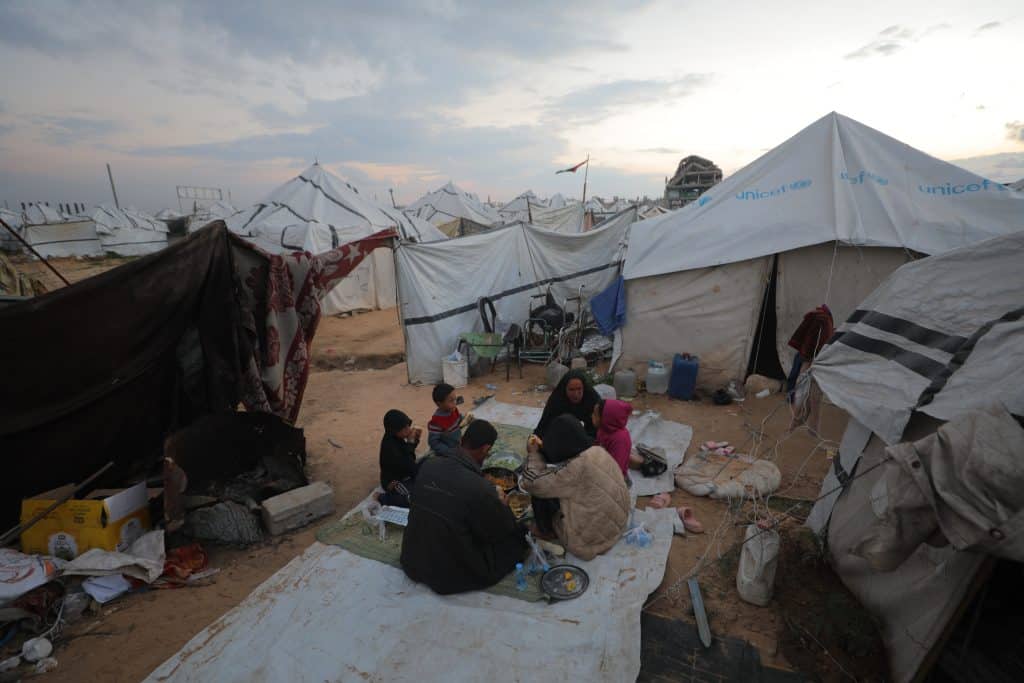
Displaced families break their fast amid the rubble and in their tents. They adorn their shelters with Ramadan decorations. In the times before, Gazans living in the diaspora would come home during the month, and plan to stay home for Eid al-Fitr immediately following its conclusion, before going back into exile again.
The genocide put an end to this. It reminds me of many stories I wrote during Ramadan when I still lived in Gaza.
I remember once traveling from Gaza City to Deir al-Balah a few hours before iftar — the hour of breaking your fast — to meet a woman who sold qatayef, a traditional sweet reserved for Ramadan.
It was April 2023, and the woman was Maryam Saleh, a mother who would spend long hours in the street before iftar selling qatayef to passersby instead of staying home to prepare the meal for her family. Some of her children helped her at her stand. When we went to interview her, she insisted that I and the photographer accompanying me each take a kilo of qatayef for free. It was an act of remarkable generosity.
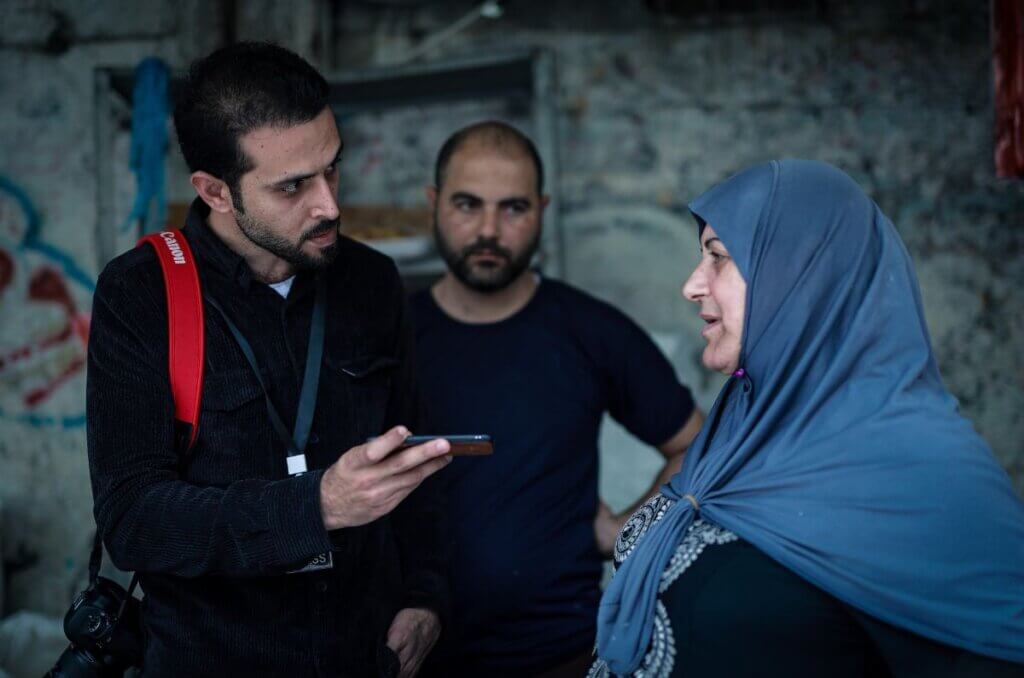
Ramadan was also a special occasion for journalists. They would hold a communal iftar every week, bringing together several coworkers. If we were to organize the same gatherings now, we would find most of their chairs empty.
For those spending the month in exile, far from their homeland for the first or second time, Ramadan has largely become a month of prayer and reflection. Gazan exiles spend most of their time remembering what they lived through in Gaza, and praying for their families still in Gaza.
It’s a strange thing to observe a month of communal gathering when you’re torn from your people. Even living in an Arab country, the decorations we encounter are foreign, totally alien from what we’re used to back home.
But things have changed in Gaza, too. The homes that hosted all those family gatherings, the mosques that held taraweeh prayers — all of them are gone.
Even religious rituals have changed, because the necessary infrastructure has been decimated. The genocide was not only the physical destruction of Gazans’ bodies and the annihilation of families — it also erased memories, traditions, and everything that reminds us of what we were.
But the genocide didn’t succeed in completely blotting it all out. We keep them alive in how we rebuild. Even in a worn-out tent, a mother or grandmother issues invitations to family and friends living abroad, urging them to return and share an iftar meal with her one day in Gaza.


Googled qatayef while reading this article. Looks delicious. I doubt I’ll be able to obtain any in my rural bit of England – but you never know. Middle Eastern food is gaining in popularity here.
This year, Ramadan coincides with Lent. Of course, as the country becomes steadily more secular, the rather milder traditions I knew as a child (e.g. giving up chocolate for forty days) are becoming forgotten. But we could all do with a period when we set aside our appetites and pause for reflection.