

Last month, 8 activists were convicted on federal charges over their connections to a 2025 protest outside the Prairieland ICE detention center in Alvarado, Texas, that led to the nonfatal shooting of a police officer.
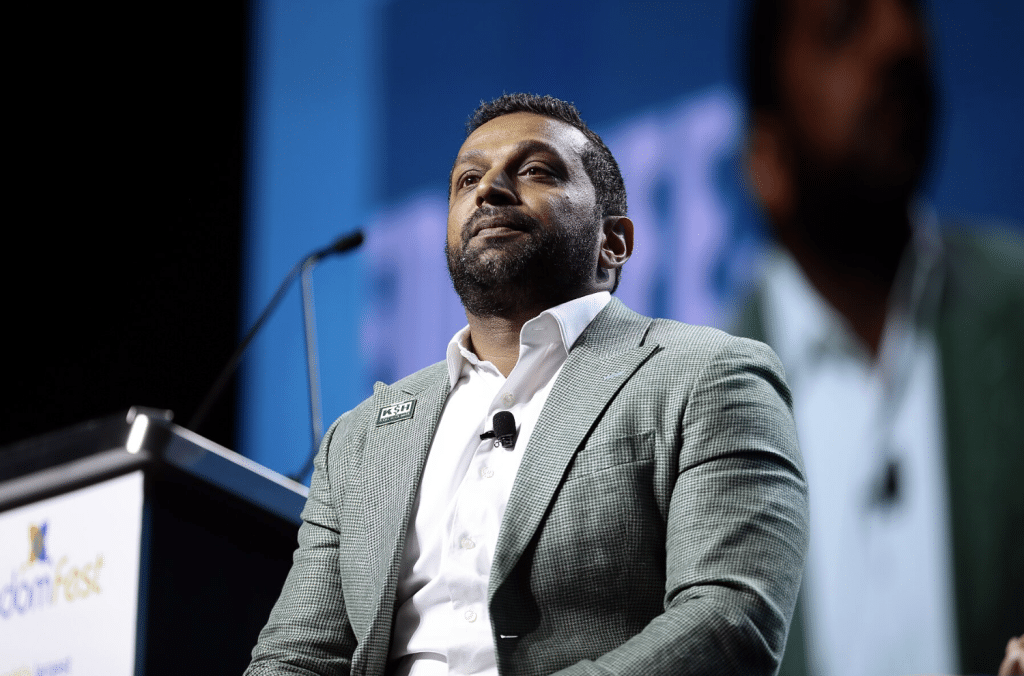
The 8 defendants, who received a cumulative 450-year prison sentence, were the first to be convicted under the framework of NSPM-7, a counter-terrorism memorandum signed by President Trump in September 2025. The convictions were heralded by FBI Director Kash Patel as a blow against “Antifa and its funding networks across the country.”
One defendant, Daniel Sanchez Estrada, received a 30-year sentence for transporting a box of anti-fascist zines after the protest.
“In a case that has been politicized since the start, it still shocks us to see protesters receive extreme sentences of 30 to 100 years for attending a Fourth of July noise demonstration,” said the National Lawyers Guild in a statement released after the verdicts were announced. “The federal government and the state of Texas want us to feel defeated. This case wants to chill dissent and enable the Trump administration to act without accountability for its brutal treatment of immigrant communities. Organizers and community activists must not allow this to stop the important work we are doing. We must continue to protest ICE and fight for our community members’ rights.”
Mondoweiss spoke with Chloe Truong-Jones, the Network and Engagement Attorney at Palestine Legal, about the case. The text has been edited for clarity.
Can you talk about the anti-terrorism laws the defendants were charged with violating? What’s their history?
Chloe Truong-Jone: They used § 2339A, which has been part of the material support statute. It was first enacted in the early 90s with the Biden crime bill, following Waco and the first attack on the World Trade Center.
2339 requires that some kind of international nexus be established. So it requires that one has provided material support to a foreign terrorist organization. Of course, we know there are all sorts of problems with that statute and what that means and how it’s been used.
2339 has not been commonly used because it does not require showing an international nexus. It can be brought domestically against individuals, and I think it’s really dangerous for that reason. So we saw it used against these Prairieland defendants in addition to charges of obstruction, attempted murder, all of these things that we see as part of a kind of larger arsenal of anti-terrorism.
FBI Director Kash Patel referred to the defendants as part of Antifa and said that the government will continue to go after that alleged network. What did you make of those comments, and do you think this opens the door for a broader crackdown on left activism?
I think that this was really clearly serving as an early test of the policies outlined in NSPM 7. The events that took place on July 4 happened a few months before Trump allegedly designated Antifa as a domestic terrorist organization. I think it’s worth noting that there is no existing federal process to designate groups as domestic terrorist organizations, though in places like, say, Florida, we’re seeing efforts to pass legislation to create such processes.
This came pretty soon after the defendants were arraigned and charged with attempted murder, in the case of Benjamin Song, and all of the other obstruction material support charges. This executive order came pretty soon after. So I think it’s really obvious what is happening: this was used as a laboratory for a larger crackdown on the left. I think the government has explicitly declared war on the left.
One aspect of this case that’s gotten a lot of attention is the charges stemming from transporting left-wing zines. Can you talk about those charges and what kind of precedent it sets going forward?
This is all part of a history of trying to find innovative ways to criminalize individuals and groups for their political views and infer their guilt based on the defendants having political opinions that are critical of the government.
As you mentioned, the prosecutors and the FBI were absolutely fixed on the political materials that were found in the homes and the cars of the defendants. The fact that the protesters used Signal, that they were wearing all black, that they had a book club under the name of Emma Goldman, and some of them identified as anarchists.
I don’t believe that the term Antifa was even used in any of the Signal chats that they had or any of their literature, but I think what we’re seeing is the government being much more explicit about their intentions to target political dissidents in a manner that reaches back to the McCarthy era. We see this in explicit statements from the government, and the judge said the state wants to send a message to anyone who shares a similar ideology. They’re really kind of putting their cards out there.
What the prosecutors were attempting to do with the zines in particular was to try to show some kind of evidence that these protesters were linked to Antifa and shared a common ideology, and that because they shared a common ideology and common political views, this was a planned and coordinated attack.
You mention the push for anti-terrorism laws in Florida. Can you talk about those state efforts and explain what’s being used as a justification for these?
Palestine Legal released a report on this subject, but the history and the design of these laws were very clearly directly reacting to and responding to Israeli state pressure and the pro-Israel lobby in the United States.
They were specifically designed to go after Palestinian communities and were prompted in reaction to flashpoints in the Palestinian struggle. So the first blacklist, the first non-state terrorist organization, the way it shows up in immigration law as a basis for exclusion, etc. The creation of a venue for filing civil lawsuits was part of an effort to target the PLO. So there is a very deep anti-Palestinian sentiment that has gone into the creation of this infrastructure, which impacts both criminal, civil, and immigration law. As we’ve seen over the past few years, this is very much part of the rhetoric that government officials are using to mark people as targets for repression.
I think what we’re seeing now is that the anti-terrorism agenda is becoming much more ubiquitous. So we’re seeing it be adopted as part of the U.S.’s larger posture in the world. Its posture of aggression towards countries in the Middle East and in Latin America is based on a stated need to eradicate terrorism. Its posture towards its own citizens and residents as well, who are becoming increasingly radicalized by the government’s very extreme international and domestic policy of repression.
I think what we’re seeing in the red states is an attempt to fulfill Trump’s agenda on their own, to try things out at the state level that the federal government can either follow up on or draw from, as these red states serve as a laboratory for what will stick.
In terms of DeSantis’s recent bills that went into effect on July 1, DeSantis, ahead of time, was very explicit about who he intended to designate, his reasons for wanting to designate CAIR, the Muslim Brotherhood, and ANTIFA as domestic terrorist groups. Then I think there’s also a part of the Florida bill that creates a scheme for states to designate groups.
There’s a clear targeting of students, which I think is a strong signal that this is an attempt to respond to the student movement and the student uprisings in support of Palestine advocacy.
Are the defendants appealing, and where can people follow this story?
People can follow the DFW Support Committee for further information. There are ongoing state charges, and individuals are appealing their cases as well. MLFA is taking on one of the appeals, and we’re really hopeful that the appeals will produce better results.
Further Reading
- Middle East Eye: Pro-Palestine activist Fergie Chambers arrested in Spain after US extradition request
- Grayzone: Under Israeli pressure, US seizes Max Blumenthal’s devices on return from Tehran reporting trip
- New York Times: PEN America President Resigns After Article About Israel and Cultural Boycott
Further reading/viewing: in this 7 minute video Peter Beinart discusses Rahm Emanuel’s recent speech in Tel Aviv. In a nutshell he says that Emanuel’s speech shows that he still doesn’t believe Palestinians have any rights to determine their own path forward, it must be determined for them.
But as interesting as that is, what really caught my eye was his mention of one of the Hasbara mythologies that never goes away. From the transcript:
So, the first thing that Emanuel says in his speech is he repeats this old kind of chestnut that basically Israel has again and again offered Palestinians everything they should have wanted, and then they said no. This is just really historically inaccurate. I mean, it’s repeated so frequently. It’s like mother’s milk for those of us who kind of grew up in pro-Israel Jewish environments. But really, there are very few, if any, historians who actually believe that as a rendition of what actually happened….And it’s just also important to remember, you know, that Rahm Emanuel is saying that three times Israel offered Palestinian sovereignty. It’s really not true. Israel didn’t offer Palestinian sovereignty at all. When you say that Israel has to have, for instance, that the Palestinian state can’t have a military, and that Israel is going to have some control over its air flight, the airspace, the telecommunication spectrum, troops on part of Palestinian territory in the Jordan Valley, that is not actual sovereignty. There’s something inaccurate about Rahm Emanuel’s kind of precondition for this bargain that he’s suggesting.
The Pro-Israel Establishment’s Five Stages of Grief
The following contain two contradictory statements regarding the international nexus requirement. The first says the section requires it, the last that it does not require it. I’m guessing an inadvertent typo, or the like. I hope you can clarify which is correct.
“2339 requires that some kind of international nexus be established. So it requires that one has provided material support to a foreign terrorist organization. Of course, we know there are all sorts of problems with that statute and what that means and how it’s been used.
2339 has not been commonly used because it does not require showing an international nexus.”