

Ihsan Yaghi sweeps the porch of her home in Zawtar al-Gharbiyah in southern Lebanon while her retired husband smokes a cigarette in the shade. It is a sweltering, humid day in the South, but Ihsan works tirelessly to clear away the dust and debris from the only part of their home that remains usable: the porch.
The couple have made do with what they have: a few chairs, a plastic table, a camping gas stove for making coffee and a small container of drinking water. Both of their faces bear the marks of time and exhaustion. Ihsan’s husband takes out his phone and shows us photographs of their home as it once was, before the war and Israeli incursions erased a lifetime of sacrifice and memories. On the screen is a family dinner, the table laid out in the middle of what, until March 2, 2026, was their garden. Today, in that same space, an excavator is clearing the rubble.
“This was our home before the Israelis tried to take it away from us,” he said. “It was habitual for us to eat and spend time together in the garden. We were happy.”
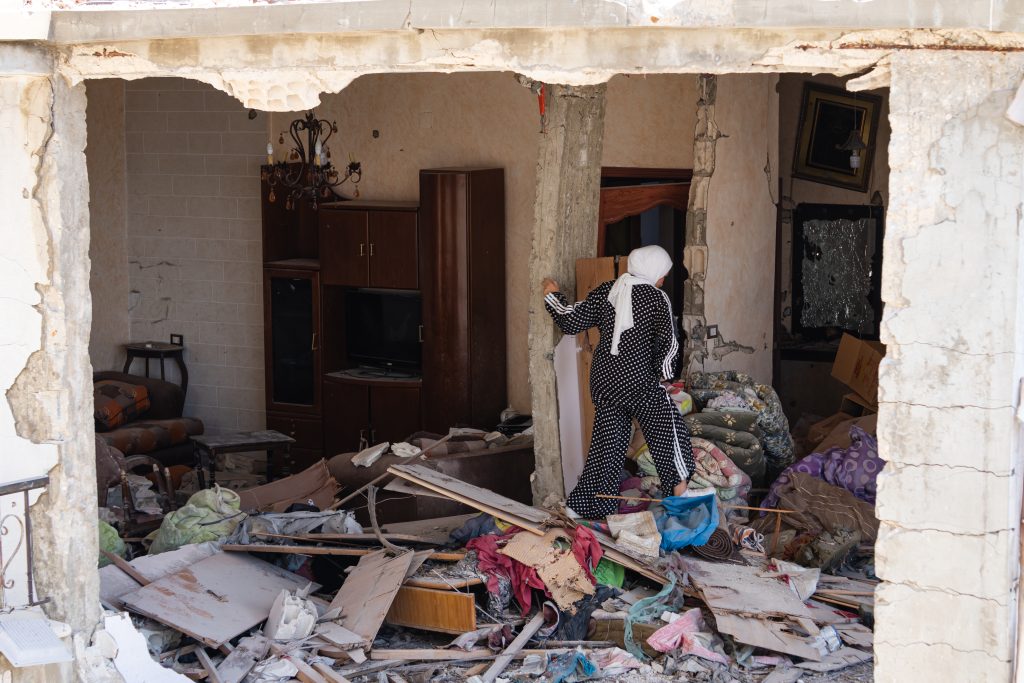
Zawtar al-Gharbiyah, southern Lebanon : A resident walks through the rubble of her home, damaged during the Israeli occupation of the village. (Photo by Manon Roca) 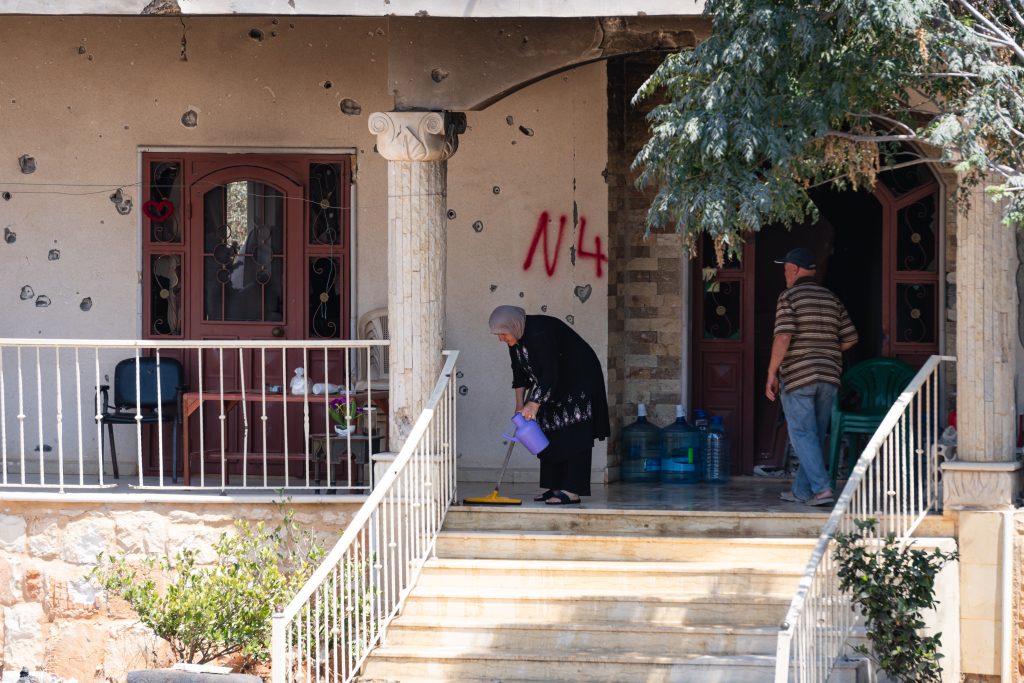
Zawtar al-Gharbiyah, southern Lebanon: Ihsan Yaghi cleans the porch of her damaged home after returning to the village with her husband. (Photo by Manon Roca)
Like roughly one in five Lebanese people, Ihsan was forced to leave her village when Israel resumed attacks on South Lebanon in March 2026, issuing evacuation orders for residents. In the two months that followed, Israel killed over 4,200 Lebanese citizens and invaded the country’s southern border. A partial ceasefire was negotiated in early June that cemented an Israeli military presence and necessitated the withdrawal of Hezbollah from the so-called “Yellow Line” — an Israeli-controlled security zone that now occupies between 55 and 62 villages in South Lebanon, from the Israeli border to Zawtar Al-Gharbiyah. The village was singled out as a “pilot zone” for a U.S.-brokered arrangement involving a partial Israeli withdrawal and the deployment of the Lebanese Army, allowing displaced residents to begin returning.
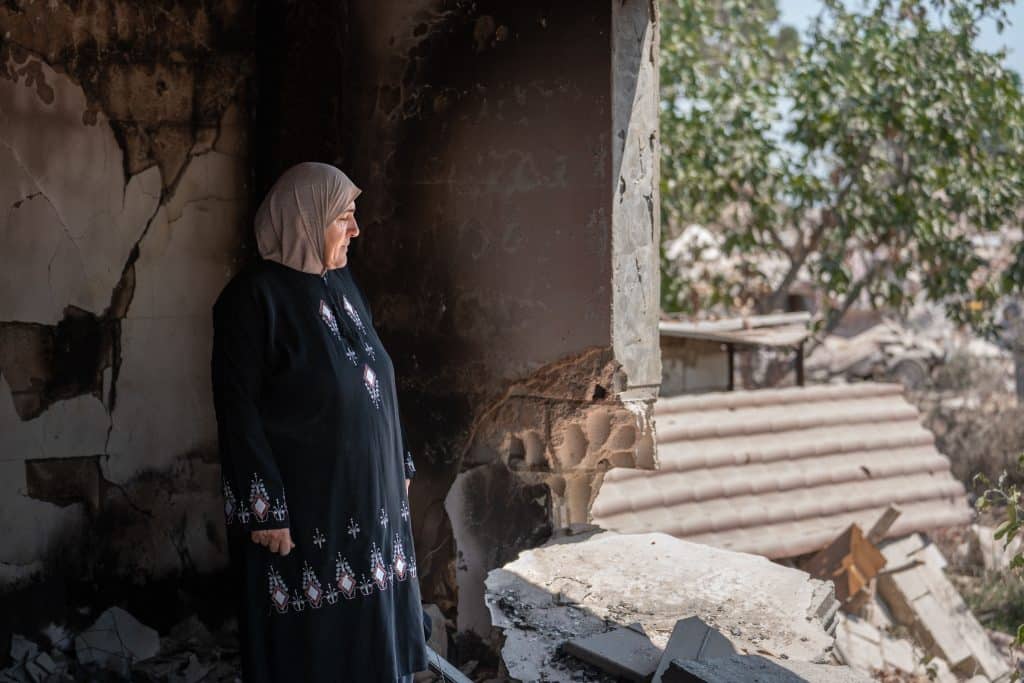
Zawtar al-Gharbiyah was among the first villages to be included in the so-called “pilot zone.” On July 21, 2026, the Lebanese army began deploying in the village following the withdrawal of Israeli forces. In the days that followed, once clearance operations and checks for mines and unexploded ordnance were under way, residents gradually began returning to their homes. What they found was a village deeply scarred by destruction. Houses still bear the marks of bombardment and fighting: blackened walls, shattered sections of buildings and concrete perforated by gunfire and shelling.
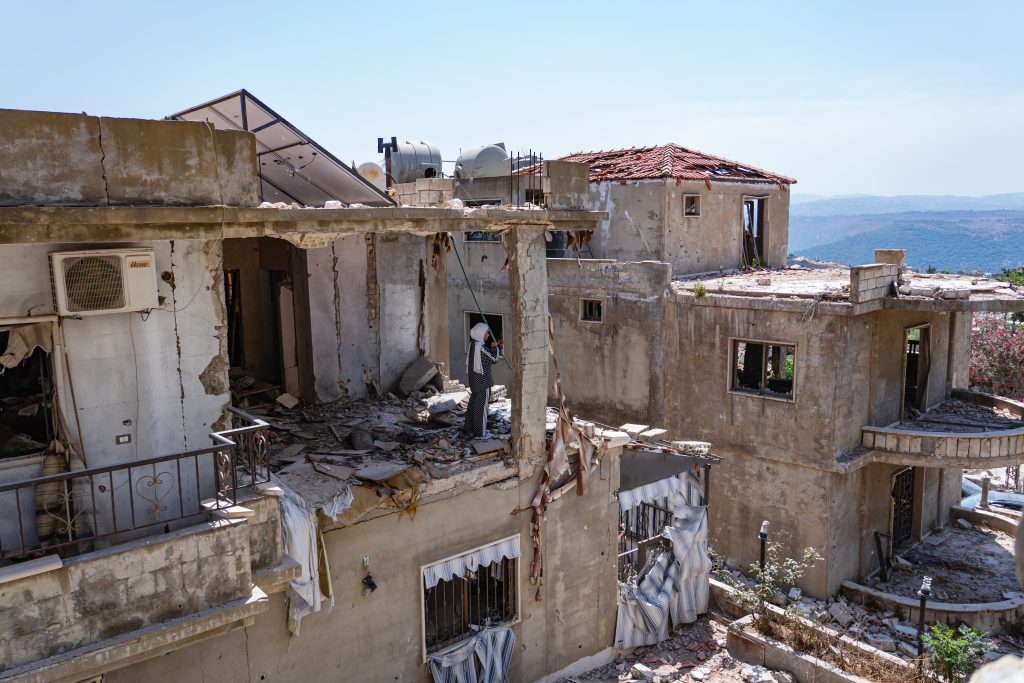
Zawtar al-Gharbiyah, southern Lebanon: A resident stands inside her damaged home amid houses destroyed during the Israeli military occupation of the village. (Photo by Manon Roca) 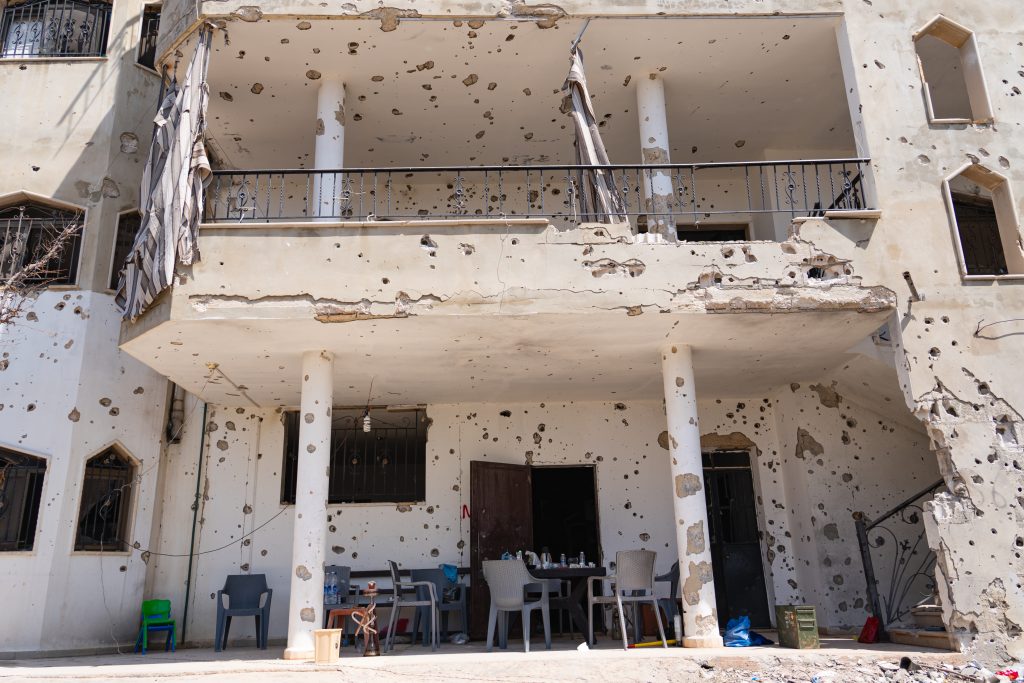
Zawtar al-Gharbiyah, southern Lebanon : A house damaged during the Israeli occupation of the village, its façade covered with impact marks. (Photo by Manon Roca)
The return to Zawtar is also taking place through small, practical gestures. Residents who have chosen to return are trying to salvage what remains of their homes, clearing away dust, rubble and debris. It is what Ihsan does every day on her porch, because before rebuilding can even begin, returning means trying to make what the war has left behind livable again.
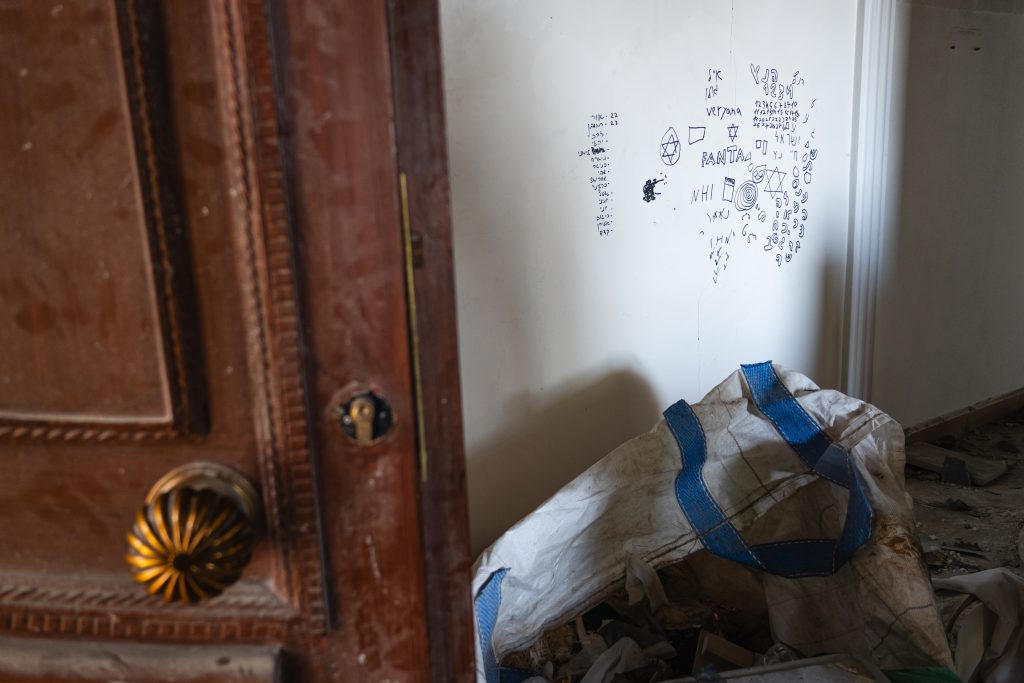
While Zawtar al-Gharbiyah was not under continuous occupation throughout the war, it was subjected to incursions by Israeli forces, accompanied by demolitions and heavy shelling. Traces of the Israeli army remain visible inside and outside homes: Hebrew graffiti on walls and rubbish left behind by soldiers. For those who have returned, these traces are a painful reminder of what happened, and an imminent threat that it could happen again.
Ihsan’s family was among the first to return to Zawtar after the Israeli withdrawal and the cautious arrival of the Lebanese Army. She has since returned to what remains of her home every day. “We belong to the South,” Ihsan said. “It is this land that gives us strength. We belong to this land, and this land gives us the strength to resist.”
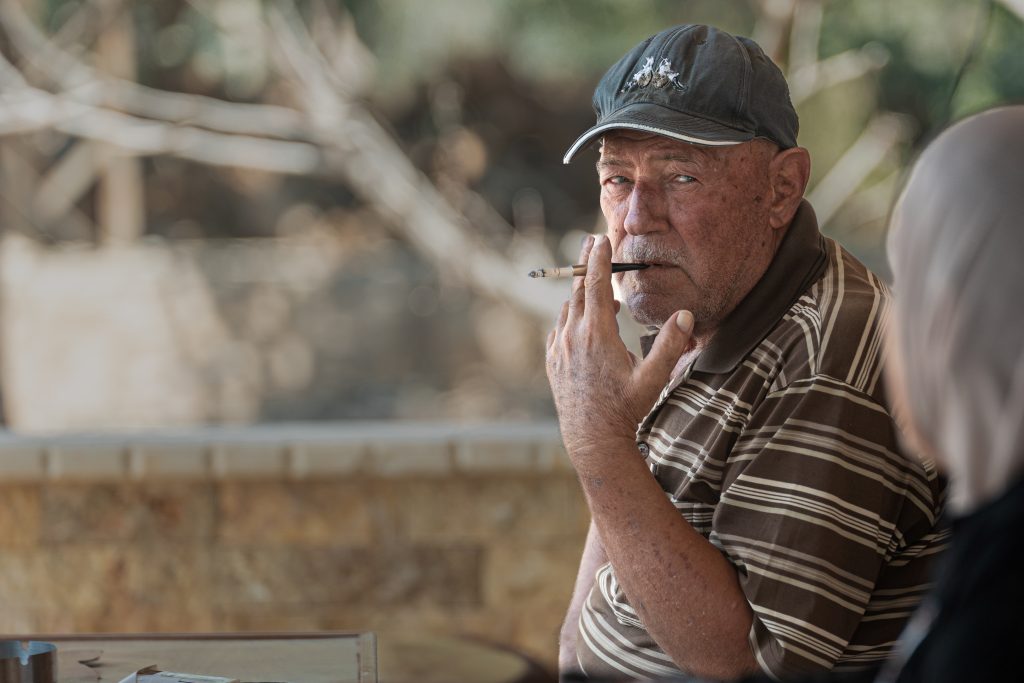
Zawtar al-Gharbiyah, southern Lebanon: Ihsan Yaghi’s husband smokes a cigarette on the porch of their damaged home after the couple returned to the village. (Photo by Silvia Casadei) 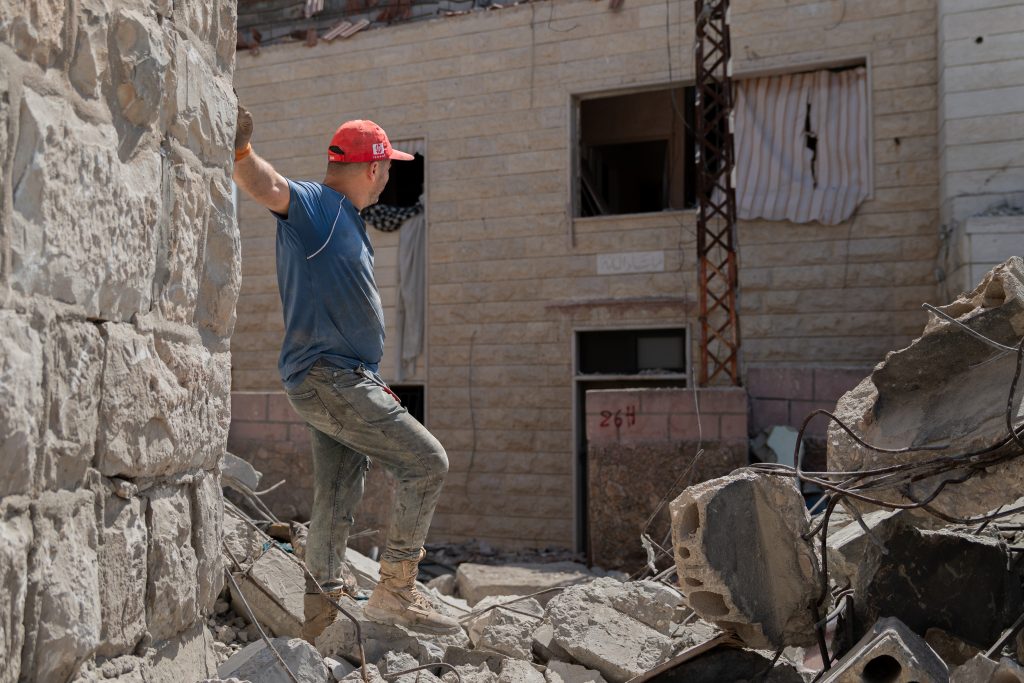
Zawtar al-Gharbiyah, southern Lebanon: A resident stands among the ruins of his destroyed home. “Show the world: a lifetime of work disappeared in a few seconds,” he told us. (Photo by Silvia Casadei)
She repeats several times that her house was destroyed by the Israelis, speaking with a mixture of anger and resignation: the anger of someone who has seen part of her life destroyed, and the knowledge that it will take a long time before anything resembling normal life can return. She describes herself as a daughter of this village, where her family has lived for generations, tending to their large olive grove, which has now been destroyed by Israeli forces. Ihsan echoes what many of her neighbors in the South have expressed: that they have been left alone.
“We feel that we are still under occupation. There is no sovereignty. They promised us sovereignty, those who talk about sovereignty, but there is no sovereignty. What they told us was not true,” Ihsan says.
The situation in Zawtar al-Gharbiyah differs from that of the towns, villages and agricultural areas that remain inside the “Yellow Line.” Within the Israeli-occupied zone, which extends up to 6 miles into Lebanese territory, many villages have been entirely razed to the ground and restricted from entry, leaving hundreds of thousands of people still unable to return.
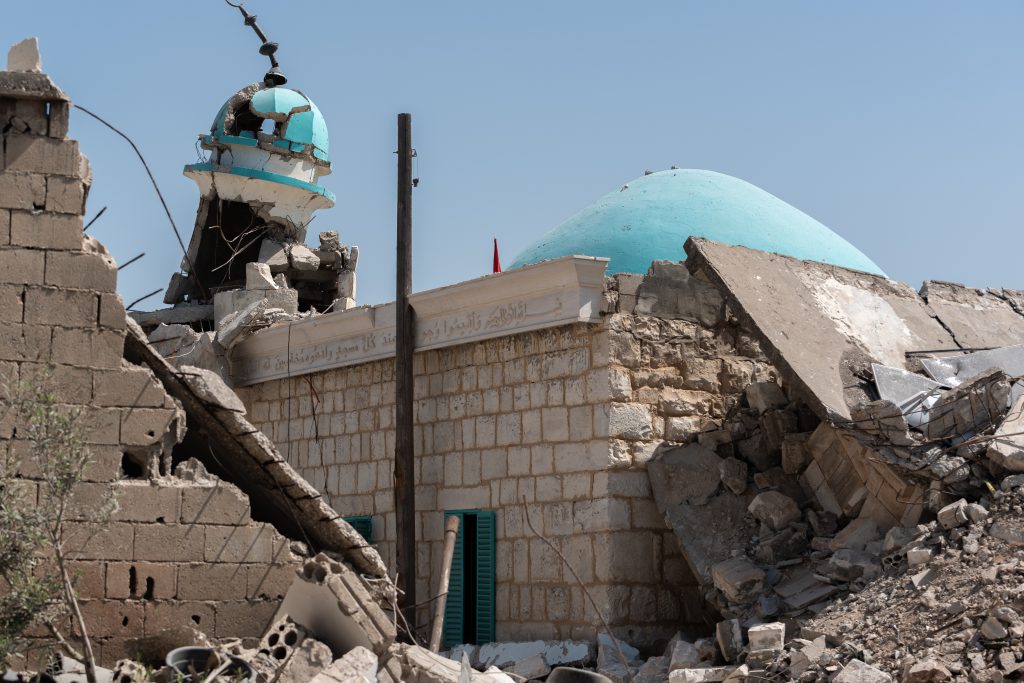
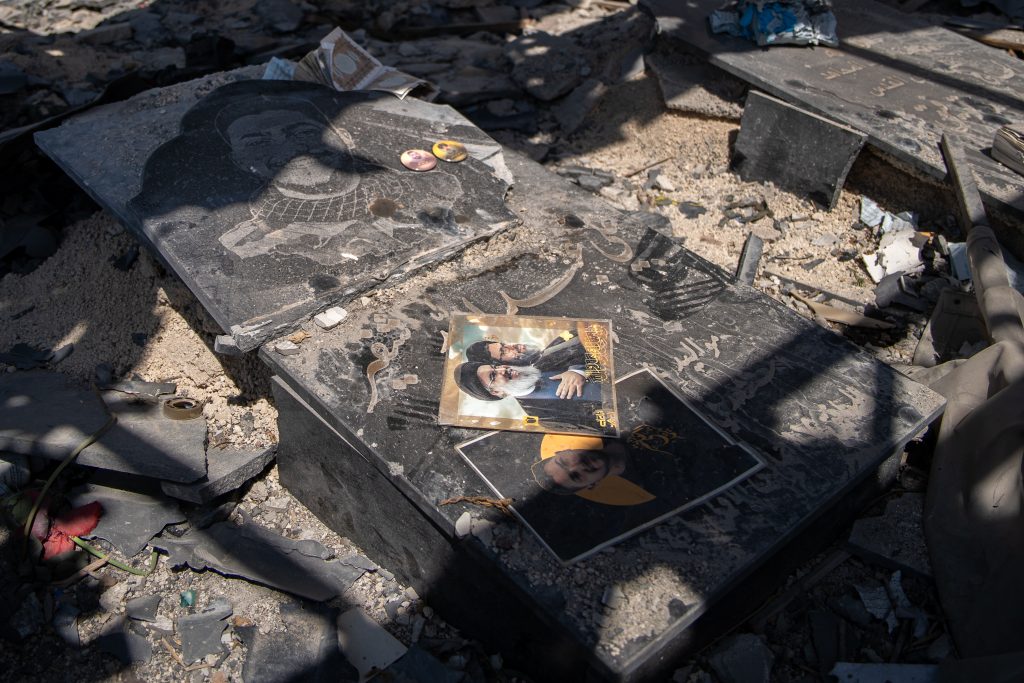
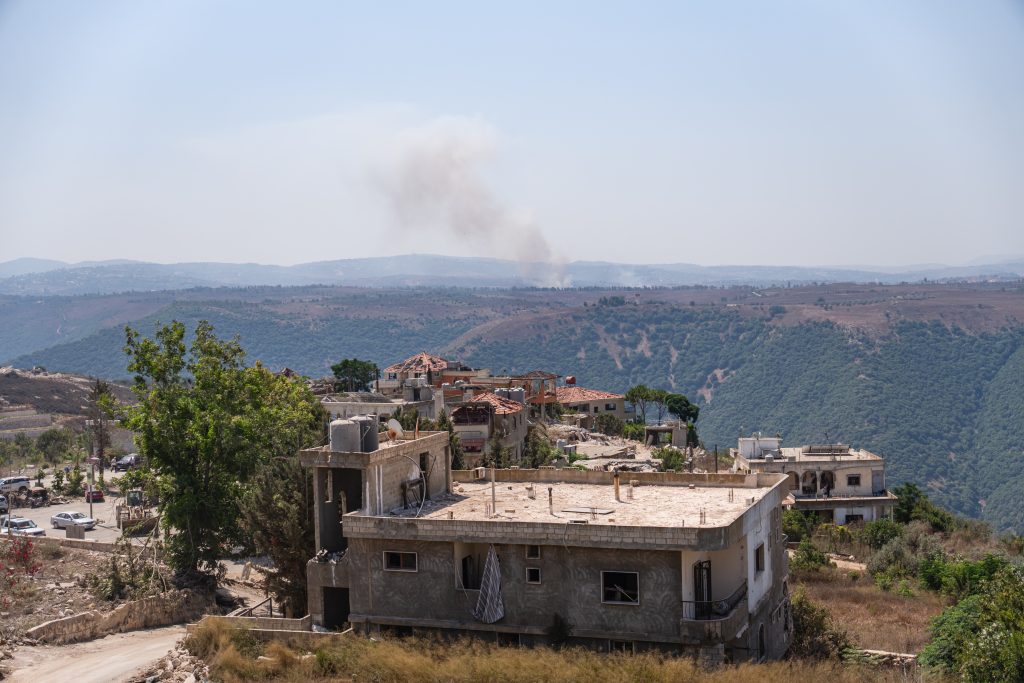
Just a few kilometers away, Zawtar al-Sharqiyah, the eastern part of Zawtar, was not included in the pilot zone and remains under Israeli control. Bombardments are a daily occurrence, as are the demolitions of homes by explosives and bulldozers. The constant hum of drones is a reminder that the occupying forces have not disappeared; they have merely moved a few kilometres away. Smoke rising after artillery strikes lays bare the gulf between the ceasefire proclaimed on paper and what continues to happen on the ground.
The proximity of the two areas makes the fragmentation of the territory particularly stark. While residents have begun returning to Zawtar al-Gharbiyah under Lebanese army control, Zawtar al-Sharqiyah remains on the other side of the line, under the control of Israeli forces.
According to the village mayor, by September around 100 families had returned to live in Zawtar al-Gharbiyah, out of roughly 500 who lived there before the war. But the destruction of homes is not the only obstacle to their return. As the pilot-zone agreement was taking shape, Israeli forces entered the village, demolishing and setting fire to additional homes and targeting what remained of essential infrastructure.
The mayor explained that the electricity network was destroyed, the water network severely damaged and the village well filled in, leaving Zawtar without running water or electricity. These conditions make the return of residents even more difficult and place tangible obstacles in the way of any meaningful reconstruction.
For the people of Zawtar, all of this has become part of a new normal: living with fear of what is to come and a continuous grief over what has been lost. It is a daily reality that sits uneasily alongside the language of diplomacy: while officials speak of a truce, southern Lebanon continues to come under attack.
Ihsan looks to the future with resignation.
“You can’t think about the future anymore,” she says. “We have to live day by day.”

Th UN is dead in the head. The US is dead in the soul. And the Arabs inside and around occupied Palestine are waiting to be shot in the head or extracted of their souls. And we, the citizens of the world scream “i am angry as hell and can’t take it anymore”. What a world we, the so called wisest of all species, have allowed ourselves to live in.