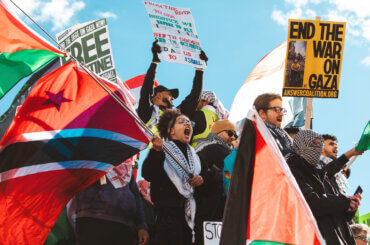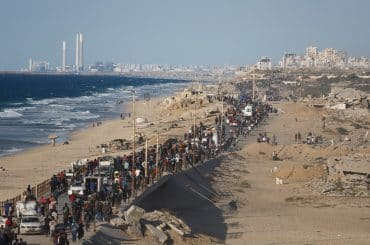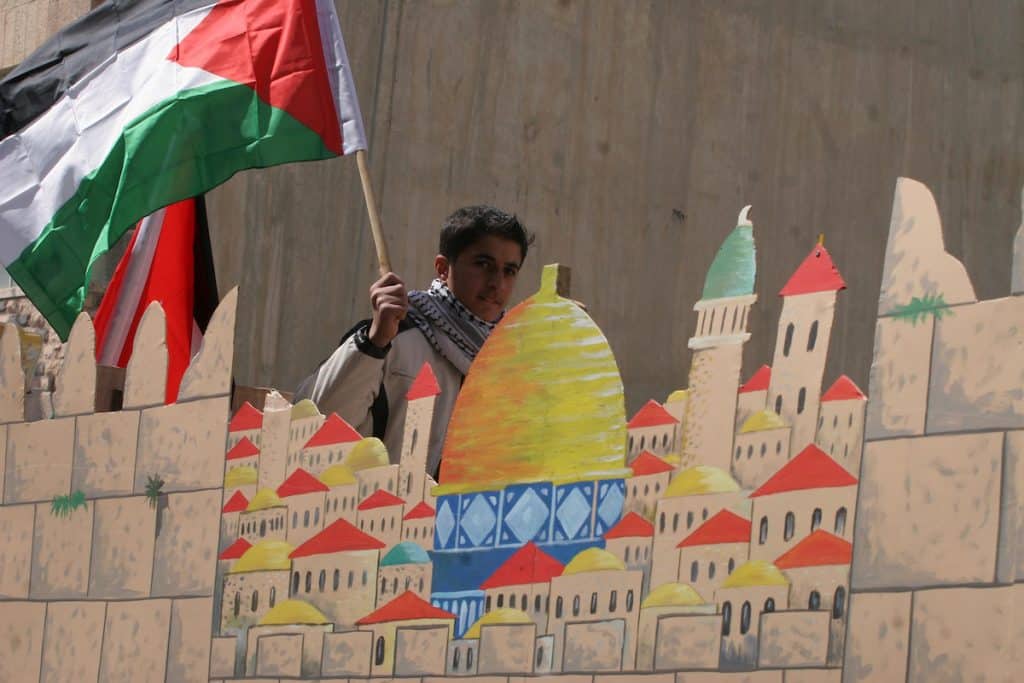
Three years into the genocide against our people in Gaza, the Palestinian question can no longer be reduced only to ending the war or rebuilding what has been destroyed. The deeper question is whether this moment will restore the Palestinian people’s right to self-determination and national independence, or enable the liquidation of the Palestinian cause through the fragmentation and occupation of the land while its people are without political rights.
These two trajectories are unfolding simultaneously. Alongside Gaza’s unprecedented destruction, settlement expansion, annexation, and ethnic cleansing, settler violence continues across the West Bank, steadily eroding the territorial and political foundations of an independent Palestinian state.
At the same time, international recognition of Palestinian self-determination has expanded, as has support for ending the occupation and establishing a Palestinian state. The unity of Gaza and the West Bank, including East Jerusalem, is increasingly affirmed as a political principle. But the problem is not a lack of opportunity, but the danger that on-the-ground changes will outpace the Palestinian capacity to turn international shifts into political leverage. This is particularly serious as the Palestinian leadership remains in a state of waiting and lacks initiative.
The danger is already visible in the emerging governance arrangements for Gaza. The National Committee for the Administration of Gaza (NCAG), established under President Trump’s Board of Peace, is a technocratic body tasked with civilian administration and reconstruction. It operates within an international structure headed by the Board’s High Representative for Gaza, Nickolay Mladenov. Whatever its immediate practical role, such an arrangement risks turning Gaza into a separately administered territory unless it is anchored within a unified Palestinian national and governmental framework.
This is the strategic danger: Gaza could become a separate humanitarian and reconstruction file, the West Bank could be increasingly fragmented through settlement and annexation, and political division could further erode the national framework capable of protecting the unity of the Palestinian people and their land.
These are not separate risks, but form a single interrelated process: separating land from politics, politics from national representation, and representation from the capacity to act. If allowed to consolidate, liquidation can take place without ever being formally declared.
Yet, international recognition, global solidarity, and readiness to support reconstruction create a political window that should not be wasted.
A consensus government is the national bridge
This is why an interim consensus government should become the center of gravity of the next phase. It would not replace the PLO or elections, or become another formula for factional power-sharing, but it can function as a legitimate Palestinian governmental address to the outside world and the practical instrument for preventing Gaza from becoming politically separated from the West Bank.
Its purpose should be clear: one governmental and financial framework for Gaza and the West Bank, unified public institutions and services, a national reconstruction plan, protection of Palestinian fiscal and institutional capacity, and coordination of Arab and international assistance through a Palestinian national channel.
The tasks of such a consensus government would include overseeing two vital matters of national sovereignty: the reconstruction of Gaza and, above all, creating the conditions for credible elections and the reform of the PLO as a more representative political institution that comprises all Palestinians, including the diaspora.
If elections have to be postponed because conditions do not permit them, that should not produce a political vacuum. On the contrary, a time-bound consensus government becomes even more necessary to prevent the vacuum from being filled by separate arrangements imposed on Gaza, such as the U.S.-imposed NCAG.
The mandate of this government must therefore be temporary, operational, and measurable, with clear benchmarks, public reporting, and effective oversight. The government should be judged by what it delivers, not by political appointments. Its purpose is to restore national capacity and prepare the ground for renewed legitimacy – not to create a new political order.
Rebuilding the relationship between Palestinians inside and outside the homeland, and mobilizing diaspora expertise and capital, could provide important political and economic leverage. A national diaspora fund, alongside more independent Arab and Islamic partnerships, deserves consideration as a means of supporting recovery while reducing dependence on externally imposed priorities.
Three years into the genocide, Palestinians face not two abstract alternatives but two unfolding trajectories: one that fragments Palestinian land, representation, and the capacity to act; and another that reconnects them within a national framework capable of using the international shift to advance Palestinian rights.
The struggle ahead is therefore not only over Gaza or the future of the Palestinian Authority, but over whether Palestine remains the cause of a people for national self-determination.
The window will not remain open indefinitely. The longer it takes to rebuild unified national capacity, the more room there will be for facts on the ground to determine the future.
After three years of genocide, it is not enough to prevent the worst outcome. The task is to open a different path: from managing division to unifying institutions, from managing catastrophe to rebuilding, and from waiting for others to act to restoring the Palestinian initiative.