After being forced out of their homes by violent Israeli settlers, the Bedouin community of Maghayer al-Deir joins a growing list of Palestinian Bedouins whose villages have been taken over by settlers since October 7, 2023.


After being forced out of their homes by violent Israeli settlers, the Bedouin community of Maghayer al-Deir joins a growing list of Palestinian Bedouins whose villages have been taken over by settlers since October 7, 2023.
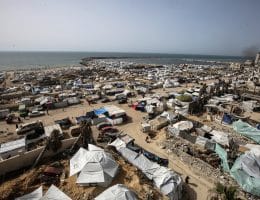
Israel plans on concentrating Palestinians into isolated camps within Gaza after it takes over 75% of the territory, luring Palestinians into those zones by using aid as bait.

Israel’s plan to handle the distribution of aid in Gaza via a U.S. private contractor is a key part of its plan to ethnically cleanse its population. Here’s how.
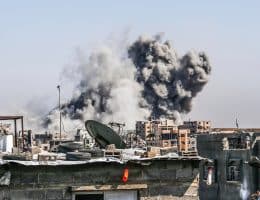
Israel announced the initial phase of “Gideon’s chariots,” the expanded ground invasion to permanently “conquer” Gaza, amid reports that Trump reneged on his deal with Hamas to lift the blockade, and will reportedly expel 1 million Gazans to Libya.
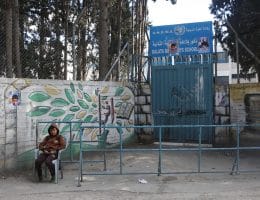
The Israeli government’s closure of six UNRWA schools in Jerusalem has left over 800 Palestinian students without school, and has thrown an entire community into limbo. Residents say it’s all part of a larger attack on Palestinian refugees.

The release of Israeli-American captive Edan Alexander, following direct negotiations between the U.S. and Hamas, comes after the Trump administration had already caught Israel off guard by agreeing to halt hostilities with Yemen’s Ansar Allah.

Israel carried out its plan to erase Gaza over the course of 18 months. Now that the plan has clearly fallen into place, the Netanyahu government is openly discussing ethnic cleansing. And still, Israel enjoys complete international impunity.

The Israeli war cabinet unanimously approved on Sunday the expansion of Israel’s war on Gaza, which reportedly include plans to reoccupy the strip indefinitely.
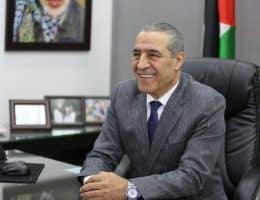
Prominent political figure Hussein al-Sheikh was recently tapped by President Mahmoud Abbas as vice president of the PLO, and by extension, Abbas’ successor. The appointment tells us a lot about what the future of Palestinian politics may look like.

Israel’s escalating campaign of demolishing Palestinian homes in the West Bank is the other side of the coin of seizing Palestinian land for settlement expansion. The objective is to force Palestinians to silently leave.