Late on Monday, 300,000 forcibly displaced Palestinians returned to Gaza City and northern Gaza for the first time since the start of Israel’s genocidal war.


Late on Monday, 300,000 forcibly displaced Palestinians returned to Gaza City and northern Gaza for the first time since the start of Israel’s genocidal war.
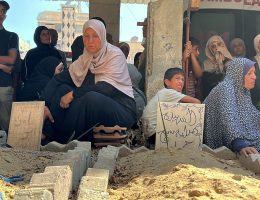
As Palestinians find some respite in the midst of a ceasefire in Gaza, many families have one important job to do before returning back to their homes: giving their loved ones, many who were buried in mass or temporary graves, a proper burial.
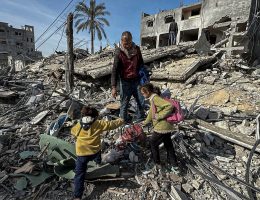
Palestinians across Gaza are returning to the rubble of their homes to search for their missing loved ones. “I’m looking through the skulls the Civil Defense collects trying to identify my sons,” Rafah resident Mahmoud Al-Qatati tells Mondoweiss.

Since the ceasefire was announced, Israel has continued to bomb Gaza, and Israeli ministers have promised to sabotage the deal. Fear and skepticism have overtaken celebrations in Gaza, as millions wait anxiously for the deal to take effect on Sunday.

It has been 3 weeks since Dr. Hussam Abu Safiya was abducted by Israeli forces from north Gaza. New information obtained by Mondoweiss reveals details about the first hours of the doctor’s detention at the Sde Teiman prison camp.
It has been one week since the Dr. Hussam Abu Safiya, Director of the Kamal Adwan Hospital, was detained by Israeli forces. Reports indicate he is being held inside a notorious torture facility, but Israeli officials won’t confirm where he is.
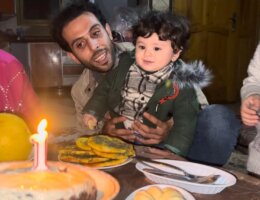
Even now, in moments of joy, all we think about are the things we lost, like celebrating a child’s birthday, celebrating the new year, or even the simple pleasure of gathering as a family without fear of the Israeli death that hovers around us.

The Israeli army raided the Kamal Adwan Hospital in northern Gaza, with more than 350 people inside at the time of the attack. Female staff told journalists that they were forced to strip off their clothes by soldiers and were beaten if they refused.
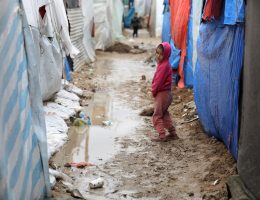
On December 26, Gaza’s health ministry confirmed the fourth case of an infant freezing to death in 72 hours. A day later, a 28-year-old doctor also died due to hypothermia. There was one common denominator in each death: they were living in tents.
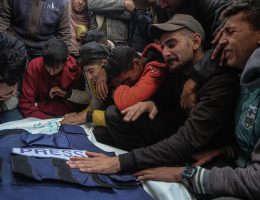
The Israeli army targeted a press van in an airstrike outside a hospital, killing an entire crew from the Al-Quds TV network. One of the journalists was awaiting news from his wife inside the hospital, who was giving birth to their first child.