The PA’s deadly campaign against the resistance in Jenin is breaking long-standing taboos against spilling Palestinian blood. It is also raising profound questions over the future of resistance in the face of the Gaza genocide.


The PA’s deadly campaign against the resistance in Jenin is breaking long-standing taboos against spilling Palestinian blood. It is also raising profound questions over the future of resistance in the face of the Gaza genocide.
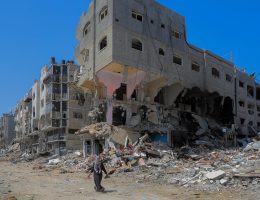
As hopes for a ceasefire draw closer, plans for the “day after” in Gaza are being debated. In interviews with Mondoweiss, Hamas representatives lay out their visions for reconstruction and post-war governance, and the obstacles that lie in their way.

Before the war, we lived a simple, beautiful, and peaceful life, like any family. Now I am a widow with two daughters who will grow up without a father, without grandparents, uncles, aunts, or cousins.
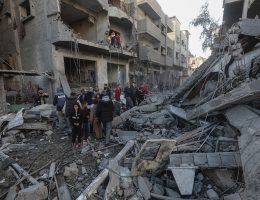
In recent days, Gaza ceasefire talks have seemed to gather unprecedented momentum, but until Israel’s far-right government concedes it is ready to abandon the genocide any predictions of the horror finally ending should be taken with skepticism.
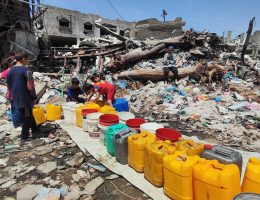
Human Rights Watch has issued a devastating report concluding Israel is committing the crimes of extermination and genocide in Gaza by focusing on one crucial issue: water.
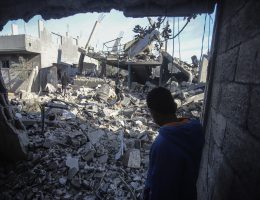
With the fall of Syria’s Bashar al-Assad, the truce between Hezbollah and Israel, and reports of progress in Gaza ceasefire talks in Cairo, Palestinians in the Strip are hopeful their reality may soon change.

The October 7 Hamas attack unraveled truths across the region, reopening questions of the future that lay dormant for years. Now, with the fall of Assad, the power map is being redrawn, presenting new threats and possibilities.

Over more than a year of war, I have volunteered to help my people in Gaza, wrapping friends and family into shrouds, but also helping bring new life into the world.

Amnesty International this week confirmed what many others have already said: Israel is committing genocide in Gaza. But the report goes to many lengths to prove one critical element in the case against Israel: that the genocide is fully intentional.
Ceasefire negotiations have resumed in Egypt between Hamas and Israel. A new push for unity between rival Palestinian factions could offer a new path forward, but internal Israeli political strife could once again prevent a deal from taking shape.