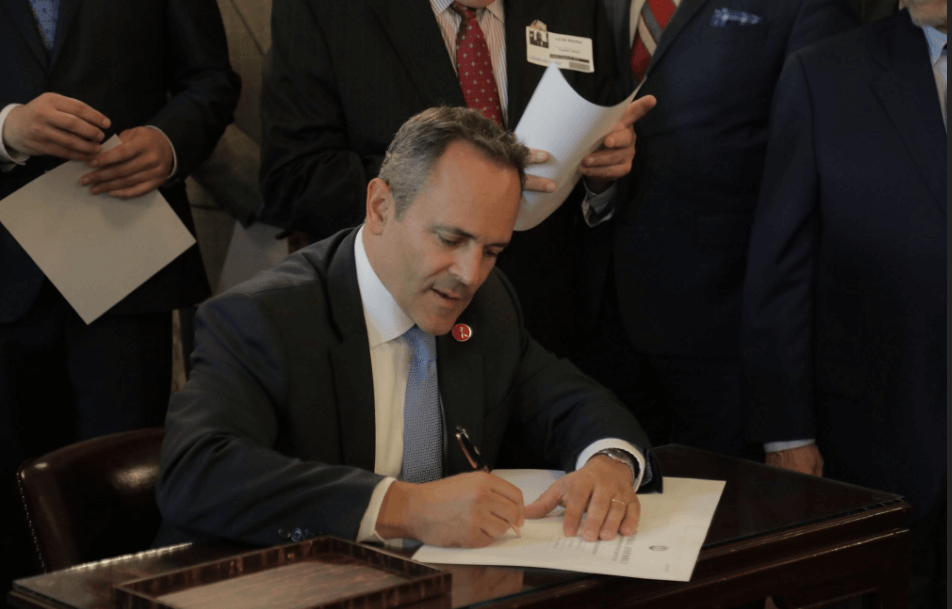
On August 27 Kentucky Governor Matt Bevin held a ceremony to officially sign a law allowing the state to refuse business from companies that boycott Kentucky trade partners, including Israel. The bill’s supporters hailed it as a way for the state to crack down on the Boycott, Divestment and Sanctions (BDS) movement.
A bill that would have required all California high school students to take an ethnic studies course will be delayed for at least a year after pro-Israel groups complained that the curriculum failed to address anti-semitism and singled “Israel out for condemnation.” Some of the backlash was initiated by an organization that is funded by the Israeli government.
By banning Reps. Rashida Tlaib and Ilhan Omar from visiting the occupied West Bank and Jerusalem, Israel has created a political upheaval in the U.S., with many Americans now favoring cutting aid to the country. One thing achieved this result: The women support BDS, and they have demonstrated the power of the nonviolent campaign.
The long term political ramifications of Netanyahu’s decision to deny entry to Rashida Tlaib and Ilhan Omar remain to be seen. What is clear, however, is that the latest efforts by the Israeli premier to quash the growing BDS movement have backfired.
The Netanyahu government barred Rashida Tlaib and Ilhan Omar over their support for BDS, but earlier this week Israeli lawmakers sent a letter to Congress saying the two-state solution is more dangerous than BDS. Will Netanyahu bar two-state supporters next?
Israel’s Prime Minister Benjamin Netanyahu gave details behind the decision to ban Representatives Rashida Tlaib and Ilhan Omar from entering Israel and the West Bank on a Congressional delegation this afternoon in a statement that alleged terrorism ties on the part of the trip’s coordinator and said “the sole purpose of their visit is to harm Israel and increase incitement.”
Israeli media is reporting that Israeli Prime Minister Benjamin Netanyahu will bar Rep. Ilhan Omar (D-MN) and Rep. Rashida Tlaib (D-MI) from entering Israel for a planned congressional delegation over their support for the BDS movement.
Israeli BDS activists write to Rep. Ayanna Pressley: “We were disappointed to learn of your recent vote in favor of HR 246. Your condemnation of the BDS movement – a global, grassroots-based, non-violent campaign for equality in human rights does not do justice to your relentless work for human rights and human dignity for marginalized populations.”
BDS movement: “In this grave moment, we stand in solidarity with the people in Kashmir. Our oppressors are united, and our struggles will be stronger if we too unite.”
On August 12, Twenty-one Israeli lawmakers sent a letter to members of Congress criticizing a bill that condemned the boycott of Israel because it endorsed a two-state solution. “We would like to make our position clear that the establishment of a Palestinian state would be far more dangerous to Israel than BDS,” the letter reads.