The entire Israeli political spectrum is united in blasting Netanyahu for not continuing to attack Iran, and Israeli society agrees. The reason, to put it simply, is that Israelis are war junkies.


The entire Israeli political spectrum is united in blasting Netanyahu for not continuing to attack Iran, and Israeli society agrees. The reason, to put it simply, is that Israelis are war junkies.

Hours after Iran and the U.S. reached a two-week ceasefire agreement, Israel launched a massive bombing campaign across Lebanon, killing hundreds of people and threatening to derail the U.S.-Iranian ceasefire before it even begins.

Three weeks into the US-Israel war on Iran, the Iranian government has not collapsed, the region has not stabilized, and the costs are mounting. The architects of this war were wrong about nearly everything.

The Atlantic’s Yair Rosenberg recasts Benjamin Netanyahu as a tragic figure forced to take radical action after October 7, ignoring his long history of fomenting war and exploiting Jewish trauma to further himself and his Zionist ideology.
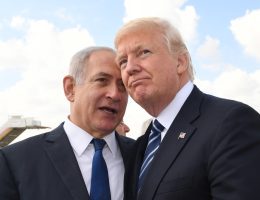
Days after his meeting with Benjamin Netanyahu, Donald Trump threatened to intervene in Iran if the country killed any protesters. Analyst Sina Toossi breaks down recent events and whether another US-Israeli aggression on Iran may be on the horizon.

Throughout the Gaza war, Israel has debated what to call it. The military says “October 7 War,” while Netanyahu wants “War of Redemption.” What’s clear is that Israel believes it can only resolve its ongoing cycle of crisis through genocidal violence.

Israel isn’t a vassal state of the U.S., JD Vance said. But when it comes to the ceasefire in Gaza and annexing the West Bank, Israeli decision-making is deeply intertwined with Washington’s current priorities.

Hamas just accepted Donald Trump’s “peace” plan. Here’s what Hamas didn’t accept, how Trump reacted, and why Netanyahu was blindsided.
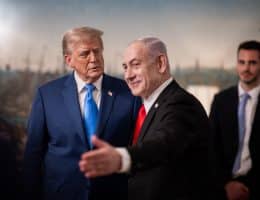
The Trump-Netanyahu proposal lacks a clear timeline or method to enforce Israeli compliance. If Hamas rejects the plan, the U.S. says Israel can “finish the job” in Gaza. But if it accepts, it could plunge the Palestinian cause into deep uncertainty.

Netanyahu’s U.N. speech vs. Gaza’s reality: ecocide, annexation, and a shifting global politics. Read our analysis and join our donor Frontline Briefing.