In a surprise announcement, Benjamin Netanyahu told The Economist magazine that Israel plans to stop receiving U.S. military aid in the next 10 years.
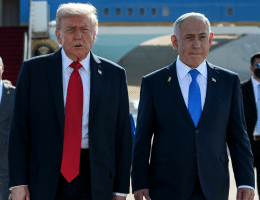

In a surprise announcement, Benjamin Netanyahu told The Economist magazine that Israel plans to stop receiving U.S. military aid in the next 10 years.

Days after his meeting with Benjamin Netanyahu, Donald Trump threatened to intervene in Iran if the country killed any protesters. Analyst Sina Toossi breaks down recent events and whether another US-Israeli aggression on Iran may be on the horizon.

In comments to reporters after his meeting with Israeli Prime Minister Benjamin Netanyahu, Donald Trump reiterated his support for another strike on Iran.

The UN Security Council voted in favor of Trump’s “peace plan” for Gaza, effectively giving the U.S. and Israel the mandate to push forward their vision for Gaza’s future – a future that, notably, features no consideration for what Palestinians want.

Throughout the Gaza war, Israel has debated what to call it. The military says “October 7 War,” while Netanyahu wants “War of Redemption.” What’s clear is that Israel believes it can only resolve its ongoing cycle of crisis through genocidal violence.

Israel isn’t a vassal state of the U.S., JD Vance said. But when it comes to the ceasefire in Gaza and annexing the West Bank, Israeli decision-making is deeply intertwined with Washington’s current priorities.

Gaza erupted in celebration as a ceasefire agreement between Israel and Hamas was reached on Thursday. But while there has been an outpouring of joy over the prospect of an end to the genocide, many are skeptical that it’s truly over.

Hamas and Israel had come to an agreement to end Israel’s two-year assault. Will Trump put pressure on Israel to make it hold?

Hamas just accepted Donald Trump’s “peace” plan. Here’s what Hamas didn’t accept, how Trump reacted, and why Netanyahu was blindsided.

The Trump-Netanyahu proposal lacks a clear timeline or method to enforce Israeli compliance. If Hamas rejects the plan, the U.S. says Israel can “finish the job” in Gaza. But if it accepts, it could plunge the Palestinian cause into deep uncertainty.