Hours after Iran and the U.S. reached a two-week ceasefire agreement, Israel launched a massive bombing campaign across Lebanon, killing hundreds of people and threatening to derail the U.S.-Iranian ceasefire before it even begins.


Hours after Iran and the U.S. reached a two-week ceasefire agreement, Israel launched a massive bombing campaign across Lebanon, killing hundreds of people and threatening to derail the U.S.-Iranian ceasefire before it even begins.

Three weeks into the US-Israel war on Iran, the Iranian government has not collapsed, the region has not stabilized, and the costs are mounting. The architects of this war were wrong about nearly everything.

Every week the U.S.-Israeli war grinds on without a decisive conclusion becomes a lesson in the limits of U.S. power. A campaign initially meant to reinforce U.S. and Israeli supremacy may instead signal its decline.
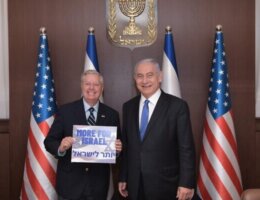
As the war on Iran unfolds, it’s clear that most Americans, including many on the right, don’t support it. Nevertheless, warmonger Republican Senator Lindsey Graham continues to boast about his role in helping Israel push the U.S. into war.

No matter how desperately our politicians try to convince us otherwise, Israel isn’t good for us. The new U.S.-Israeli war on Iran, which Americans overwhelmingly do not want, is the latest proof of that. It’s time for us to end the relationship.
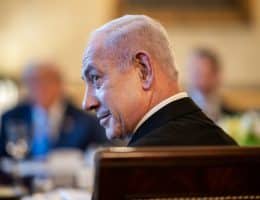
The Atlantic’s Yair Rosenberg recasts Benjamin Netanyahu as a tragic figure forced to take radical action after October 7, ignoring his long history of fomenting war and exploiting Jewish trauma to further himself and his Zionist ideology.
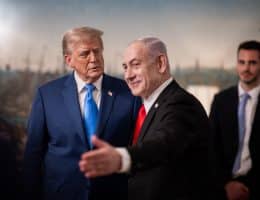
Benjamin Netanyahu may have finally gotten the war on Iran he’s long pushed the U.S. toward, but he also ignited the domestic battle over the U.S.-Israel relationship.

Donald Trump says he will decide whether to attack Iran within the next 10 days. Mondoweiss talks with Center for International Policy Senior Fellow Sina Toossi about Trump’s threats, Israel’s role, and how Iran might respond if the US starts a war.

On Thursday, Donald Trump formally announced his so-called “Board of Peace” during the World Economic Forum in Davos, Switzerland. The body has been widely criticized as an attempt by Trump to undermine the UN and ‘takeover the world order.’
Amid domestic protests in Iran, the Trump administration is threatening U.S. attacks on the country.