Many in Gaza participate in the “Ramadan economy” – a once-a-year opportunity offering Palestinians suffering from poverty, war, and the Israeli siege, a chance to secure a much-needed income.


Many in Gaza participate in the “Ramadan economy” – a once-a-year opportunity offering Palestinians suffering from poverty, war, and the Israeli siege, a chance to secure a much-needed income.
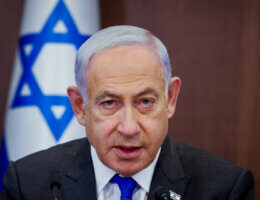
The Netanyahu government has so far externalized its ongoing crisis through its military campaign on the West Bank, but Palestinians in Gaza fear that it might ultimately resort to war to cripple the Israeli protest movement.

I spent a day with a family in Jabaliya refugee camp at the height of Gaza’s cold winter months. This is how they survive without electricity.
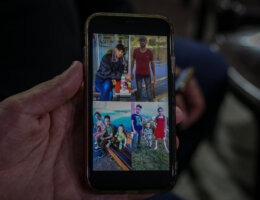
After leaving Gaza to find work abroad, Abdul Kareem Abu Jalhoum was finally able to bring his family to join him in Turkey after 5 years of hard work. They all died in the devastating earthquake.
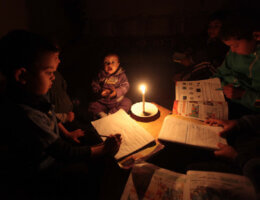
During Gaza’s cold winter months, the absence of sufficient electricity drives families desperate for warmth to use hazardous fuel sources to heat their homes. The results can often be deadly.
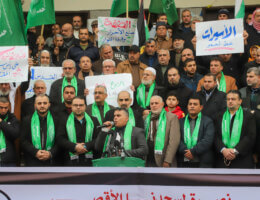
While the people of Gaza cheer for resistance in the West Bank and call for armed factions in Gaza to support it, they also fear that escalations with Israel will lead to another war on Gaza.

Every year thousands of Christians from around the world travel to Bethlehem to celebrate Christmas. But just 46 miles away, an entire community of Palestinian Christians is banned from traveling to the city, even for the holidays.
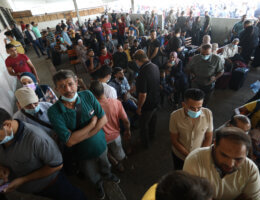
Palestinians travelling out of Gaza are routinely subjected to inhumane and degrading treatment by Egyptian officials as they are escorted to Cairo International Airport and placed under guard until they board their planes.
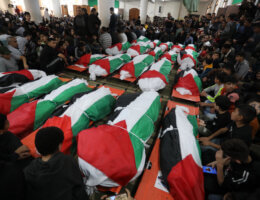
Gaza is mourning 21 members of the Abu Rayya family who were burned alive when a fire ignited the small apartment they had gathered in for a family celebration.
The tragedy is a direct result of the Gaza blockade, as frequent power cuts have forced families to use alternative fuel sources to fight the dark, often in hazardous conditions.
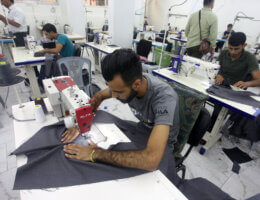
The Hamas government has imposed a tax on imported clothing in a bid to support local industries. In the meantime, this has caused the prices of clothing to soar, leaving families in Gaza in the difficult position of choosing whether the should buy food or clothing for their children.