Palestinians in Gaza’s border areas have continued to be killed and injured on a daily basis since the ceasefire began in mid-January. A resident of Shuja’iyya tells Mondoweiss, “The war has not stopped, quite the opposite. The war intensified.”
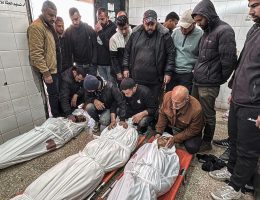

Palestinians in Gaza’s border areas have continued to be killed and injured on a daily basis since the ceasefire began in mid-January. A resident of Shuja’iyya tells Mondoweiss, “The war has not stopped, quite the opposite. The war intensified.”

As part of the ceasefire deal between Israel and Hamas, Amir Abu Raddaha was freed from Israeli prison after 23 years. He spoke to Mondoweiss about his time behind bars, and the horrific conditions of Palestinian prisoners since October 7.

While Israel and the United States are working together on a plan for Gaza, they have slightly different interests. This gap is opening space for regional Arab leaders to propose an alternative vision that avoids full-scale ethnic cleansing.

Israel has suspended the entry of humanitarian aid into Gaza and resumed targeting Palestinian civilians, bringing the ceasefire with Hamas the closest it has even been to collapse.

As the first phase of the Gaza ceasefire comes to an end it is clear the Trump White House has no substantive policy for the region. Israel is filling that vacuum with perpetual war.

Hamas leaders in Gaza say that although they will accept a “national consensus” on who governs Gaza, the movement will not lay down its arms. But Israel intends to tank the ceasefire through its violations of the deal, a senior Hamas leader tells Mondoweiss.
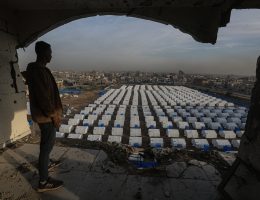
Palestinians in Gaza say that Israel is violating the ceasefire’s humanitarian agreements in order to force them to leave their homeland.

Secretary of State Marco Rubio’s first trip to the Middle East made clear that Donald Trump is driving U.S. policy and largely adopting Israel’s belligerent stance in Gaza and Iran. The question remains whether the rest of the region can stop them.
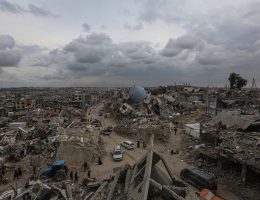
Israel wants to drag out the first phase of the Gaza ceasefire and eventually return to war, while Hamas wants to begin reconstruction as part of a second phase. This current impasse is bringing the fragile ceasefire to a dangerous crossroads.

Following tensions that threatened to unravel a tenuous ceasefire, Hamas released three Israeli prisoners after receiving guarantees from mediators that Israel would adhere to the humanitarian stipulations of the ceasefire agreement.