This week, we covered Donald Trump’s so-called “Board of Peace,” escalating threats toward Iran, and Israel continuing to make life unlivable for Palestinians.


This week, we covered Donald Trump’s so-called “Board of Peace,” escalating threats toward Iran, and Israel continuing to make life unlivable for Palestinians.

Donald Trump says he will decide whether to attack Iran within the next 10 days. Mondoweiss talks with Center for International Policy Senior Fellow Sina Toossi about Trump’s threats, Israel’s role, and how Iran might respond if the US starts a war.

The U.S. is once again threatening a war on Iran that could devastate the region. Trump knows Iran is not pursuing nuclear weapons, but that has never been the point. It is about removing Iran as the only actor in the region beyond U.S. control.
Amid domestic protests in Iran, the Trump administration is threatening U.S. attacks on the country.
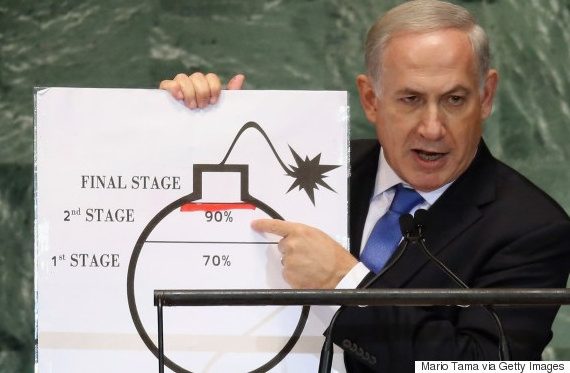
In the wake of the United States’ invasion of Venezuela, countries around the world are asking what this means for them. For Israel, it could mean an opportunity for another conflict with Lebanon or Iran that Netanyahu has been vying for.

Since the US dropped an atomic bomb on Hiroshima on August 6, 1945, US imperialism has driven nuclear proliferation worldwide. Current nuclear flashpoints, such as Iran, show how the US continues to use nuclear blackmail to reinforce its dominance.

The Trump administration announced it is approving another massive arms deal for Israel ahead of Benjamin Netanyahu’s visit to Washington next week.

The vast majority of the Republican party and a number of hawkish Democrats are rallying around Trump’s war on Iran.
As Israel pushes for full U.S. intervention in its attacks on Iran, two dozen progressive House members are pushing a bill that would block the U.S. from sending Israel offensive weapons.
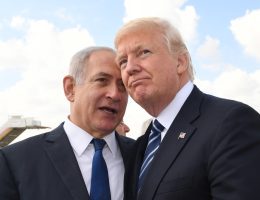
The attack on Iran is just the latest crime in the Israeli regime’s path of destruction across the Middle East. Its Western-backed impunity has become a global threat.