On the martyrdom of Ismail Haniyeh as Iran inaugurated a new president, and the ways the Martyr may enable us to see a path forward to break a siege that stretches from Tehran to Gaza.
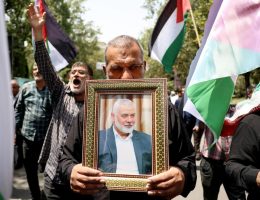

On the martyrdom of Ismail Haniyeh as Iran inaugurated a new president, and the ways the Martyr may enable us to see a path forward to break a siege that stretches from Tehran to Gaza.

Iran announced that its barrage of ballistic missiles was in retaliation for the assassination of Ismail Haniyeh in Tehran and Hasan Nasrallah in Beirut.

Media sources have misunderstood how the leadership of Hamas operates, drawing simplistic binaries between the “moderate” Ismail Haniyeh and the “extremist” Yahya Sinwar. In reality, Hamas decision-making is far more institutionalized.

The Biden administration wants a ceasefire deal but is not prepared to put pressure on Israel to make it happen. Netanyahu knows this and is pushing forward with the genocide of the Palestinians, and regional war with the Axis of Resistance.

Ismail al-Ghoul had become a household name for anyone following the war on Gaza. When he went to Ismail Haniyeh’s hometown to cover a commemoration of his killing, Israel assassinated him too.
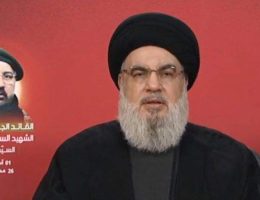
In a strident speech on August 1, Hezbollah leader Hasan Nasrallah said that the fighting with Israel has “entered a new phase” that goes “beyond supporting Gaza,” vowing an “inevitable” response to Israel’s Beirut bombing.

Israel’s assassination of Hamas and Hezbollah leaders doesn’t aim to weaken the resistance. Its real motive is to restore the image of military and intelligence superiority in the eyes of the Israeli public.

Yumna Patel talks to Qassam Muaddi and Abdeljawad Omar about the implications and impact of the Israeli assassinations of Hamas leader Ismail Haniyeh and Hezbollah senior commander Fouad Shukr.
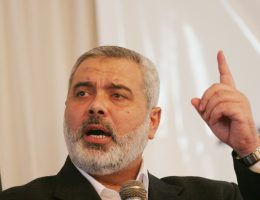
Israel assassinated Hamas politburo head Ismail Haniyeh in Tehran after a series of mounting regional tensions that included unprecedented Israeli attacks on the “Axis of Resistance,” including airstrikes on Beirut and Yemen.
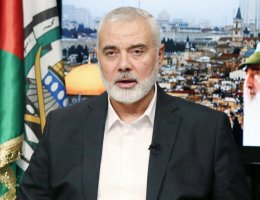
Israel has always punitively killed the families of leaders and resistance figures as collective punishment. It is a sign of Israel’s inability to extract a military victory on the ground.