A visit to southern Lebanon shows that support for Hezbollah among the Shi’a population is as strong as ever.
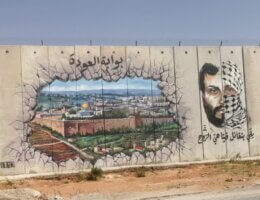

A visit to southern Lebanon shows that support for Hezbollah among the Shi’a population is as strong as ever.
Nadya Hajj powerfully conveys how new technologies make, re-make, and occasionally unmake ties in the global Palestinian community.

Over the past century more than 20 international commissions have been convened on the question of Palestine, Dr. Lori Allen uses them as the basis for her investigation into Palestinian political history.

The book is an epic novel that follows Palestinian ex-pat Adam Dannoun and his brush with Blind Mahmoud that spurs an exploration of the past, and what happened to his hometown, the “ghetto” of Lydda in 1948.
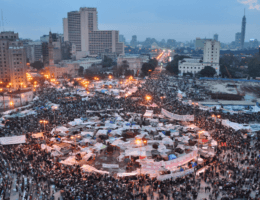
December 17 marked ten years since Mohammed Bouazizi, a street vendor in Tunis, set himself on fire in an act of defiance and desperation that triggered what would become known as the Arab Spring. Over the course of the last decade we have witnessed revolutions sweep the Middle East and North Africa, but we have also witnessed the sheer might and terror of counter-revolution as well. What are the lessons from the Arab Spring?

The United States has the dubious distinction of being the world’s leading arms dealer. It dominates the global trade in a historic fashion and nowhere is that domination more complete than in the Middle East.

Yitzhak Rabin never evolved from warrior to peacemaker. Until the very end, he retained his “warrior” attitude by openly resorting to the mass killing of civilians to serve his political aims. This includes Operation Accountability, a week-long bombing campaign against the residents of south Lebanon in 1993, that took place as the Oslo Accords were being negotiated.

In the long-term, negotiations between Lebanon and Israel over maritime borders will be detrimental to the interests of Lebanon and its people. Israel always negotiates in bad faith.

There are certain profound events in a nation’s history that leave an indelible mark on all its people. The massacre in two Palestinian refugee camps outside of Beirut, Sabra and Shatila, on September 16, 1982 stands as one of those events.
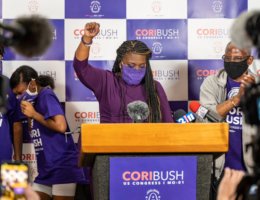
Upset in Missouri Once again, a longtime Democratic incumbent has been ousted by a progressive…