Do all Palestinians have the right to citizenship in whatever state rules historic Palestine? The right of return of Palestinians to their places of origin now in Israel is both well-researched and uncontested in ethics and international law, for instance in many conventions and UN Resolutions.
In the late 1960s as black organizations began to weigh in on the national discourse on the Arab-Israeli conflict, black radicals and their critiques of Israel became a source of much anxiety for civil rights groups who fear support for Palestinians would jeopardize their cause.
The Great March of Return began on Land Day and ends on Nakba Day. In the process it is demonstrating that each period of Palestinian dispossession is connected — it is an ongoing saga where the Nakba never ended. The protest is also showing that when Palestinians seek to make the world remember them, they are killed with impunity. Still, Jonathan Ofir says the Israeli response has exposed Israel “as the monster that it was destined to be.”
Israel’s top diplomat, Deputy Foreign Minister Tzipi Hotoveli waves the bible and an empty book of Palestinian history at Palestinian-Israeli Members of Knesset and tells them they don’t exist, and then says they are trying to Islamicize the holy sites and eradicate the Jewish connection to them.
A new poll shows most Arabs, and especially Palestinians, think Hillary Clinton will be no better for the region than Donald Trump. “I just feel like Americans aren’t choosing between the lesser of two evils, but the quieter of two evils,” says 15-year-old Amera Abunada, a Palestinian writer now living in Turkey.
The Association for Investment in Popular Action Committees writes to New York Governor Andrew Cuomo declaring its support for BDS and asking to be included in the list of boycott-supporting organizations the state of New York will be creating following the governor’s executive order.
On a recent September evening, two groups of culturally curious people, separated by countries and borders, virtually gathered together for art and social justice. At Said Al-Mishal Establishment for Culture and Science, Gaza’s Theatre for Everybody performed a short version of Tolstoy’s classic “War and Peace.” Simultaneously, on the other side of the world at London’s Az Theatre, a group of British and international supporters gathered to watch a previously recorded version of the same performance. The play was centered on two themes: condemning war and denouncing dictatorship.
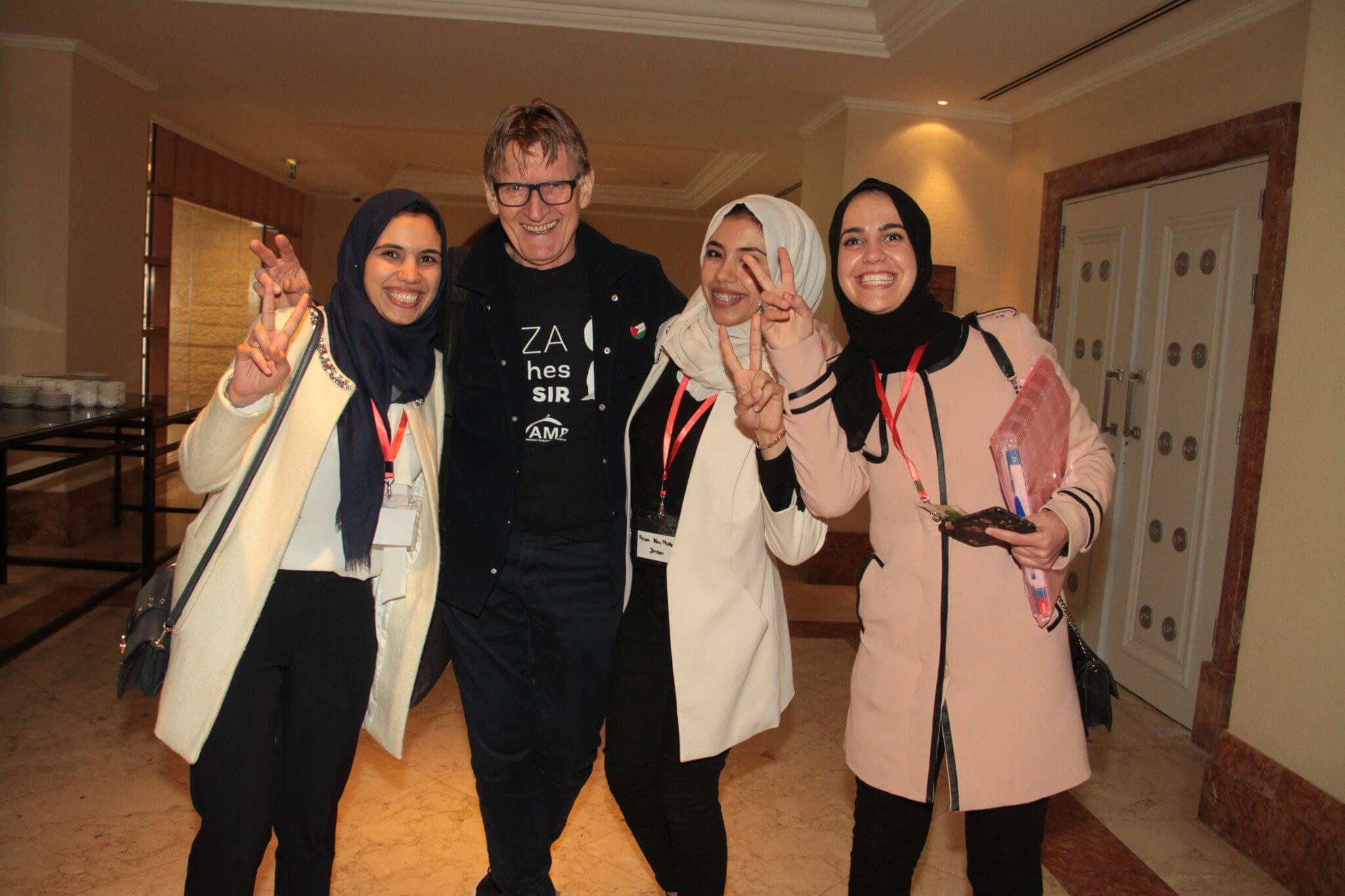
The Israeli occupation is the chief structural barrier to quality healthcare for Palestinians—it has exacerbated existing inequities in the population and has given rise to a host of issues unique to this devastating political reality. The structural aspects of the occupation —political, economic, and social— collectively mitigate access to quality health care for Palestinians in Gaza, the West Bank, and Jerusalem. Healthcare is not just measured in mortality statistics or disease prevalence. National health systems are highly influenced by the political climate surrounding them, and as Norwegian physician and activist Mads Gilbert puts it, “Medicine and politics are Siamese twins.”