

Empires do not require invitations. They arrive, impose and endure until, as the anti-colonial struggles of the past demonstrated, they are expelled. That was the grammar of colonialism as it left scars across Asia, Africa and the Middle East: a one-way street paved with extraction, humiliation and the slow suffocation of self-determination
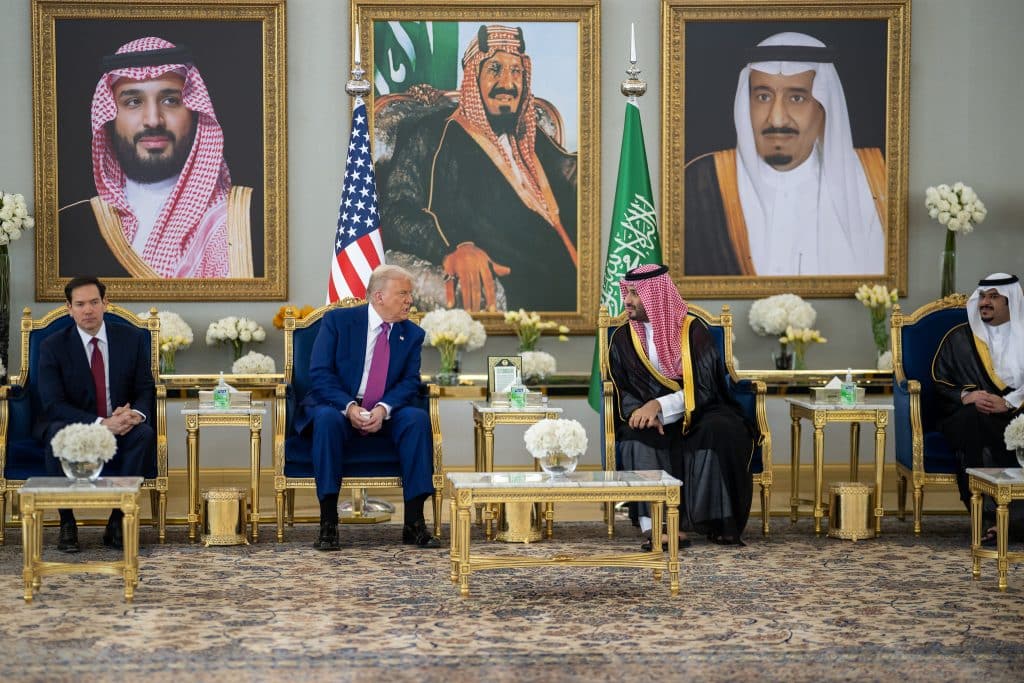
The tragedy of the current Gulf predicament in the Middle East is not that empire persists, but that it has been invited with ceremony, financed with petrodollars and normalized as strategy. The rulers of the Gulf did not resist the imperial embrace. They cultivated it. American bases were not imposed at gunpoint but negotiated, expanded and celebrated as security guarantees. Sovereignty was subcontracted.
This has always been a dangerous illusion. Outsourcing security diminishes sovereignty, and when sovereignty is diluted over time, it is denied. The trade-off was simple and unambiguous, yet also disastrously misunderstood. The United States would project power, whereas the Gulf monarchies would provide territory, capital and political alignment. But the beneficiaries of this arrangement were never symmetrical. It was not a partnership. It was patronage.
The recent confrontation with Iran has stripped away the last vestiges of self-deception. When the moment of reckoning arrived, the expectation was clear: Proximity to American power would translate into protection from its consequences. Instead, what emerged was a familiar imperial calculus. American strategy is not an insurance policy for supplicants but an instrument for American interests. In this theater, those interests place Israel front and center, with regional stability a distant and conditional concern. In the case of Saudi Arabia, the United Arab Emirates, and Qatar, they stooped to an unprecedented low, personally enriching the Trump family through business deals that blurred the line between statecraft and private gain.
Some Gulf states compounded the misjudgment by formalizing their alignment with Israel. The United Arab Emirates and Bahrain formally established open, institutionalized relations via the Abraham Accords in 2020 that tied their security posture to a regional power in Israel whose conflicts are enduring and combustible.
Others maintain the fiction of distance while practicing proximity. Saudi Arabia, Egypt and Jordan are widely understood to be de facto supplicants, calibrated to the strategic preferences of Washington and Tel Aviv while preserving a veneer of independent posture for domestic consumption and stability, doing just enough to ensure the status quo while avoiding real questions of alignment with their populaces.
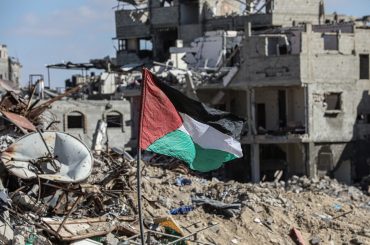
But there is a deeper indictment, one that cannot be obscured. At a moment when Gaza has been reduced to rubble, when civilian suffering has been broadcast in relentless detail, these same regimes have demonstrated moral vacancy. Their alignment has not been tempered by principle. It has been accompanied by silence and, at times, complicity. They have neither marshaled meaningful diplomatic resistance nor leveraged their considerable economic power to impose costs for the genocide in the Strip. They have, instead, normalized relations and stabilized the same status quo that many across the world regard as intolerable.
Here, the prescient clarity of former U.S. Secretary of State and National Security Advisor Henry Kissinger intrudes with unsettling precision. It may be dangerous to be America’s enemy, he observed, but to be America’s friend is fatal. The Gulf rulers are now confronting the second half of that aphorism, not as theory, but as lived reality.
For decades, they mistook access to America for influence, proximity for protection and alignment for autonomy. Yet, in moments of crisis, the asymmetry becomes unmistakable. Decisions and priorities are defined elsewhere, with risks borne locally. The imperial center acts; the periphery absorbs.
The absence of respect renders this arrangement even more corrosive. The Gulf was placed on the front line of American strategy and treated as disposable. When U.S. officials implied that the costs of conflict would fall upon these states, the message was unmistakable: This is not a partnership of equals but a hierarchy of convenience. In this formulation, the Gulf is not rendered as a sovereign actor with agency, but as a reservoir of capital, perceived less as a partner than a bag of money to be drawn upon with ease.
The Gulf rulers now stand at an inflection point. They can persist in the fiction that proximity to American power guarantees security or confront the harder truth that sovereignty cannot be leased, nor legitimacy sustained, without principle. The former path offers temporary reassurance and permanent vulnerability. The latter demands recalibration, independence and, above all, a willingness to align policy with values and human decency. In both instances, the Gulf monarchies have repeatedly proven to be extensions of old colonial projects that keep their people down. The Iran war is a clear message to the Arab despots. It is time for them to decolonize. Little suggests that this will change.
Empires, by their nature, do not prioritize the dignity of those who orbit them. They prioritize their own endurance. The lesson, written plainly across history and now reiterated in the present, is that reliance on imperial power is not a shield. It is a condition.
Conditions, unlike illusions, eventually come due.

Kissinger’s observation about friendship with the USA must be qualified. Israel is not a friend to the USA. Thanks to the US political campaign system, the USA has been rendered a dependent intimidated client state of hyperwealthy Zionist plutocrats and carries out the will of these Zionist plutocrats with respect to Israel and to the Middle East.
The US empire rules since WW2 and especially since 1990. Normally its rule is quite benign, because that benignness neutralises resistance against the empire. Trump does not understand this. He only understands ‘hard power’. He is slowly destroying the basis of American power.
…
The dark side of American empire is that it lets capital rule. This also means that poor countries and people are kept poor and exploitable. Even without Trump it was bad for the weak and poor. But Trump also takes on the rich…
It all started with Camp David and been downhill for Arab populations since. It is for them to rise from their sleep and make a change.