In an effort to apologize for last year’s notorious election-day comment when he warned that “the Arabs are coming out to vote in droves,” Israeli prime minister Benjamin Netanyahu took to social media to last week to urge Palestinian citizens to become more active in public life. They needed to “work in droves, study in droves, thrive in droves,” he said. “I am proud of the role Arabs play in Israel’s success”. Swiftly and predictably, the reality of life for Israel’s 1.7 million Palestinians upstaged Netanyahu’s fine words. In a radio interview, Moti Dotan, the head of the Lower Galilee regional council, sent a message to his Palestinian neighbors: “I don’t want them at my [swimming] pools.” Sounding like a mayor in the southern United States during the Jim Crow-era, he added: “Their culture of cleanliness isn’t the same as ours. Why is that racist?”
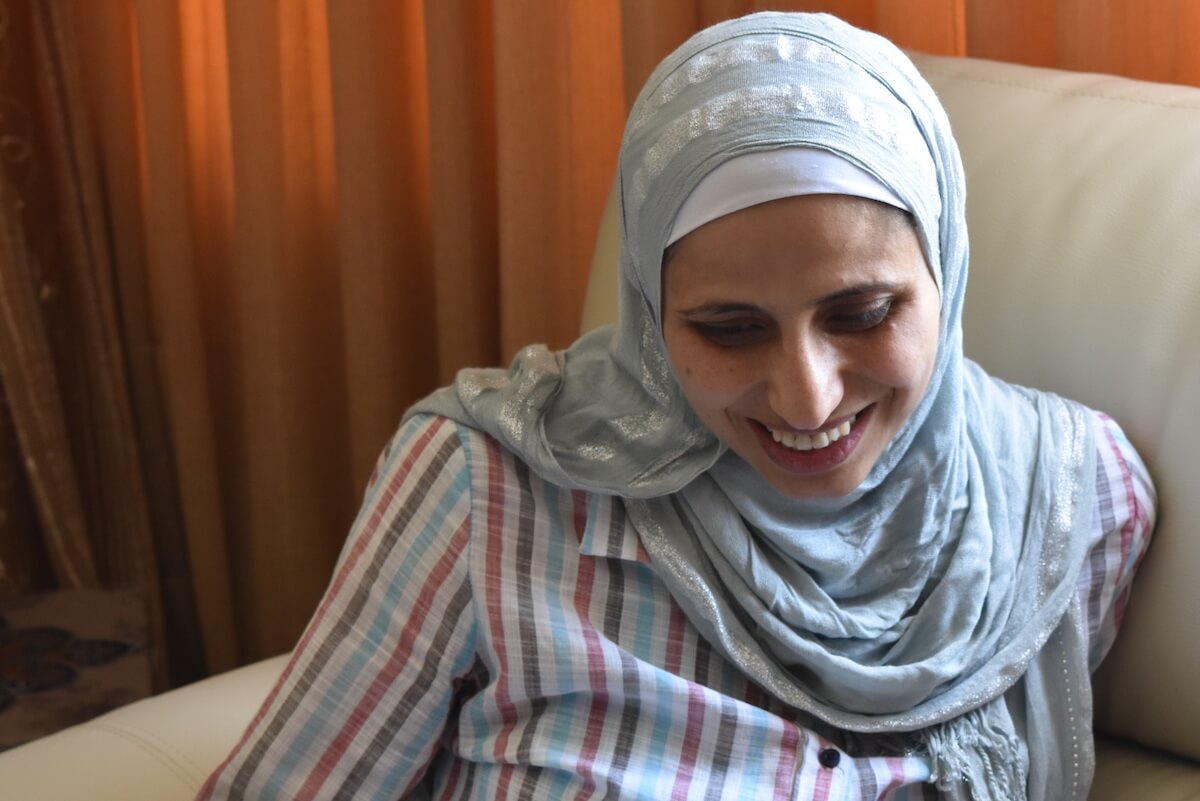
In the late afternoon of July 26, 2016, Dareen Tatour briefly found herself a free woman. For a fleeting, puzzling hour and a half, the young Palestinian poet who is being aggressively prosecuted by the State of Israel for “incitement to violence” found herself standing alone by the side of the road outside Damon prison when she should have been getting transported home to continue her court mandated house arrest. The state’s apparent lack of concern about Tatour’s actual whereabouts demonstrates one of two things: either the Israeli security services are inept, or they have already caught a whiff of the obvious—that the mild-mannered poet poses no security threat whatsoever—and that this trial is entirely a political stunt.
Hatim Kanaaneh writes about Brig. Gen. Ofek Buchris, an Israeli general recently indicted for “rape and indecent acts,” who lives one town over from him: “Part of my anguish about the report is the geographic location of the accused general’s residence; Mitzpe Netoufa is practically in my backyard. The basic concept of a Mitzpe—Hebrew for ‘lookout’—the hilltop-positioned barbed-wire-encircled Jewish-only settlement dreamt up by Ariel Sharon in the 1970s to protect the promised land of the Jews from potential ‘goy’ usurpers. Those ‘goys’ turn out actually to be us, the Palestinians who have been ‘squatting’ on the land since the Romans destroyed their second temple! Be that as it may, the good general’s purpose in life and that of his fellow Mitzpe Netoufa religious Jewish residents, is to watch over me so I won’t steal my own Netoufa (Battouf) Valley Land.”
In what was intended as a message to Palestinian citizens of Israel on “equality and dignity for all,” Prime Minister Benjamin Netanyahu’s accidentally called Arabs “goats,” and received backlash from Palestinian political parties for staging a “hypocritical charade.”
Growing up in the US, the Israeli national anthem held special meaning for Steven Davidson. But after living with a Palestinian family in Hebron, the song gained a different meaning: “Hatikvah didn’t feel so close to my heart any more. Its solemn melody still aroused that sense of belonging through wandering, only now, this sense felt betrayed by the song’s words. Everyone singing Hatikvah in this room felt like they belonged in a state they barely knew of— to the exclusion of so many whose home this had once been.”
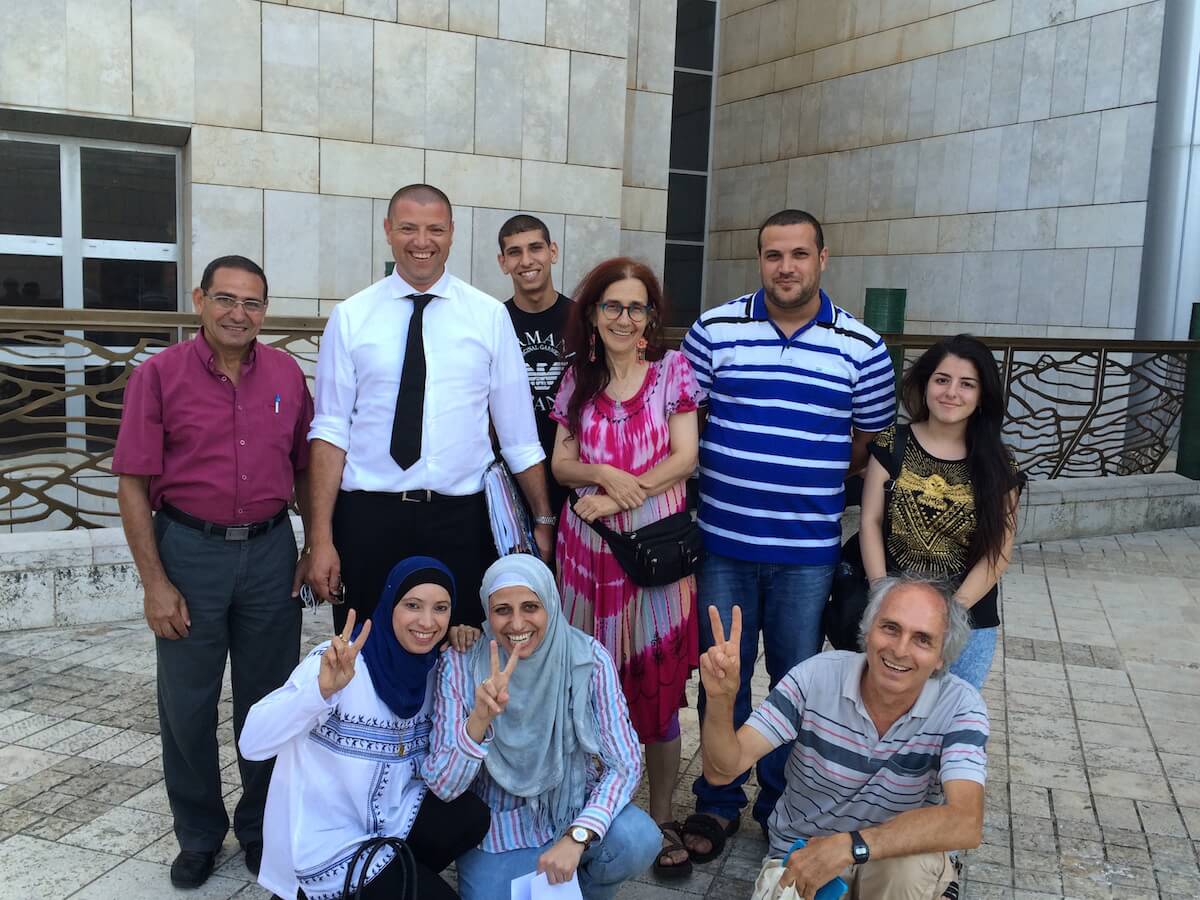
Kim Jensen reports from Nazareth at the third hearing in the Israeli government’s case against Dareen Tatour, the 33-year old Palestinian poet who is being prosecuted for “incitement to violence” on the basis of a YouTube clip and two alleged Facebook status updates. Jensen writes, “The wheels of justice grind slowly in the State of Israel, at least for Palestinian activists who endure de facto and de jure inequality under the law.”
Members of Israel’s opposition coalition will filibuster overnight to stall a vote on a controversial bill to expand the Knesset’s power to oust one of their own. The expulsion bill, formerly called the suspension bill, grants parliamentarians the authority to permanently kick their peers out of office, without loose criteria for disqualification. It is aimed at one member: Hanin Zoabi of the Joint List.
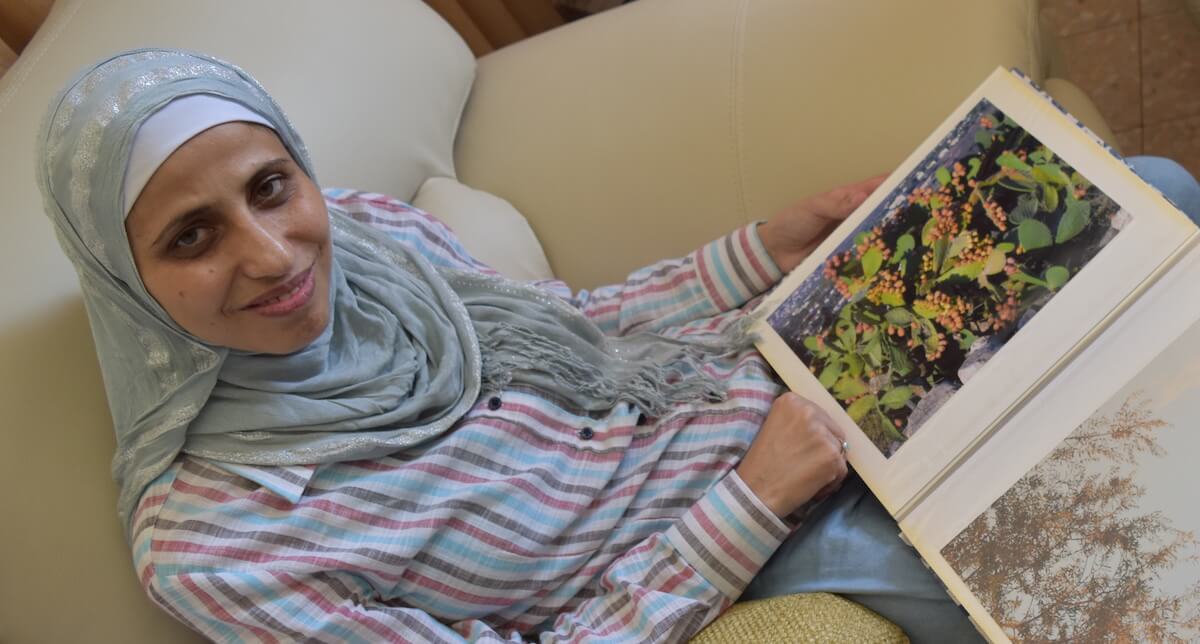
At about 3:00 am on October 11, 2015, Israeli police and border guards kicked open the door of the Tatour family home and hauled Dareen Tatour off in her pajamas. The police had no warrant and offered no explanation for the shocking pre-dawn raid. It was only after twenty days of imprisonment and four interrogations that Tatour and her family finally learned the exact nature of the charges. She was being held for “incitement” because of two Facebook posts and a poetry video clip that she posted on YouTube. Nine months later, an Israeli court issued Tatour a 48-hour pass to visit her family in Reineh, a small Palestinian town outside of Nazareth, where Kim Jensen talked to Tatour about her case, her work, and her aspirations as an artist.
The UN removed portions of an Israeli exhibition at the international body’s headquarters in New York this week that alleged Israel’s equal treatment of Palestinian citizens and touted Jerusalem as Israel’s capital, claims deemed by the UN as falling out of line with international law. Two panels out of 13 in the display were barred in order that it “conform with the purposes and principles” of the UN, Farhan Haq, spokesman for the UN Secretary-General, told Mondoweiss.
Palestinian citizens of Israel today marked “Land Day,” an annual commemoration of protests that began 40 years ago on March 30, 1976 when Israeli police killed six during a demonstration over land confiscations. As in years past, a general strike was announced for one day, and thousands protested in the north and the south of the country in opposition to a similar looming round of land expropriations.