Hundreds of Palestinians are arrested, interrogated, and sentenced to Israeli prisons for their pronouncements made on Facebook each year. But the most absurd case of them is that of poet Dareen Tatour. Yoav Haifawi reports from an solidarity event with Tatour in Jaffa: “the wall of silence and denial on the part of the Israeli government fell altogether when supporters of Dareen Tatour called for an artistic solidarity event in the Jaffa (Yaffa) Theatre on August 30, 2017. And when the walls fell, we faced a wave of threats and inciting language from top Israeli politicians printed in Israeli mainstream media.”
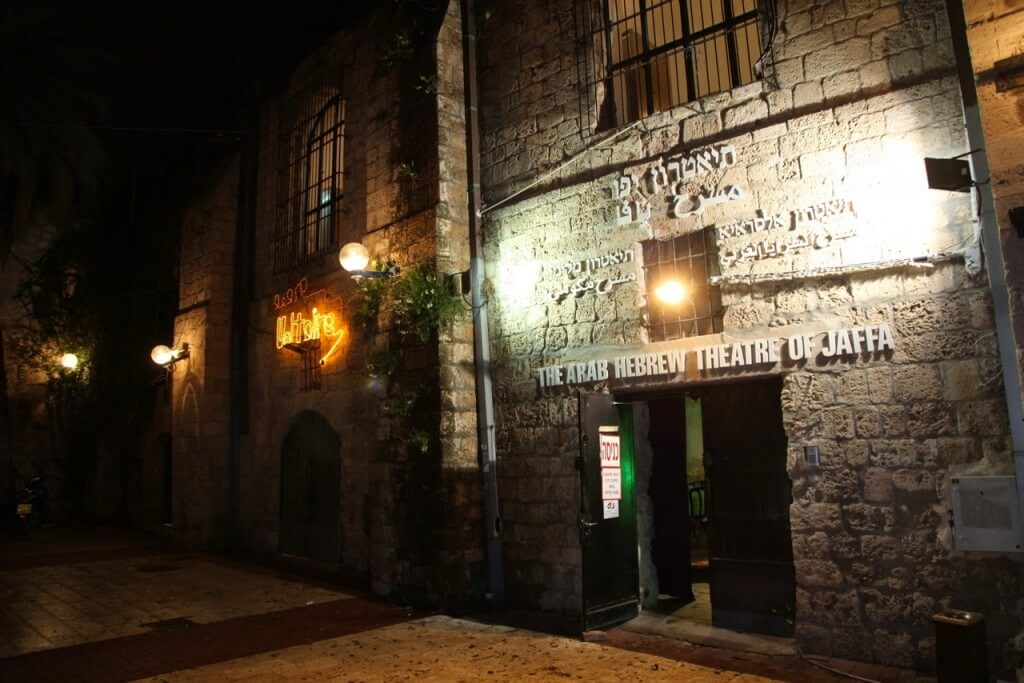
In retaliation for an upcoming event planned in solidarity with Palestinian poet Dareen Tabour, the Israeli Ministry of Culture has requested the Treasury to examine whether Yaffa’s (Jaffa) “Arab-Hebrew Theater” has violated the Nakba Law. Yoav Haifawi writes, “The common knowledge in Israel is that even as Palestinians are persecuted for anything or nothing, the freedom of expression for the Jewish population was more or less secure. Now the event in Yaffa may become a test case of the new laws and the old assumptions.”
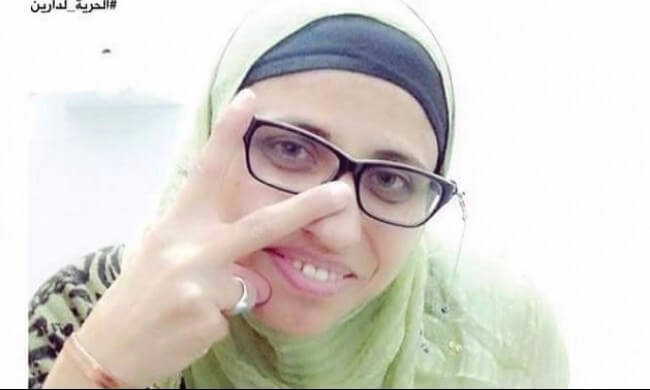
Dareen Tatour, a Palestinian poet and citizen of Israel, was arrested in 2015 for posting a poem on Facebook. Tatour was charged with “incitement”, imprisoned for months and then kept under house arrest while awaiting trial. Transcripts from her trial were recently published and reveal the Israeli state’s inquiry into the nature of poetry: What is a poem? And what makes one a poet? Those were some of the questions raised by the state prosecutor in a tribunal that seems somewhere between an academic conference and a Stalinist show trial.
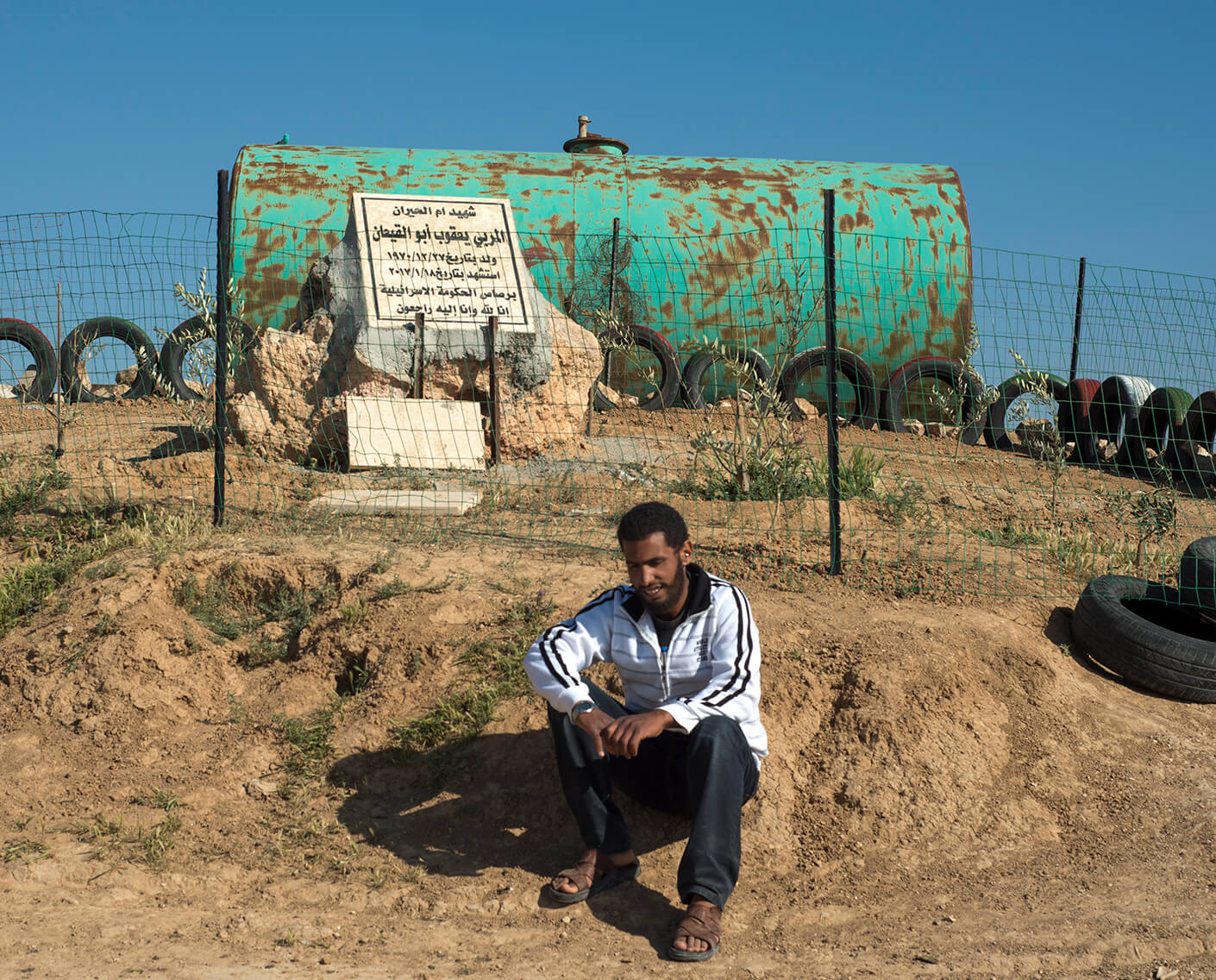
Howard Cohen returns to the unrecognized Bedouin village of Umm al-Hiran where he meets more members of his student’s, Noor Abu al-Qia’an, family, and finds a cousin who was nearly lynched by a mob of Israelis, “Noor’s expression grew animated with tension and excitement as he related the story, as if he himself was reliving it. His cousin was working in a supermarket in Tel Aviv and had stepped outside into the street to smoke a cigarette. A young man came up to him and demanded aggressively that he show his ID. The Bedouin youth was indignant at this unwarranted intrusion into his life and replied that he was not a police officer and had no right to demand from him anything. ‘Show me proof that you are a police officer otherwise just leave me alone,’ said the youth proudly. The man refused to show any ID and also refused to accept that the Bedouin Arab could defend his rights according to the law like any other citizen and set upon him brutally. His friends who were nearby came to the scene and joined in the lynching. Noor’s cousin was beaten to a pulp and hospitalized as result. ‘I think I remember hearing about this on the news at the time,’ I said. Noor nodded, confirming that the event indeed reached the mainstream news outlets. ‘A campaign was set up for him and he received 80,000 shekels which was paid into his account.'”

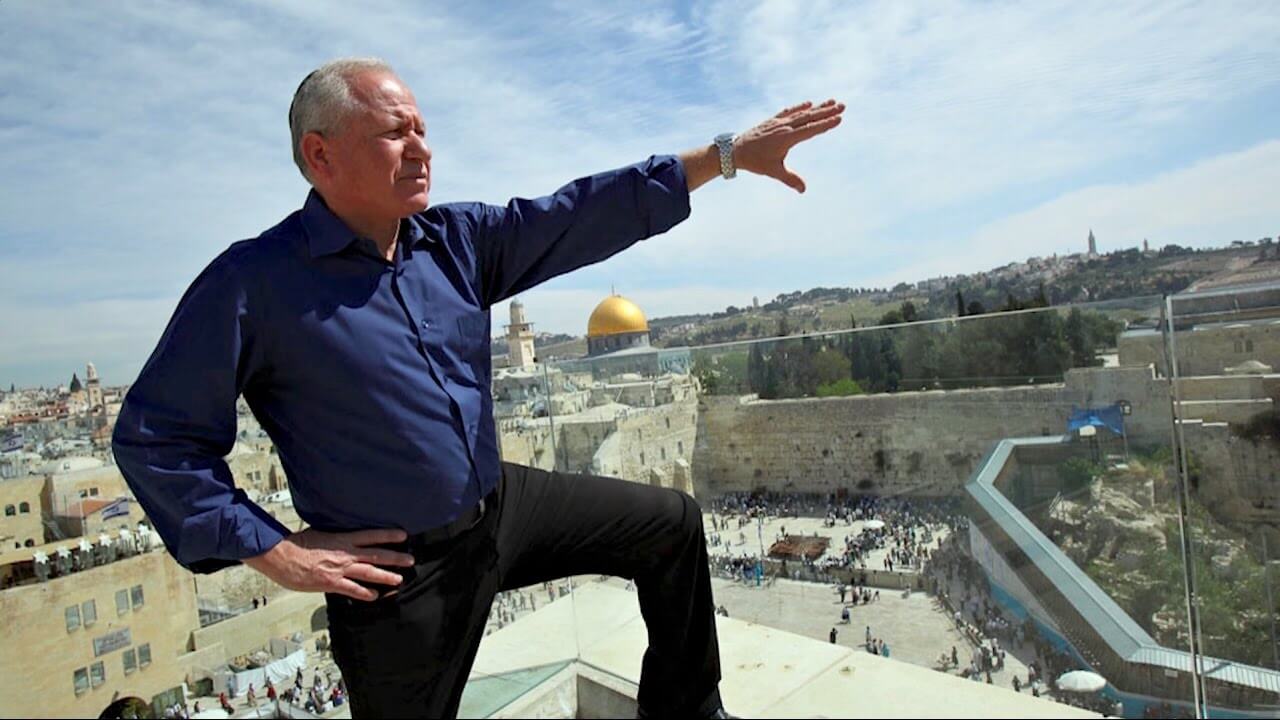
Yesterday, the Israeli Knesset passed a bill titled “Nation State of the Jewish People” in a preliminary vote. In explaining the need for the bill MK Avi Dichter said: “Israel is the state of all its individual citizens. It isn’t and won’t be the nation-state of any minority living in it…That is a right this bill gives to the Jewish People alone.” Jonathan Ofir says a close examination of this one statement, reveals a wealth of Zionist lies, contradictions, obfuscations, and sheer chutzpah.
The trial of Palestinian poet Dareen Tatour who faces up to eight years in prison for a poem she wrote continues with expert witnesses testifying about the meanings of her words in translation. Kim Jensen and Yoav Haifawi write “the defense’s overarching objectives were to establish Tatour’s inalienable right to freedom of expression, to point out the distorted police translation of Tatour’s poem, and to demonstrate anti-Arab bias in the judicial system. The contentious hearings started late and dragged into the evening as the prosecutor Alina Hardak spared no attempt to undermine the credibility of the witnesses.”
Howard Cohen relates the story of one of his students at an engineering college in the Negev struggling to keep up with his studies after Israeli police killed his father, demolished his home: “He had used the word killed, it was me who had used the word murder, but the words were irrelevant at this moment. He wasn’t interested in making a political statement to me, he was making an existential one. That was clear enough. ‘You see it’s so difficult for me,’ he went on, wiping away the tears that had welled up at the corner of his eyes and which threatened to stream down his face. ‘Everything was under the rubble. I even had a workbook for the class but that too was under the rubble together with my ID card and all our other belongings. They didn’t give us any time to leave. They bulldozed the house with all of our possessions in it. I’m trying to return to my studies. It’s important for me to continue, in spite of everything. But it’s so difficult for me. My head just isn’t there. And it’s going to be difficult for me to attend all the classes and prepare for the presentation.'”
A Palestinian state is anathema to Zionism – and must therefore be kept in the realms of fiction. The Palestinian state does not arrive, because Israel doesn’t intend, and never has intended, for the Palestinian dream to come true. After Palestinians accepted a partition of the land and initiated the peace process, Israel came up with a charade to convince the world it meant business– what Yitzhak Shamir called the “teaspoon” process.
Dareen Tatour, a Palestinian citizen of Israel, faces the possibility of eight years in prison for “incitement” and support to a terror organization – for a Youtube poetry video and two Facebook posts.
Israeli police and authorities have rushed to produce a ‘terrorist’ narrative of an official killing; but autopsy indicates the Israeli teacher Yacoub Abu Al-Qia’an was executed at Umm al-Hiran village last week and left bleeding for twenty minutes when there were medical vehicles at hand. “They murdered him not once, but several times,” his brother Ahmed says.