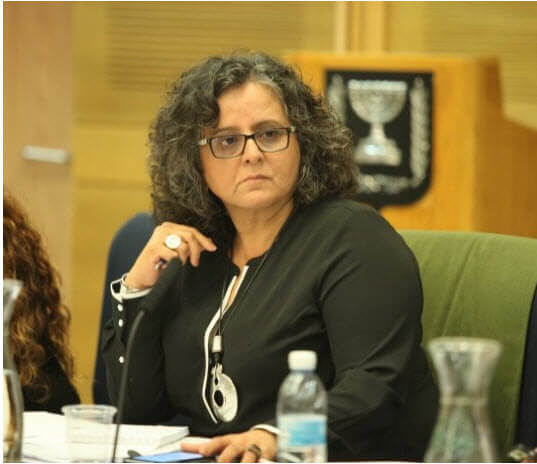
An Israeli district court sentenced Palestinian poet Dareen Tatour, 36, to five months in prison and a six-month suspended sentence on Tuesday for posting a poem she wrote to social media in 2015.
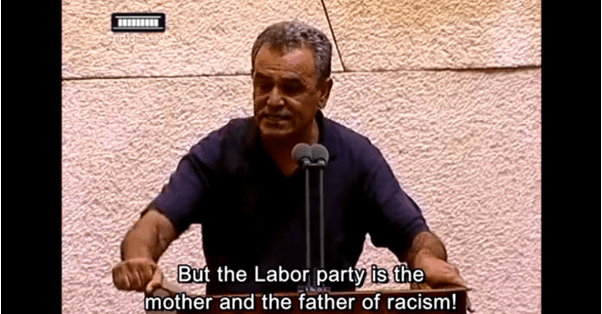
Last month, the Israeli Knesset voted to disqualify a bill proposed by the Balad party that called for Israel “to be defined as a state of all its citizens” before it even reached the Knesset floor for deliberation. Yumna Patel interviews Balad MK Jamal Zahalka about the party’s motivation behind proposing the bill, its significance in the current Israeli political climate, and the consequences of the outright rejection of the bill and what it represents: “Israel has to decide, if they want a Jewish or a democratic state. They cannot have both.”
Israel is an apartheid state, but you don’t have to take our word for it. All you have to do is take a look at the actions of the lawmakers in the Israeli Knesset, the national legislature of Israel.
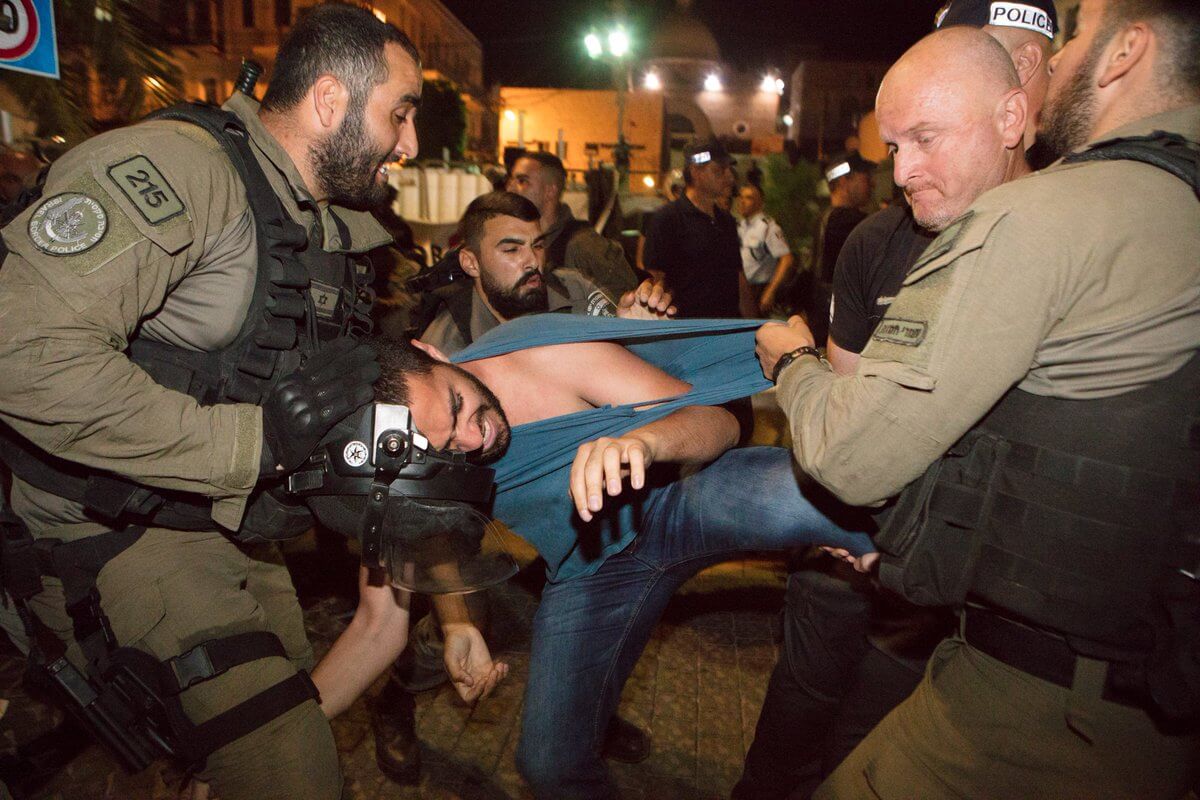
Protests have taken ahold of Haifa over the last few days as Palestinian citizens of Israel demonstrate against the actions of the Israeli military in Gaza. They were met by police who rights groups say used excessive force, including breaking the knee of one protester. “The first reaction of the police to stop the demonstration was to use violence,” Bashar Ali, 22, told Mondoweiss. “We can’t be surprised by this when at the same time Israeli soldiers are using deadly weapons on nonviolent demonstrations near Israel’s separation fence in Gaza.”
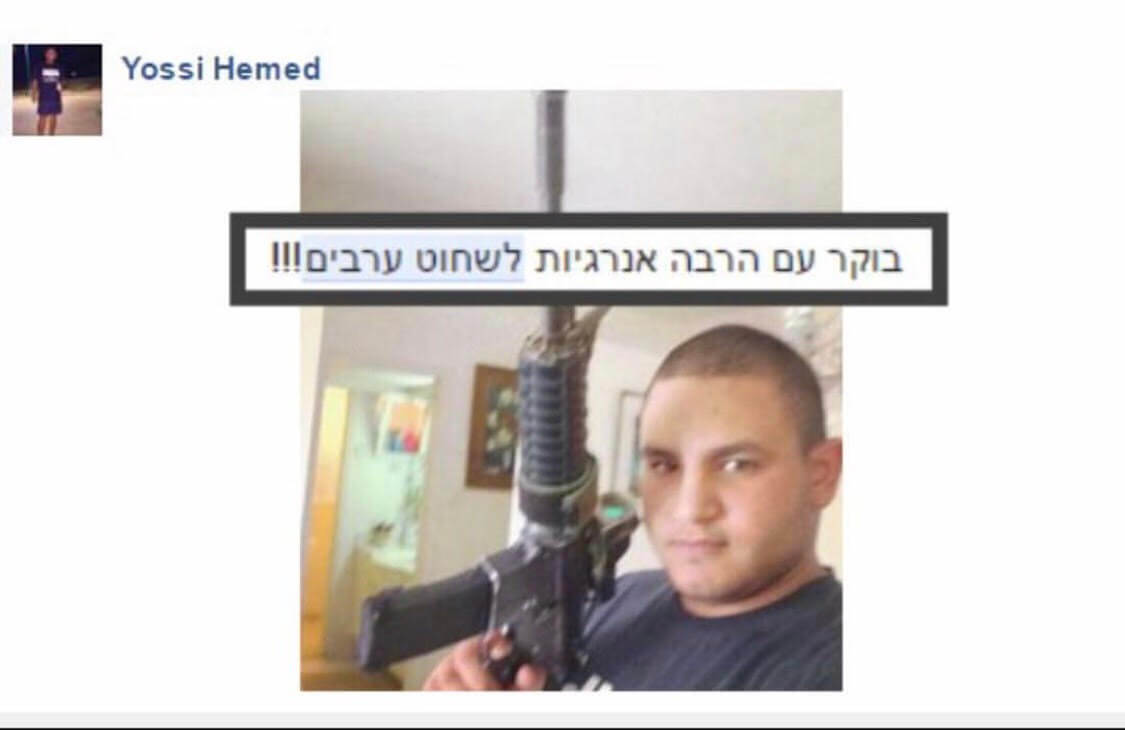
After Palestinian poet Dareen Tatour was imprisoned for a Facebook post that was described as incitement, Danielle Alma Ravitzki compiled social media posts by Israelis about committing acts of violence on Palestinians. None of these writers was ever tried or convicted.
Statement by civil society organizations in Israel: “In light of recent barbaric and inhumane military actions carried out against unarmed protesting Palestinian civilians in Gaza by Israeli forces protests have erupted all over the world and in Israel in solidarity with Gaza and its victims. Amongst the many hotspots, Haifa experienced the highest number of Police brutality cases and arrests of activists and high school students. Demonstrators have been gathering daily to peacefully express their right to protest and stand by the “March of Return” victims. Police have escalated their intervention and use of violence against protesters each day culminating in the mass arrests and brutality witnessed on Friday night.”
The residents of the Bedouin town Umm Al-Hiran have signed an agreement with the Israeli government to be relocated under threat of demolition and more violence to make way for the Jewish town of “Hiran”. This “voluntary” response to the government’s “generous offer” tells us a lot about Zionism, and how Israel understands its own history.
Michael Oren has made himself a laughingstock by starting an investigation into whether the Tamimi family of Nabi Saleh is “a real family”, because they wear baseball caps backward. The more important question is whether Israel is a real country; and it gets harder and harder to believe that it is.
Sheikh Saih Abu Madiam, 68, has been sentenced by an Israeli court to 10 months in prison and fined over $10,000. The crime? Trespassing state land — which he in fact owns in Al Araqib, one of the nearly 40 “unrecognized” Bedouin villages in the Negev.
Al-Shabaka’s Inès Abdel Razek has been asked the same questions about her homeland so many times that she decided to write a simple document to answer them. She writes, “During these conversations, I wish I had a simple leaflet I could hand to my interlocutors that would lay out the answers I end up diligently repeating. This is where the idea of this FAQ emerged.”