These are signs of the growing impatience of Iran’s Arab neighbors with Iran’s tactic of striking at them in response to Israeli or American attacks. But the anger of the Gulf states isn’t only reserved for Iran.


These are signs of the growing impatience of Iran’s Arab neighbors with Iran’s tactic of striking at them in response to Israeli or American attacks. But the anger of the Gulf states isn’t only reserved for Iran.
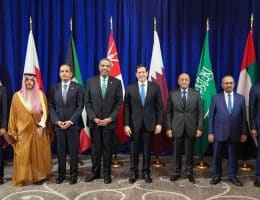
Iran’s retaliatory attacks on its neighbors, and the U.S. failure to plan for them, are forcing the Gulf Cooperation Council states to reconsider their regional strategies and their relationship with Washington.

Saudi Arabia is shifting toward a major realignment of its foreign policy and global role. This goes far beyond its rivalry with the United Arab Emirates — it includes a complete rethinking of its relationship with the U.S. and Israel.

Israel has entered a new phase of expansion and military aggression beyond historic Palestine. This is not due to a strategic shift, but rather because the constraints that kept it confined before October 2023 are now too weak to hold it back.

Donald Trump aims to push Israel-Saudi normalization next week during his meeting with Mohammed bin Salman. MBS favors a weapons deal and a defense pact, while Israel will be in the background, working to ensure its regional dominance remains intact.

The tools of boycott and public protest are inherited from the colonial period. We need to adapt these methods to focus on where power is concentrated today in our region: Arab capital.
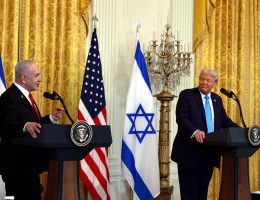
On Monday, Donald Trump and Benjamin Netanyahu will meet to discuss the next steps in their plan to reshape the Middle East. Their vision includes expanding normalization, disarming adversaries, and ending any Palestinian aspirations for freedom.

Today, most Muslims would be surprised to learn that Palestine was once a central part of the Hajj journey for Muslims around the Middle East and Asia. After the Nakba and Israel’s occupation of Palestine, the Hajj pilgrimage was changed forever.

On the heels of Trump’s Gulf tour where he secured trillion dollar deals with Arab states, Israeli tech leaders are now trying to get in on the action.

Donald Trump’s tour of the Gulf hinted at possible changes in U.S. foreign policy, but Israel’s escalation of the genocide in Gaza makes clear its destructive fundamentals are essentially intact.