Congressmen Brian Baird and Keith Ellison have published a beautiful piece on American policy in Israel/Palestine in the Seattle Times. Excerpts below. A few comments first.
–It is significant to me that Baird and Ellison are non-Jews, writing in a west coast publication. The most forceful statement about Israel/Palestine at the Nation's Obama event last week also came from a non-Jewish congressperson, Donna Edwards of Maryland (as Scott McConnell reported here). These are signs of the change I have been pushing for: non-Jewish Americans must become engaged on the issue. All three of these brave people are forward-looking progressives.
–It is interesting to compare Baird/Ellison with Michael Walzer/Avishai Margalit in the New York Review of Books. They also penned an anti-Gaza piece. But it is virtually impossible to read as such. Read it for yourself, I find it impenetrable: legalistic and detached from the incredible suffering. While Baird and Ellison write simply and straightforwardly, and without my emotion (no "slaughter" here) about a tragedy. I cannot emphasize enough the importance of Walzer/Margalit's crowning principle in that piece–treat others' civilians as you treat your own–but I would emphasize that that a west coast newspaper with non-Jewish voices is offering better guidance on this moral horror than a leading intellectual publication in New York with Jewish voices. And why do I inject the religious note? Because I would insist that New York publications are generally leery of lesson 1 above. They do not want to include non-Jewish voices, they are hesitant to have non-Jews comment on this stuff. The pattern is overwhelming, in the Times, the New Yorker, the New Republic, the New York Review of Books: Jewish guides are sought. Though yes, now and then an Arab or Palestinian is allowed to write. The great division that is occurring now is between Jews, Roger Cohen vs. Jeffrey Goldberg. I want more voices.
From Baird/Ellison:
We are convinced that the strategy in Gaza and ongoing policies in
the West Bank are counterproductive to the cause of justice and lasting
peace for all concerned.
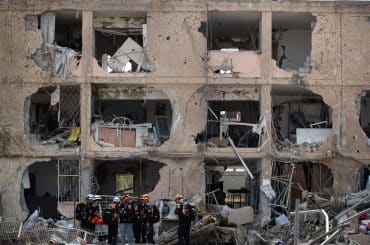
In our judgment, pursuing extremists with overwhelming air power in
one of the most densely populated areas in the world — with no means
for civilians to escape — ensures the devastation that has occurred in
Gaza. The extremist targets may have been hit, but so too were
essential civilian services and any means of economic self-sufficiency.
Palestinian families and businesses now lack the resources to rebuild
their homes and businesses because they cannot get essential building
materials such as glass or concrete. The consequence is that Hamas has
not been visibly or demonstrably weakened but, ironically, moderate
voices in the region have.
Beyond Gaza, a less dramatic but counterproductive strategy is
taking place in the West Bank. The Palestinian Authority leaders have
recognized the right of Israel to exist, have been fighting the
corruption of prior regimes, and have maintained law and order
throughout the recent Gaza assaults.
Despite these efforts, the economy of the West Bank is crippled by
more than 600 imposed checkpoints. Palestinians must endure long and
humiliating searches on a daily basis. even essential medical
professionals and critically ill patients are forced to take circuitous
and costly detours.
Meanwhile, despite commitments to the contrary, Israeli settlements continue to expand throughout the West Bank.
Repeatedly we were asked by moderate Palestinians and others in the Islamic world: What is the reward for moderation and peace?