Diane Shammas is a recently-minted doctorate from USC who was on the Code Pink delegation to Gaza earlier this month. She sent this report from her trip:
Two nights before my departure from Gaza, early in the morning around 2 AM I was awake at my home-stay in Gaza City when all the lights shut off in the neighborhood. In the yard of the next building over, the rooster “deek” (in Arabic) was going nuts and crowing in a more frantic manner than usual—animals always sense an abrupt change in their immediate environment before humans do.
I turned to Abir, one of the sisters in the household with whom I shared a room, and asked "what is going on" in Arabic. Abir called her brother into our room, and both said, "do not worry it is the Israelis," they do this at least once a week—like business as usual. I tried not to act frightened as this is not your occasional brownout in California, but a frequent occurrence in Gaza. Fortunately, the electricity shutoff occurred during the sleeping hours so as not to disturb the ebb and flow of one's day work.
As I expressed to our delegation at one of Code Pink’s round up meetings, None of us from the States, Canada, or Australia can even fathom an existence without the basic necessities of life: food, electricity, security, etc.
Oh, beaches and sunset… On the second day of my visit in Gaza, Mohammed, my host's son, and the shebab took me to the beach, a couple blocks down from the Commodore Hotel. We spent five hours there meeting up with a delegation from the American University of Cairo. Mohammed's friend, Mahmoud, commented, This is what keeps us going, we love to sit near the beach, smoke the hubble bubble (nargileh) and we forget what is happening.
The fishing boats were all positioned in line for their catch of the night within Israel’s enforced 3- mile limit. To the right side of the horizon, the Israeli navy boat was present, distinguished by its flashing yellow light "dow" (in Arabic). The shebab (the young) always seemed the happiest at the beach so on two occasions after I finished our day program I suggested that we go there.
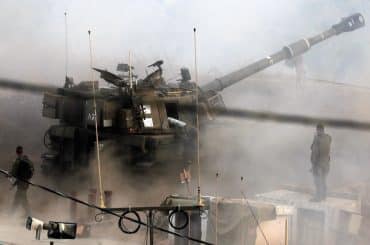
One night, everything was fine and dandy, we were sipping on mango drinks and watching the horses lope along the beach, till we saw an Israeli F16 soaring in the air. This should not be considered a normal occurrence; yet for Gazans this is what they endure in their day to day existence.
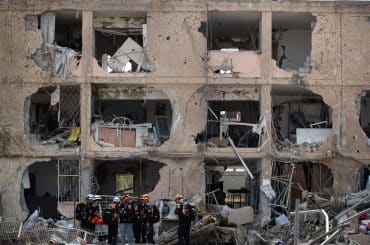
With respect to the Gazans' narratives of Israel’s massacre, I will relate the following. During dinner, Mohammed's other sister, Nareene, pointed at the black smudgy line and a deep crack in the wall, caused by the force of the bombings. She recounted that "Lianne”, the three-year old child, known by the affectionate diminutive "Lulu" (here is a picture of me and Lulu)  , was so frightened from the bombs that she hid for hours under the nearest table in the den. Yet, within the course of the five nights that I spent with this family, surprisingly I did not observe any symptoms of post traumatic stress. If there was crying in the house it was usually associated with sibling rivalry, as in Lulu grabbing the spoon away from her year and a half old brother, Osama “Susu”. These are the kind of childhood experiences that most of us would consider "normal,” not the kind of "oppressive normalcy " that Israel imposes upon Gazans.
The Gazans are proud of their material culture. The shebab took me into the old city. We went to the Pasha Museum that houses on the first floor Hamas martyr paraphernalia from the recent War on Gaza as well as, on the second floor, Canaanite relics and remnants from the Ottoman period. The docent, Abir, commenting on the few cases of antiquities donated to the Museum: " They [referring to Israel] think we have no high culture." The museum had recently opened and I suggested they secure the display cases in the event of another bombing or natural accident.
Abir neither supported Hamas nor Fatah, she was clearly disenchanted with Gaza and politics. She desperately wanted to leave Gaza in order to enter a graduate program in Spain. She explained that as a woman (and presumably without a visa), she could not exit Gaza, and she was clearly in despair and sought anyone who could relieve her from this cesspool of an existence. She yearned for the secularism of Arafat. Throughout our tour, her eyes were welling up, it was a very distressing experience for me, as I felt absolutely powerless in transforming such a wretched existence. We then continued to the open market where there was a variety of vegetables, fruits, and nuts which indeed are able to grow plentifully in the "mazaras" (farms) if not destroyed by Israel’s bombing!
My shebab group loved classical Arabic music, Oum Khalsoulm, Wadia Safi, Fairooz, etc. Mahmoud and the other young men, all graduates in engineering, started a company that taught computer skills, "Access to your Aims". They were very interested in my opinion of their company’s logo and asked me numerous financial questions on how they should proceed further with this fledgling business of two months. They employed one woman, Ominiyya, an ambitious and serious female student enrolled in the Commerce (business) school at the Islamic University.
As others have indicated of their interactions with Gazans, I found that Yaasir and his wife harbored hatred towards Israelis. Yet, Abir, Mohammed's sister, bought an Israeli brand of shampoo. I asked why. She said in Arabic, it was much nicer “kwayis” quality than the Egyptian one.
The head of Mohammed's household, Yaasir, posed a poignant question to me: "Why do Israelis do this to us?"
The explanation that I furnished him is perhaps simplistic based on that the family spoke no English and my limited vocabulary in Arabic. I relied upon Mohammed for occasional translation. His familiarity with English has been acquired mainly through reading his engineering textbooks, one of the many consequences of being brutally-severed from contact with Anglophones—the English speaking world. Drawing upon the social-psychological theories, concerning learned aggression (e.g. Alfred Bandura), I explained first on a micro level: aggression is learned within families. If someone is subjected to violence within their family of origin, such aggressive patterns often are emulated and directed towards this person's spouse and children. I was careful to point out that this aggression is not always transmitted to later generations; I gave them an example of my own father, a U.S.-born son of Lebanese immigrants whose father abandoned them, lived in boarding houses until my grandmother remarried a physically-abusive, Lebanese physician from Buffalo. But my father never laid a hand on me, my sister, or my mother.
I then moved on to the macro level, regarding Israelis aggression towards Palestinians, a topic that Norman Finkelstein could address better than I. That Jews and Israelis alike live with the constant reminder of the Holocaust, which has been used to invalidate any sharp criticism of Israel’s policies–this in turn has rendered some completely impervious to the pain, suffering, and homelessness of the Palestinians. For in this way of thinking, the Israeli government's treatment of Palestinians (and even Lebanese I might add) is rationalized by the propagandized notion of defending the security of the state of Israel.
The last but not least of the points I'd make is Gazan university students' access to
American and European research journals. I spent an entire day at the Islamic University and Al Azhar University visiting their libraries and various departments, including engineering, medicine, commerce, and social sciences. Specifically, with two professors in social sciences, psychology and educational psychology, I discussed their university's access to first tier, peer-reviewed journals, which among the best are publications from the U.S.
Due to the lack of funds, the universities in Gaza cannot provide their students or faculty with free access to e-libraries. The dearth of educational resources has prompted the Free Gaza group to head up a "Right to read campaign" in which they are soliciting donors for textbooks and educational supplies to Gaza universities. According to an email correspondence with Huwaida Arraf, access to e-libraries is among one of the main requests by the universities. Dr. Haidar Eid from Al Aqsa has emailed me to check into any reciprocal arrangements with U.S. universities that would extend to Gaza students and faculty articles and books online. I am starting from the bottom in asking our research librarian at USC if she might be able to put me into contact with the university purchasers of such databases. If anyone, who regularly reads this blog, is knowledgeable in this area, your expertise is welcomed.