


Now that a ceasefire has been agreed to in Gaza, the bombs will stop falling, and the world will breathe a sigh of relief. There will be celebrations of peace, even if temporary, nations will pat themselves on the back, and the media will move on to the next trending crisis. Yet, for those of us who survived, the war hasn’t ended—it has merely transformed.
For us, the war began long before October 7, 2023, and continues in the ashes of what was once our home. The world’s ceasefire is a fabricated pause in our endless torment. The world seeks its own resolution, a quick fix to soothe the conscience, but for us, the ceasefire is just another fleeting moment in a long history of erasure.
Before the war, Sheikh Ijleen wasn’t just my neighborhood—it was a universe unto itself.
It was the place where my family planted grapevines and fig trees for centuries. It was where I learned to walk among the grapevines, where I came of age. My grandfather’s grave was there, and so were the faces of neighbors whose kindness I remember. These were not just landmarks; they were the thread that wove my sense of self. Today, Sheikh Ijleen exists only in my memory. What was once my home is now nothing but ruins.

The bombs didn’t just explode the buildings there; they also erased the essence of who we were. The IOF didn’t only destroy our homes—they declared our memories illegal. They took my street, my family’s lands, and even the cemetery where my ancestors rest, and they turned it all into a “military zone.”
Now, the very place that held my history and my identity is lost, buried beneath layers of rubble and cold, indifferent military control. The trees that once shielded us from the summer sun are now crushed and their roots are severed. My room, where the setting sun used to paint the walls with golden hues, no longer exists. It is not just the destruction of a place; it is the destruction of memory, of home, of family, and of history.

This erasure is not a mere side effect of war; it is a calculated effort to sever the bonds between people and their land, to strip us of our identity so that we become faceless, nameless victims in the global narrative. The world has never asked for our story before, and now it wants to remember us only as casualties and numbers.
Gaza’s true story is lost in the rubble, overshadowed by the broader political calculations that govern its existence.
Our suffering is made digestible for the international audience, while the deeper, more profound losses are hidden beneath the surface. Sheikh Ijleen is gone, but it lives in my memory, and it is a memory I refuse to let die.
The false resolution of the ceasefire
As the world celebrates the ceasefire, we are left to question its meaning. What does it truly signify for us in Gaza?
It is not an end to the war; it is simply a temporary lull in the violence.
It does not undo the devastation, nor does it heal the wounds inflicted on us.
A ceasefire is nothing more than a global performance, a signal that the world has done enough to appease its own conscience.
But for us, it is nothing more than an intermission in an endless tragedy.
When the bombs stop, the trauma does not fade.
The streets still lie in ruins. The poisoned water still courses through our bodies, and the toxic memories of the bombings linger like an invisible disease.
We don’t return to normal—we adapt to a new kind of existence, one that is born from the wreckage of our past and the uncertainty of our future.
A ceasefire does not undo the loss of homes, of lives, of family members. It does not bring back what has been destroyed. It does not restore dignity, nor does it heal the wounds of displacement.
For the world, a ceasefire is the end of the story, the resolution that allows the audience to turn the page. But for us, it is just another silence, another chapter in a story that never truly ends. The bombs may stop, but the wounds they leave behind will continue to bleed.
And the silence that follows is not peace—it is the deafening quiet of lives left in limbo, waiting for the next round of violence to begin.
The international community reduces Gaza to an event: a spectacle of suffering consumed in headlines and sound bites as if our lives are nothing more than a tragic narrative with a predictable plot. Gaza has become a stage, where every tragedy follows the same story line—suffering, climax, and resolution. We are portrayed as either heroes, martyrs, symbols of resistance, or victims of oppression. Yet, the truth is far more complicated.
Our pain is reduced to symbols, our suffering treated as an image rather than the brutal reality of our lives. Behind every headline is a human being—living through the unimaginable. The headline shows the fire without showing people who are burning behind them.
We refuse to be erased
Even as the world turns away, Gaza refuses to be forgotten.
My neighborhood, Sheikh Ijleen, may no longer exist in the physical world, but it lives in my memory.
The streets I ran through, the fig trees that once grew in my yard, the faces of my neighbors—they are etched in my mind, and the sunset over the sea from my window is as vivid as ever. I refuse to let them be erased.
From Cairo, I hear the hum of civilian planes, and it pulls me back to the roar of F-16s—the only kind of planes I knew before I left Gaza.
The bombing may stop, but the sounds of destruction will always be with us, echoing through our thoughts.
And then they speak of a “humanitarian pause.” How ironic—how hollow—to call it a “humanitarian pause” when we have lived through the very core of inhumanity.
How can the world call it a pause when our humanity has been shattered, when our homes, our memories, and our very existence have been systematically erased?
How can the world declare a pause when we are left to pick up the pieces of a life that no longer exists, to live with the haunting residue of what was once ours?
The bloodshed may stop, but the stains will never leave our hands. The bodies may be cleared from the streets, but the images will never leave our minds. The world will move on, thinking they have fixed the problem with a ceasefire, but for us, it is just another lie in a long history of indifference.
Gaza is not a problem that can be solved with a pause—it is a wound that will never heal.
So now that a ceasefire has been declared and the world celebrates, remember this: the blood may no longer stain the streets, but it will stain our memories. The bombing may have stopped, but we still hear it in our ears. The world may think it’s over, but for us, it is a continuous nightmare and a burden of existence.
Roaa Shamallakh
Roaa Shamallakh is a freelance writer, journalist, storyteller, and digital marketer originally from Gaza, now based in Egypt.
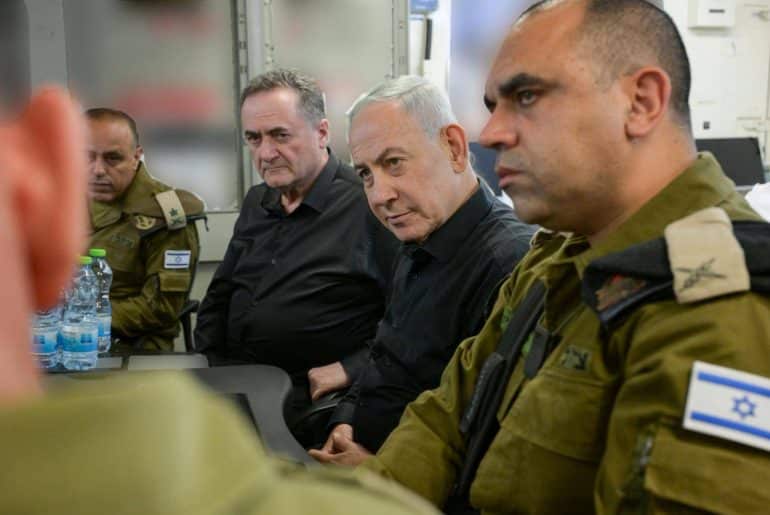
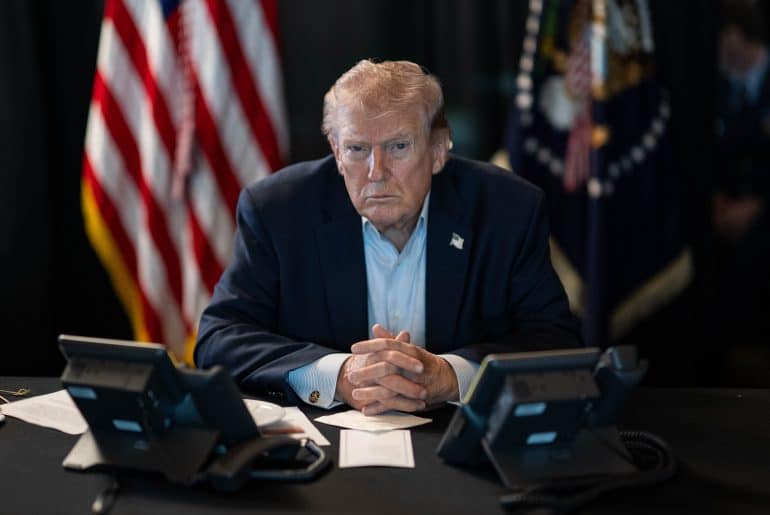
This is the same deal that Hamas agreed to last June. Israel intentionally delayed the deal so that it could weaken Hezbollah starting in September, with the exploding pagers, ground invasion, assassinations, and massive aerial bombing. All of it done in coordination with al-Qaeda rebels preparing their offensive from Idlib province in Syria. It was all coordinated between Israel, Turkey and the U.S. That is why the Gaza cease fire deal was delayed by the US for months, with Blinken lying about Hamas delaying the deal.
For example, the US supported al-Tanf rebels, located in the Southeast of Syria, at that US controlled boarder crossing, say that they were instructed to prepare for the «mother of all battles» days before the al-Qaeda rebels even launched their offensive toward Aleppo from Idlib, and then later down to Damascus. These al-Tanf rebels were so prepared that they actually captured Palmyria, cutting off the road to Deir Ezor in the East, and the only remaining road to Baghdad, and advanced all the way to the suburbs of Damascus before the al-Qaeda rebels even got to Damascus.
Thousands more civilians in Gaza died during this delay, and dozens of hospitals and schools were bombed, all so that the US and Israel and Turkey could achieve their long promised regime change in Syria. A promise made to Saudia Arabia back in 2002 in exchange for Saudi «permission» to remove Saddam in Iraq. Permission that was necessary for that Iraq war to proceed in 2003.
So, with the regime change in Syria, the US finally fulfilled it’s part of the grand bargain made to carry out the Iraq war. That is why it was necessary to delay the cease fire deal in Gaza.That is why these criminals thought it was necessary for more Palestinians to die.
And how long before frigging israel will give us ‘the finger’ again??? And Western nations will once more look the other way – afraid of being labelled ‘anti Semite’??? What a sorry society…
Israel Kills Dozens of Palestinians in Gaza After News of Ceasefire Deal
At least 82 Palestinians were killed on Wednesday
by Dave DeCamp
January 15, 2025
“Israeli strikes killed dozens of Palestinians in Gaza on Wednesday after the news that Israel and Hamas had reached a ceasefire deal, which still needs final approval by the Israeli government and is expected to take effect on Sunday.
Medical sources told Al Jazeera that at least 82 Palestinians were killed by Israeli attacks on Wednesday, including about 30 who were killed after the ceasefire deal was announced.
Most of the dead were killed by Israeli strikes on Gaza City, but Israeli attacks were also reported in the southern city of Khan Younis and central Gaza. According to the Quds News Network, 20 Palestinians were killed by an Israeli bombing of a residential building in the Sheikh Radwan.”
https://news.antiwar.com/2025/01/15/israel-kills-dozens-of-palestinians-in-gaza-after-news-of-ceasefire-deal/
The Grayzone
Max Blumenthal and Aaron Mate discuss the Gaza ceasefire deal, the real history of US and Israeli obstructionism, and efforts to hold the authors of Gaza’s destruction accountable – including Blumenthal’s questioning of Tony Blinken at the Secretary of State’s final presser.
Streamed live 5 hours ago
“Max, Thank you for your courage today and every day in covering this genocide!”
“Delighted that someone managed to get to Blinken and call him out publicly. Thanks for your courage.”
https://www.youtube.com/watch?v=Z6MCsAjlL5U