

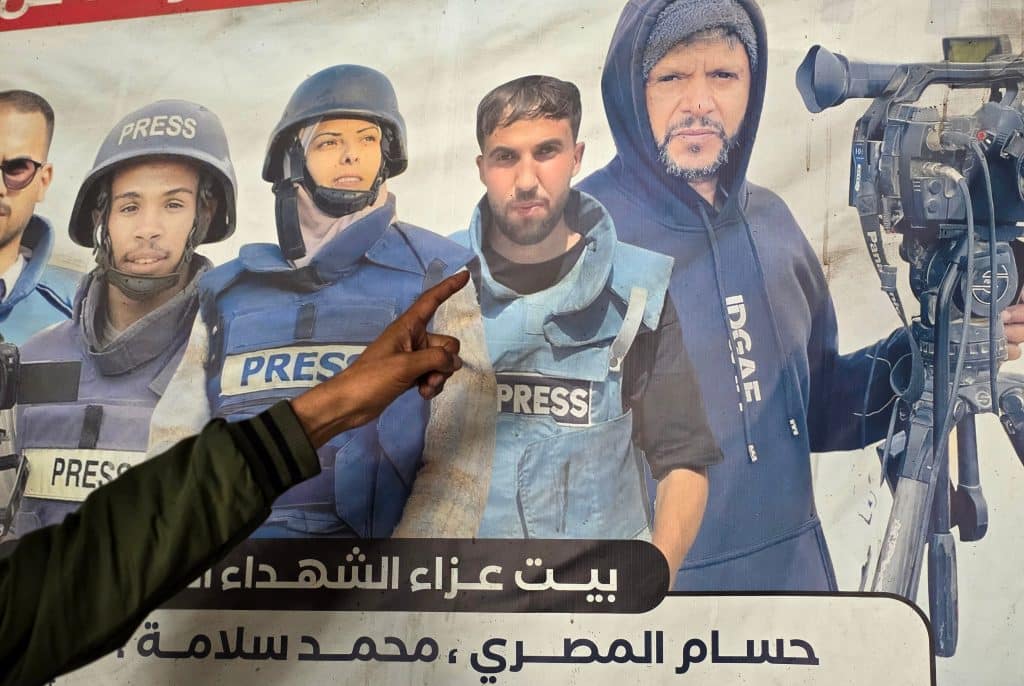
Eight years ago, I applied for a job vacancy in a Western news agency and was rejected. It didn’t affect me much, especially since the vacant job was too senior for the little experience I had at the time. But a few weeks later, a friend who worked there told me that they hadn’t considered any Palestinian applications. The agency’s concern was that a Palestinian journalist wouldn’t be objective enough for a key position in producing news and stories on Palestine.
That was my own brush with a phenomenon that many Palestinian journalists know all too well. Some have known it even more personally. All of us know that we can assist Western journalists as fixers, stringers, or interpreters, but only rarely will any of us be entrusted with producing work for a mainstream Western outlet from start to finish.
The reason for this mistrust boils down to the nebulous concept of “objectivity,” and the different ways of understanding it. It’s also a main principle of journalism that we’re supposed to strive for. Western editors lecture us on its importance, and as a result, we have been made to feel wrong about ourselves, that we are lacking in professionalism since we’d be covering events in our country from the perspective of our people, that we would feature their vocabulary and wouldn’t maintain a sufficient distance from their lived experiences.
In 2017, a foreign journalist I was fixing for told me that their job in Palestine was to describe the events, not what they meant for the people who lived them. When I told him that one day there would be a machine that could do just that — little did I know about the coming AI boom — he answered that, indeed, a machine would be more objective than the most objective among us.
As Palestinian journalists, we have to ask ourselves many questions: if we chose this profession to give voice to our people’s reality, how do we do so without becoming as soulless and colorless as an algorithm? What does it mean when we say that journalism is a humanist profession? And what difference does it make being Palestinian or not, if we are going to be objective?
In the past two-and-a-half years, the genocide in Gaza opened the eyes of many of us to something we hadn’t considered enough: those who were lecturing us on how to be objective were the least objective of all.
Narratives were constructed around lies, twisted facts, and celebrated pieces of journalism that were entirely free of evidence and systematically biased. Israeli claims were taken at face value, and Palestinian numbers were systematically doubted or ignored. Gaslighting, however, was on full display.
These practices didn’t just falsify reality or deceive the public, but enabled a genocide in real time.
This wasn’t just a lack of objectivity, but the active enabling of the massacre by some of the largest and most reputable outlets.
But this realization doesn’t wash away the question we have to answer on our own, regardless of the unspoken bias of the mainstream media: what is objectivity, and how do we practice it as Palestinian journalists?
The answer to this question, for me, also came from Gaza. Over the years, the awareness of public opinion around the world about Palestine grew simultaneously with the growth of knowledge about the reality in Gaza. This knowledge came through reports of human rights groups and other sources, but it wouldn’t have been possible without the work of Palestinian journalists on the ground, who have committed to one thing only: showing reality — all the reality — and nothing but reality.
Showing reality has meant making the living facts of life the subject of their reporting. Not statements about facts, or commentary on the facts, or abstract narratives about them, or even debates about conflicting interpretations of the facts. It’s about the material elements of life and the violence that disfigures them. It’s about documenting every death, every destruction, every effort to rebuild and move on.
All the truth means that facts are not limited to events, but also to how people experience and understand them, and to the human cost they produce. How do people who live the events, who lose loved ones, homes, and years of their lives in detention, digest their experiences? How their future is altered, and how they talk about it.
Nothing but reality means we don’t have to mix reporting reality with our opinion of it. Because reality alone, crude and unvarnished, is the greatest challenge to their propaganda narratives. Gaza’s journalists trusted the intelligence of their audience around the world to understand and make up their own minds about the truth of what was happening in Palestine. And they have.
As Palestinians, we are part of the reality we cover, which gives us access to a part of it that foreign media outlets don’t. We know the cultural, psychological, and social language of our people and how they interact with reality. What we bring to the table is something foreign journalists struggle to capture, especially since it wouldn’t show up in the official positions of Palestinian leaders: our voice.
If there were actually objective coverage of Palestine by the mainstream media, this voice would have been from the beginning. Instead, Palestinians are passive objects whose stories are told by others.
This is exactly why we‘re telling our own stories. All reality, and nothing but reality. The agony of a mother who lost her child, the struggle of a farmer to stay in his land, and the journey of a released detainee to cope with his pain and rebuild his life are the materials of that reality.
And as we continue to do this, we’re no longer intimidated by those who try to lecture us on objectivity, because they’re the ones enabling the injustice imposed on our people. In the meantime, we’ll continue to teach our school of human journalism. We will continue to convey the language of our streets and our communities with a proximity to reality that no mainstream agency can hope to attain.
Qassam Muaddi
Qassam Muaddi is the Palestine Staff Writer for Mondoweiss. Follow him on Twitter/X at @QassaMMuaddi.
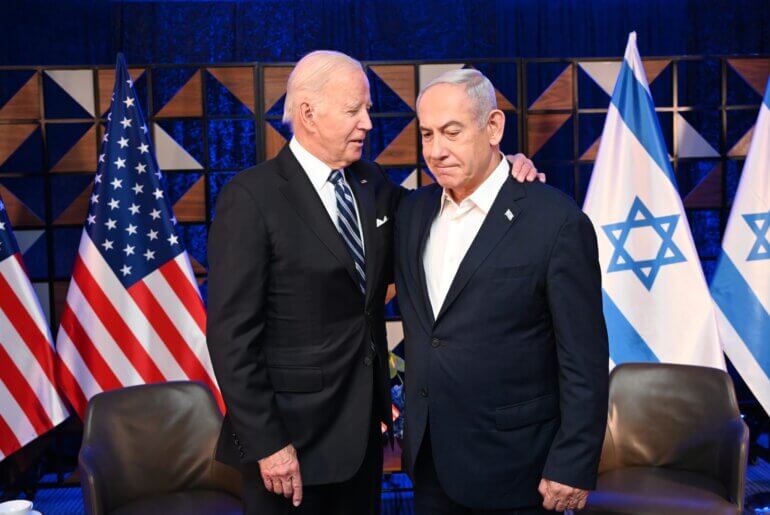
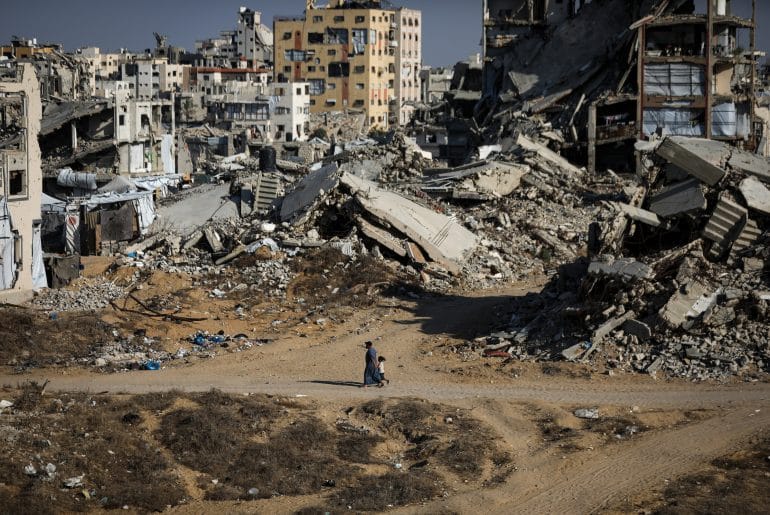

Ironically, Israel’s refusal to let international journalists into Gaza has raised the profile of Palestinian journalists. Tragically, this has come at a terrible cost in lives, as Israel murders them at will.