As a Palestinian journalist, I have spent my career explaining the context the world keeps ignoring. But I’ve come to realize that the context is itself the story, and we aren’t done telling it.
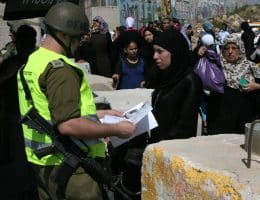

As a Palestinian journalist, I have spent my career explaining the context the world keeps ignoring. But I’ve come to realize that the context is itself the story, and we aren’t done telling it.
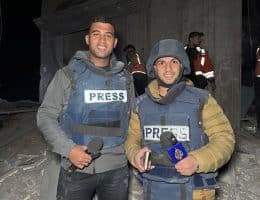
One year ago today, Israel killed Anas Al-Sharif as part of its deliberate campaign to target Palestinian journalists. Join the Palestinian Youth Movement in honoring the 260 journalists martyred in Gaza by exposing Western media’s complicity.
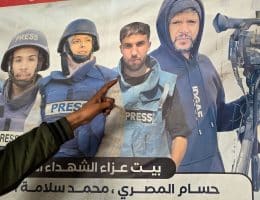
For years, mainstream media outlets lectured Palestinian journalists on the importance of “objectivity.” But the genocide in Gaza made us realize that they’re the least objective of all.

I am a journalist from Gaza, and I have documented loss so relentlessly that I have wondered where all that grief goes. I now know it never disappears. It might feel gone, but then one story comes along and unlocks everything that came before it.
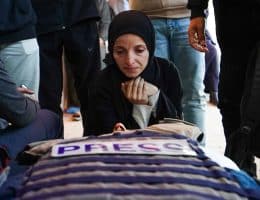
I have worked as a journalist in Gaza for nearly a decade, and I believe the Committee to Protect Journalists’ decision to remove the names of Palestinians killed while reporting from its records is yet another attempt to silence Gaza. It will fail.
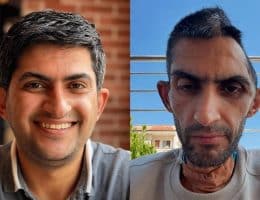
Mujahed Mofleh, one of Palestine’s finest editors, nearly died after leaving Israeli detention. When I visited him, he could barely move, yet wrote he had messages from prisoners he needed to deliver. That’s when I realized the prison never left him.
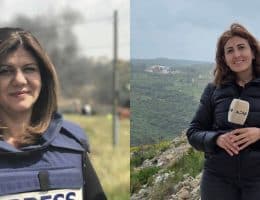
Four years ago today, Shireen Abu Akleh was assassinated by an Israeli soldier. Since then, Israel has killed more than 275 journalists in Gaza and Lebanon. The world that let Shireen’s killer walk free made all of this possible.
Ahmad Barakat knew he could be killed the moment he sat down to interview Hamas security leaders and police officers for our story. He did it anyway.
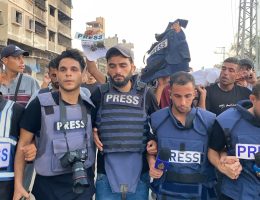
The new documentary “Gaza: Journalists Under Fire” honors the remarkable bravery and work of Palestinian journalists reporting on the Gaza genocide, including those who have been killed by Israel simply for sharing the truth.

In Palestine, journalistic integrity isn’t derived from AP or the New York Times. It is grounded in the faithfulness of Palestinian journalists to their people and to the truth of their reality. That is why Israel is killing them.