

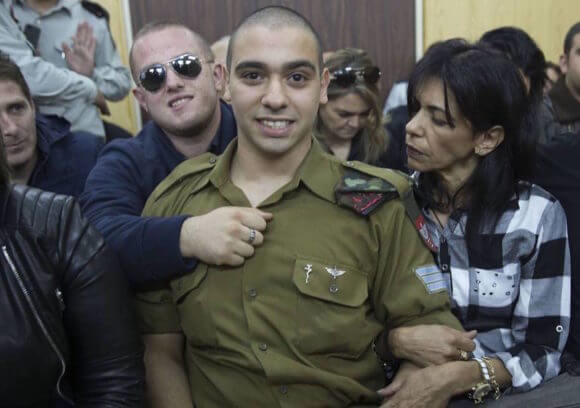
Israeli President Isaac Herzog’s recent decision to pardon a former Israeli soldier who summarily executed an incapacitated Palestinian a decade ago is more than a gesture toward one individual, and it is not an innocent attempt to “heal the divisions” between Israelis surrounding a case that convulsed Israeli society a decade ago. It is a political act that continues a long tradition of legitimizing the killing of Palestinians. The pardon does more than clear the remaining stain from the soldier’s record. It once again blurs the line between an unlawful killing and conduct that the state is prepared first to tolerate, then to justify, and ultimately to absolve and thereby implicitly condone.
In March 2016, Elor Azaria, then an Israeli soldier, shot Abdel Fattah al-Sharif in the head as he lay wounded and unarmed on the ground in Hebron, in the occupied West Bank. The shooting was filmed, and the scene was widely circulated. An Israeli military court convicted Azaria of manslaughter. His sentence—an astonishingly lenient eighteen months in prison—was subsequently reduced, and he was released after serving two-thirds of it. He later declared that he would do exactly the same thing again. Nevertheless, Herzog has decided to pardon him.
The president’s position carries considerable public weight. In a 2017 Peace Index poll, 64 percent of Jewish Israelis supported a pardon for Azaria, reflecting the broad consensus that once a person is defined as a mehabel, they forfeit their right to live. Yet in a subsequent survey, when respondents were asked whether they agreed with President Reuven Rivlin’s decision to reject Azaria’s pardon request, only 50 percent opposed his decision.
Therefore, in the current public climate, the Herzog’s message to present and future soldiers could hardly be clearer: even if they are filmed killing a Palestinian who no longer poses a threat, and even if they are convicted, the political system may ultimately erase the stigma attached to their actions.
Incidents of this kind should not be understood as momentary deviations from the Israeli state’s norms. The pardon forms part of a long history that began with leniency toward those who perpetrated massacres during Israel’s establishment in 1948 and the accompanying mass expulsion of Palestinians. It continued in the years that followed, when Israel pursued an unofficial policy of shooting Palestinian refugees who attempted to return to their homes, their land, or the property they had left behind. This unofficial open-fire policy turned the new border into a lethal instrument for making the results of the expulsion permanent.
Even when Jews were convicted of killing Arabs, the state knew how to respond with understanding. Israeli presidents Chaim Weizmann, Yitzhak Ben-Zvi, Yitzhak Navon, and Chaim Herzog (the current president’s father) granted pardons or reduced the sentences of Israeli soldiers and police who had killed Arabs. Each case was explained by reference to its supposedly exceptional circumstances: prevailing security tensions, the defendant’s personal history, his service to the state, the passage of time, or the need for reconciliation. Yet the accumulation of such cases reveals a pattern. The judicial process ostensibly draws a moral boundary, while the power of pardon retroactively strips the crossing of that boundary of its full significance.
The pardons, reduced sentences, and failures to prosecute associated with the perpetrators of the 1956 Kafr Qasim massacre, members of the Jewish Underground in the 1980s, and the policemen who killed a dozen Palestinian citizens of Israel in October 2000 all belong to the same pattern—a pattern that prepared the ground for the genocide that has unfolded since October 2023.
The killing of Palestinians has never been separate from their dispossession. It was one of the means through which dispossession became possible and, later, one of the tools through which it was maintained. A territory cannot be emptied of its inhabitants, its expelled population prevented from returning, its land confiscated, and another population settled in its place without the continuing threat of violence. Not every Palestinian must be killed for violence to serve its purpose. It is enough for the possibility of being killed to remain palpable—and for Palestinians to know that their lives are exposed and that those who kill them are unlikely to face serious punishment.
From this perspective, the pardon of Azaria complements the enduring Zionist aspiration to reduce the Palestinian presence in the land as much as possible. Herzog signals to soldiers on the ground that killing a Palestinian need not permanently stain their futures. There may be a trial and perhaps even a short prison term, but ultimately the state will know how to welcome them back into its embrace. The pardon transforms what is presented as an aberration into part of the state’s moral order. The “civilized” language of the pardon presents the erasure of responsibility as a humanitarian gesture while making the person who was killed disappear. Al-Sharif vanishes from the story, while the killer’s future, feelings, and rehabilitation become the focus of concern.
The decision also has an ethnic and class dimension that should not be ignored. Azaria, the son of a Mizrahi family from the working-class city of Ramla, carried out the killing on the ground. Herzog, a descendant of a prominent Ashkenazi family of European origin and a former partner in one of Israel’s most powerful law firms, now legitimizes Azaria’s act in the decorous language of the establishment. One man pulled the trigger; the other speaks of reconciliation, rehabilitation, the passage of time, and mercy.
This does not mean that Azaria is a victim who bears no responsibility. It means that a social division of labor is at work. Members of the lower classes are sent to perform the work of policing and occupation, which necessarily entails sporadic killing, while the legal and political elite translates the consequences into clean, respectable language.
This division of labor enables Israel’s liberal center to distinguish itself publicly from the crude rhetoric of the far right while still legitimizing the results of its actions. Itamar Ben-Gvir, Israel’s far-right national security minister, can openly turn Azaria into a hero. Herzog has no need for such rhetoric. The “civilized” language of the pardon is, in fact, more effective: it presents the erasure of responsibility as a humanitarian gesture while making the person who was killed disappear. Al-Sharif vanishes from the story, while the killer’s future, feelings, and rehabilitation become the focus of concern.
The pardon therefore tells us not only how Israel treats one soldier, but also how it understands the relationship between Jews and Palestinians. A Palestinian life may be taken, and after enough time has passed, even the conviction for taking that life may be erased. This is how the imagination of erasure operates: first the person is erased from the landscape, and then responsibility for that erasure is itself erased.
Herzog’s decision is not a belated conclusion to the Azaria affair. It is another link in a historical chain connecting the shooting of refugees who tried to return home, pardons for Jews who have killed Arabs since 1948, and the continuing effort to make the land less Palestinian.
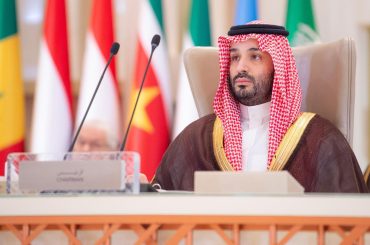

” The pardon forms part of a long history that began with leniency toward those who perpetrated massacres during Israel’s establishment in 1948 and the accompanying mass expulsion of Palestinians….”
On that topic, has anyone seen the documentary Tantura? It’s available on Amazon for $5:
Watch Tantura | Prime Video
Hundreds of Palestinian villages were depopulated in 1948. To Israelis it was the War of Independence, to Palestinians it was ‘Al Nakba,’ the Catastrophe. Director Alon Schwarz revisits former Israeli soldiers as well as Palestinian residents in an effort to re-examine what happened in Tantura, the location of an alleged, Israeli-perpetrated massacre…..
Tantura – Wikipedia
RE: “Itamar Ben-Gvir, Israel’s far-right national security minister, can openly turn Azaria into a hero.”
RELATED:
■ U2’s Bono compares Ben Gvir to Nazi SS chief Himmler over his comments on Gaza
The Times of Israel | 29 September 2026
In Rolling Stone interview, Irish rockstar says he ‘has stood by Israel,’ but Ben Gvir’s ‘outrageous’ remarks on Palestinians have put Judaism ‘in the shade’
LINK ~ https://www.timesofisrael.com/u2s-bono-compares-ben-gvir-to-nazi-ss-chief-himmler-over-his-comments-on-gaza/