Days away from elections in Israel on March 17th, Prime Minister Benjamin Netanyahu’s Likud party may not be able to recover from the dive it took in the polls this week. They are down—more than they have been since campaigning began in December. He is expected to get 21 seats while the Zionist Camp headed by Labour’s Issac Herzog and Hatuna’s Tzipi Livni, would get 24. However, Israeli elections are determined by voting blocs and not individual parties. And so even if Bibi loses, he can still win. And if that happens, it wouldn’t be the first time.
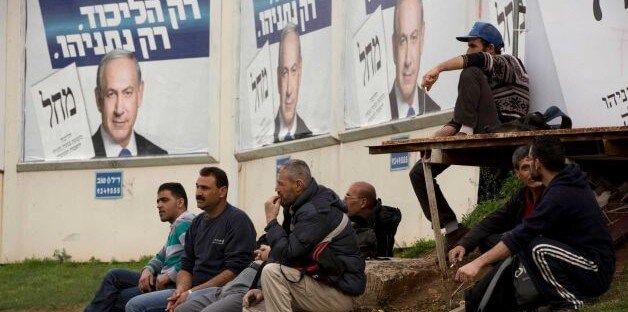
With more than a half-million Israeli citizens living over the Green Line in occupied Palestinian territory, it was only a matter of time before a frontrunner made a campaign stop there. For weeks election posters have plastered major intersections and checkpoints across the West Bank. Then yesterday morning Israeli Prime Minister Benjamin Netanyahu visited the Judea and Samaria division headquarters with Defense Minister Moshe Ya’alon in Beit El, outside of Ramallah, becoming the first party leader to hold a settlement election event.
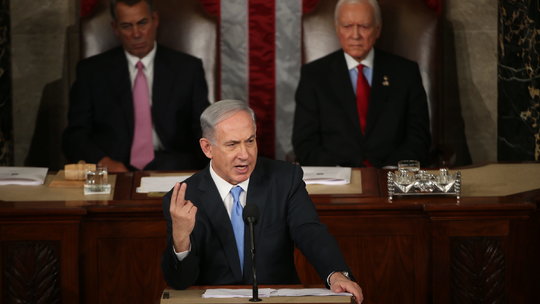
Last week when Israeli Prime Minister Benjamin Netanyahu spoke to Congress in hopes of blocking a possible nuclear deal with Iran he did not mention the Palestinians once. To officials in the West Bank, this omission showed Netanyahu would rather the occupation stay invisible.
Palestinian leaders decided Thursday night they will “end all forms of security coordination with Israel,” a much-criticized practice of shared policing across the West Bank and a staple of Israeli-Palestinian relations over the last two decades. Still the announcement included one loophole where Israel could salvage the security arrangement, signaling the Palestinian leaders could be seeking to leverage Israel’s security concerns as a tactic for the release Palestinian VAT-taxes frozen during the winter after the Palestinians acceded to the Rome Statute, joining the International Criminal Court (ICC) where they can charge Israel with war crimes.
Israeli Prime Minister Benjamin Netanyahu’s speech to Congress on Tuesday elicited strong opinions from U.S. elected officials with rave reviews from Republicans and condemnation from several Democrats. But back home Israelis were nonplussed over the talk—if they watched at all.
On the eve of his departure to Washington DC to address Congress about the possible nuclear deal being brokered between the U.S. and Iran, Israeli Prime Minister Benjamin Netanyahu made one last stop to occupied East Jerusalem.
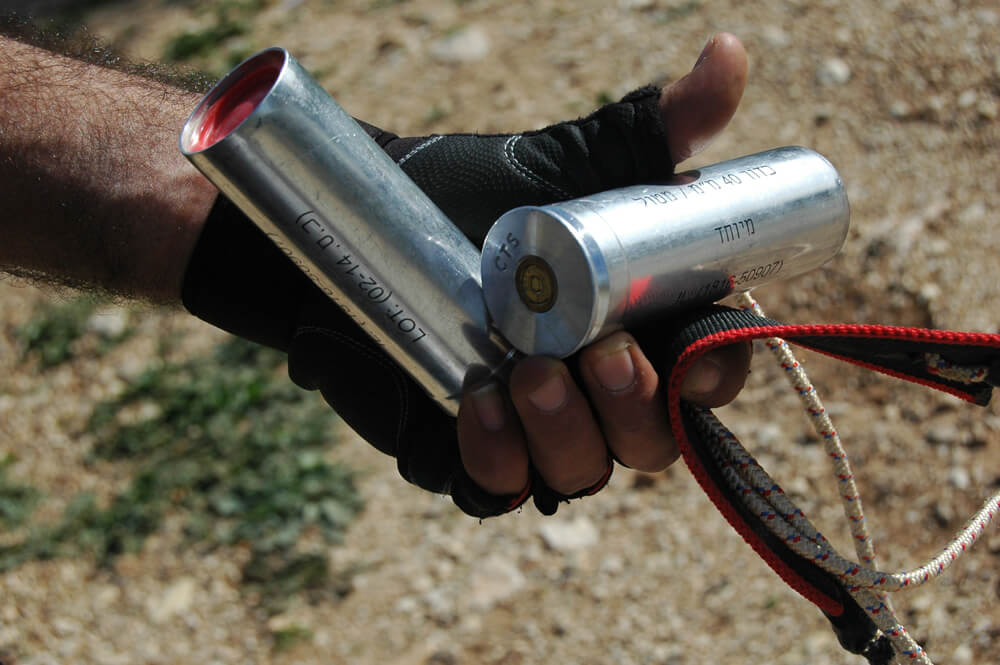
Plumes of teargas wafted up the terraced hillside of the West Bank village of Bil’in on Friday when over 1,000 demonstrators marked ten years of weekly protests against Israel’s separation wall and occupation, outside of Ramallah. Israelis drove in from Tel Aviv, and international activists and Palestinians from nearby towns flocked to march from the center of Bil’in, to the hamlet’s agricultural grounds. As with every Friday, clashes ensued once protesters reached the outskirts of town where olive orchards and patch vegetable farms buffer Israel’s concrete barrier and one of the most populated settlements, Modi’in Illit.
Will the Arab List with its assumed new clout back a Zionist-left government in order to keep incumbent Prime Minister Benjamin Netanyahu and his right-wing bloc out of government? Or will Palestinians be politically marginalized, as they traditionally are? Some Frequently Asked Questions about Palestinians and the election.
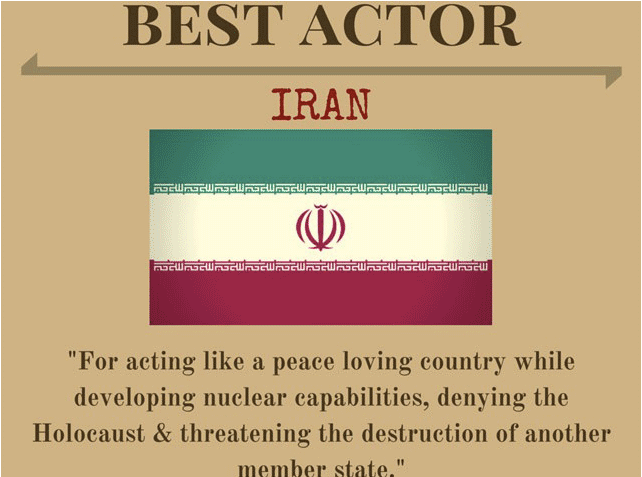
Addressing the Security Council in New York on Monday Israeli Ambassador to the United Nations Ron Prosor gave a bizarre satirical presentation of “Oscar” awards for “peace and security.” The victors were Iran, Hezbollah, Saudi Arabia and the Palestinian Authority.
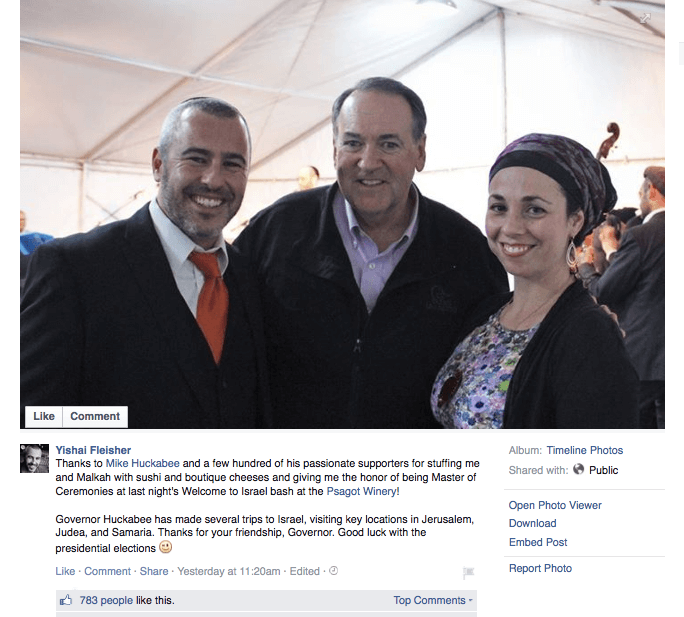
Sushi and wine were in abundance in the West Bank settlement of Psagot near Ramallah Monday night as former Arkansas Governor and 2016 presidential hopeful Mike Huckabee was honored at the start of a ten-day trip to Israel. Huckabee is in the region promoting Prime Minister Benjamin Netanyahu’s forthcoming address to congress.