Author

Allison Deger

Browsing

Hiam al-Nawaja dreams to live in what she calls a “normal house.” The 23-year old mother of three small children and sheepherder manages in a cinder block frame insulated with a tarp a typical modest home in Susiya, a pastoral Palestinian village set in the rolling south Hebron Hills in the West Bank. Yet a few short decades ago Susiya’s residents had sturdy stone structures built over ancient caves on a hilltop one kilometer from where their town stands today. The former location, “old Susiya,” is close enough that al-Nawaja can see bulldozed remains from her kitchen window. It was destroyed in 1986 when Israel dismantled the town’s mosque to uncover an ancient Jewish synagogue dating back to the sixth century.

Subhiya Abu Rahme, 60, propped up on her elbows and recounted her son’s last morning before the Israeli army killed him. Six years ago on April 17, 2009 Bassem Abu Rahme, 30, was shot in the chest with a tear gas canister in his West Bank hometown of Bil’in outside of Ramallah. The morning was a scorcher. Bassem went into the bathroom to cool off, musing, “I will shower or I will die.” Once clean and dressed, he walked to the garden behind the house. “I was working. He told me don’t tire yourself. It’s not good for you,” Subhiya said, relaying Bassem’s final words to her.

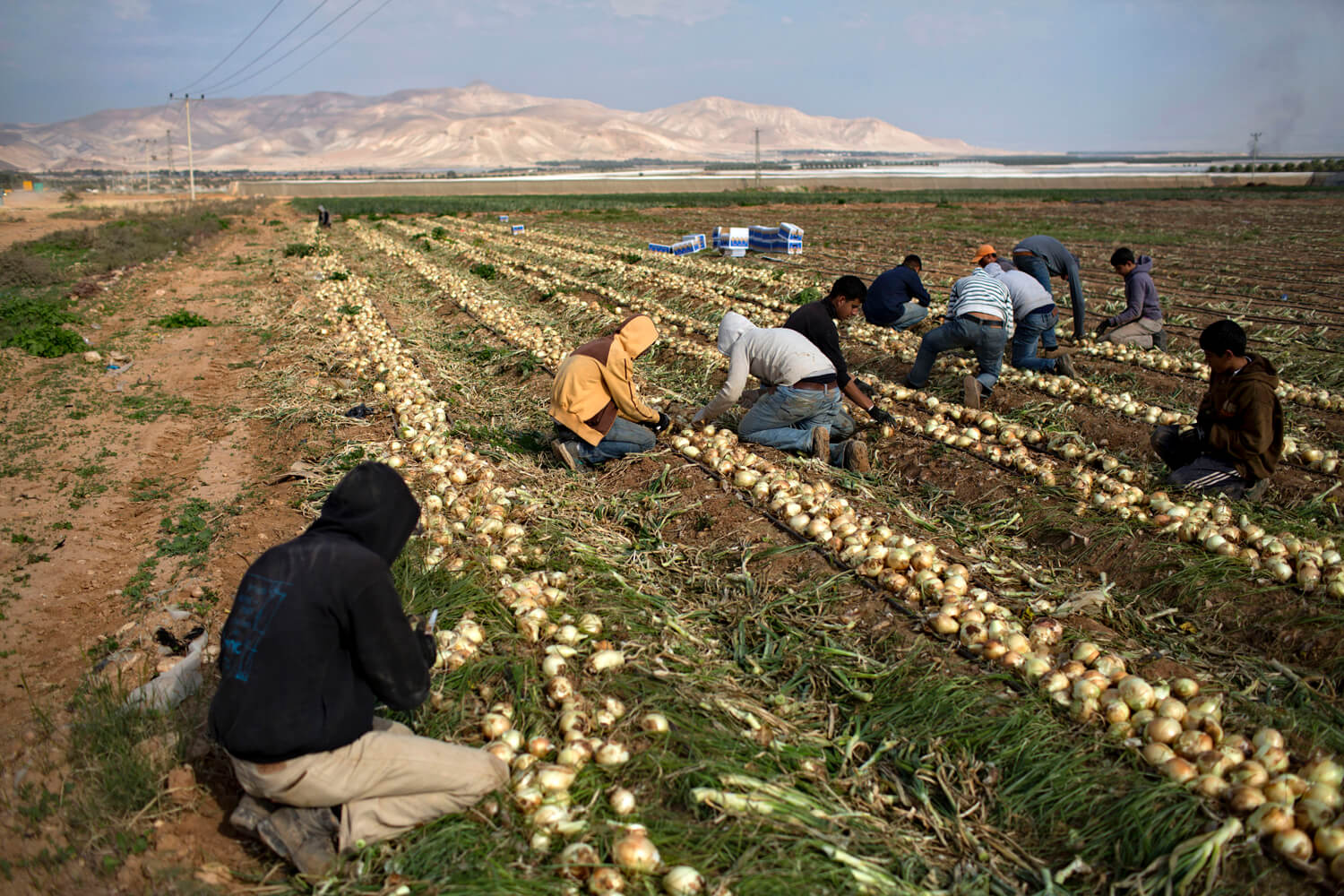
Bad pay, hard labor, nasty skin rashes, and poor sleep in constructions sites are just the tip of work conditions found in Israeli agricultural settlements, said a Human Rights Watch (HRW) in a report released Monday. The 75-page “Israel: Settlement Agriculture Harms Palestinian Children” is a devastating look into underage Palestinian laborers farming for Israeli companies.

This week a horrific scene unfolded in Syria as a besieged Palestinian refugee camp fell under attack by ISIS and al-Nusra Front, another extremist Salafi group. When the fighters gained control of Yarmouk in Damascus, harrowing reports circulated of ISIS’s iconic beheadings and executions. This time it was Palestinian refugees who were victim and amid the chaos 18,000 Palestinians and Syrians were stranded and starving behind ISIS sharpshooters. In response, Palestinian leaders in the West Bank announced they were planning to coordinate a major convoy that would truck humanitarian aid inside of Yarmouk. Then yesterday, the Palestinian officials reversed their decision.

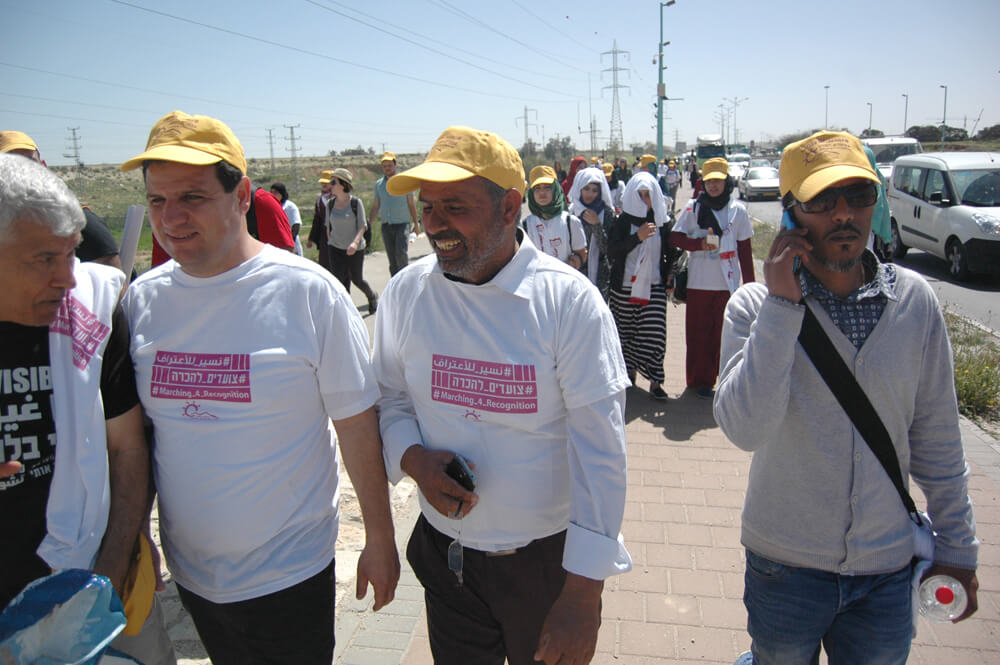
There are still a few weeks before head of the Joint List Ayman Odeh begins his first term in Israel’s parliament, yet he has already led a protest across the country. This past weekend Odeh led the “March for Recognition” with hundreds of Bedouins who live in unrecognized villages. The 130 kilometer trek from the southern Negev desert to Jerusalem officially ended on President Reuven Rivlin’s doorstep Sunday afternoon.

While Israeli Prime Minister Benjamin Netanyahu is in the final hours of forming a ruling coalition to lead the country, the Joint List is organizing a mass march. Unrecognized villagers will camp and walk their way to Israel’s seat of government, all while their party’s leadership is tightening ties with presumed opposition heads in the Zionist Camp.

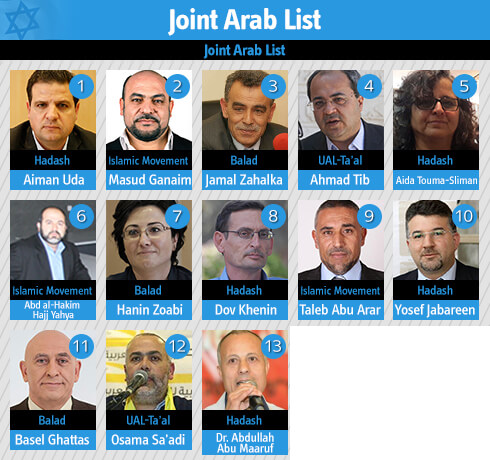
Something has changed inside Israel for its Palestinian citizens. The hard data is revealing: voter turnout by Palestinian citizens of Israel jumped by 10% from the last election and in the Joint Arab List’s party leader’s home district it was nearly an unheard of 80%. The joint list is full of fresh faces with seven first time Knesset member, two women, five communists, two national democrats, two Islamist, one Christian and one Israeli-Jew. Meet the next Knesset members from the Joint Arab List.

A historic moment was about to take place at campaign headquarters. An assistant for Ayman Odeh, head of Joint Arab List, a coalition of four parties running on one ticket for the first time, pulled me aside in the Nazareth convention hall and said with a smile, “we got 14 seats.” It was 8pm, there were still two hours to go before precincts would shut. Yet the Nazareth rally was abuzz over early the results. Israeli media had estimated their group would win enough seats in the next Knesset to become the third largest party in the country. It would become an unprecedented feat for the 20-percent Arab-Palestinian minority population. In this election another candidate, Avigdor Liberman, campaigned that they are a fifth column, to be expelled to the West Bank. Those signs, were plastered all over the entrances of Arab villages throughout the north of Israel throughout the past three months.

Months ago questions were raised if, at all, there would be any Arab representatives in the next Knesset. Then the groups unified under a single banner headed by Ayman Odeh, 41, a first time Knesset candidate from Haifa who started his career in public office at the age of 23 on Haifa’s city council. Now the long road is coming to and end and the Joint Arab List is the third largest party in the country with the potential, for the first time, to influence the outcome of elections.