Palestinian journalist Khalid Amayreh died on July 12 at the age of 66. He is remembered as a steadfast voice for the Palestinian cause. His daughter, Azhaar Amayreh, pays tribute to his written legacy.


Palestinian journalist Khalid Amayreh died on July 12 at the age of 66. He is remembered as a steadfast voice for the Palestinian cause. His daughter, Azhaar Amayreh, pays tribute to his written legacy.
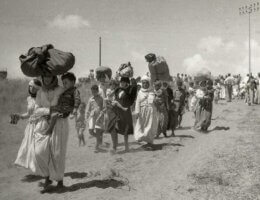
Linda Dittmar witnessed abuses of Palestinians during the Nakba as a girl in Israel. Now in her 80s, living in America she seeks to retrace the ways that Israelis suppressed the Nakba and replaced Palestinian life with a Zionist narrative.

In “Three Worlds: Memoir of an Arab Jew,” Avi Shlaim declares his identity clearly as an Arab Jew — an Arab by culture, history, and geography and a Jew by faith. His identity was destroyed by Zionism and by the Ashkenazi European Jews.
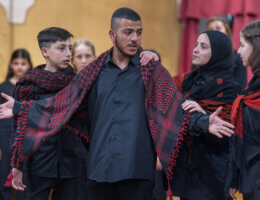
Palestine’s Amwaj Choir has embarked on an ambitious eight-stop tour of Italy, which includes performing the opera “Amal — Oltre il Muro” based on the work of imprisoned Palestinian writer Walid Daqqah.
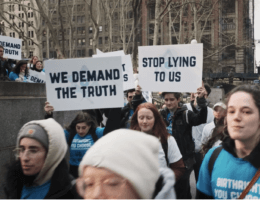
A new documentary unpacks the confluence of Judaism and pro-Israel fervor in the American Jewish community and the young Jews who are coming to reject it.
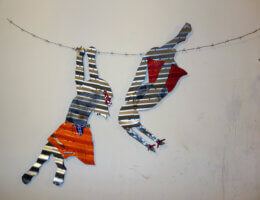
Abdul Rahman Katanani’s art is not an identification with the refugee camp’s misery, but an attempt to show all that is beautiful and painful in it, showing the camp to those who can’t enter it, those who don’t want to, and those who fear it.
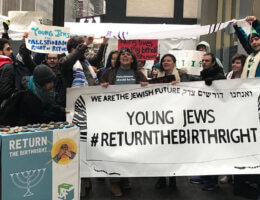
Abba A. Solomon’s new book, “Miasma of Unity: Jews and Israel,” chronicles the search for a Jewish identity not inextricably tied to Israeli Apartheid.
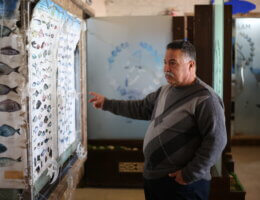
Gaza’s vibrant culinary traditions are being warped by the Israeli blockade, and the seafood that used to be the product of cultural exchange across the Mediterranean is now changing to adapt to Israeli restrictions.

In this animated short, Leila Warah tells the story of her family, who was forced out of their village, Deir Aban, during the Nakba. Leila’s story of exile and denial from her homeland is shared by millions of Palestinian refugees.
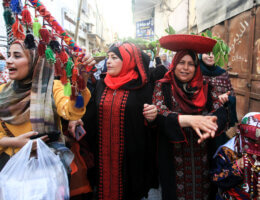
75 years after their displacement, refugees in Gaza are preserving their cultural heritage through folklore and song. These songs tell a story of resistance and longing for Palestine.