As the current disastrous phase of Anglo-American colonialism sinks even deeper into chaos and anarchy, causing untold suffering in the Arab and Muslim worlds and elsewhere, thoughtful reflection and careful analysis become more urgently needed. Heeding Edward Said’s call, Haider Eid uses literature to “de-orientalize the orient” in Gaza.
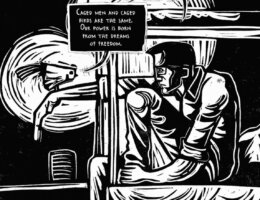
Palestinian American poet George Abraham talks with Mohammed El-Kurd in an expansive interview about Jerusalem, the revolutionary potential of poetry, and El-Kurd’s groundbreaking new book, Rifqa.
“Facing Gaza,” by artist-scholar Robert Hardwick Weston is a collection of montages of images posted on social media, juxtaposing destruction in Gaza during the 2014 war between Israel and Hamas, and life in Israel.
Susan Abulhawa reviews Mohammad el-Kurd’s stunning debut poetry collection, Rifqa: “Letting my eyes sweep over lines just once wasn’t nearly enough to take in the unbearable beauty of this book. The words that Mohammad assembles in his poems aren’t pulled from books or dictionaries. They are snatched from clouds, excised from his bones, excavated from Jerusalem’s fabled tales and the inscriptions on her storied stones, plucked from the creases in tank treads and history’s smoke.”
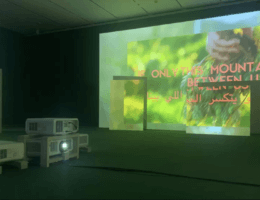
Netflix has added 32 Palestinian films to its streaming service. Pro-Israel groups have attacked the move because many of the directors support BDS.
Ghada Hania was raised in the UAE on bedtime stories of Palestine from her mother, but when she moved to Gaza at the age of 12, reality clashed with the idealized version of homeland in her head.
Kevin Hadduck had never met a Palestinian until five years ago when a student studying Latin walked into his office. This chance encounter led to Hadduck’s “Beloved Brother, Beloved Sister,” a book of poems from voices in Gaza.
Haidar Eid performs the Simsimiyya as part of a collection of resistance songs from around the Arab World.
Eleven years ago filmmaker Udi Aloni moved to the Jenin refugee camp to work at the Jenin Freedom Theater. During that time he lived in Zakaria Zubeidi’s house. Here, Aloni recalls several stories from him time with Zubeidi on the nature of art and resistance.