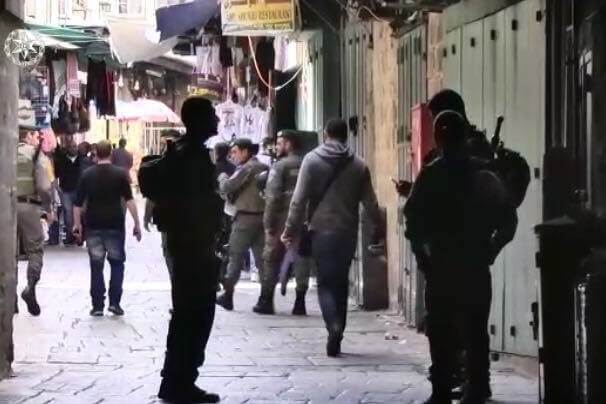
Ahmad Zahir Fathi Ghazal, 17, from Nablus was shot and killed by Israeli forces in occupied East Jerusalem’s Old City on Saturday, after he carried out a stab attack that left three Israelis lightly injured, with witnesses asserting Israeli police could have easily detained the boy without killing him.
Palestinian university student Kifah Quzmar, in his final year studying business administration at Bir Zeit University, launched a hunger strike on Sunday, March 26 in Ashkelon prison, where he is held shackled and remains under interrogation after 22 days of imprisonment. Quzmar, a popular, well-known student, was seized by Israeli occupation forces on March 7 at the Karameh/Allenby crossing from Jordan as he returned from travel. After denying that he was in their custody for several days, he was then denied access to a lawyer for 19 days.
Ma’an News Agency reports, “The Hamas-run Ministry of Interior in Gaza closed the Palestinian side of the Beit Hanoun (Erez) crossing between the Gaza Strip and Israel on Sunday morning, denying residents of the besieged coastal enclave passage in both directions, as local sources described a ‘state of alert’ in Gaza with severe security measures being imposed across the small Palestinian territory.”
The Rasmea Defense Committee announced yesterday Palestinian activist Rasmea Odeh, “has made the difficult decision to accept a plea agreement. She will plead guilty to Unlawful Procurement of Naturalization, lose her U.S. citizenship, and be forced to leave the country, but will exit the U.S. without having to serve any more time in prison or ICE detention, a victory, considering that the government had earlier fought for a sentence of 5-7 years.”
Howard Cohen relates the story of one of his students at an engineering college in the Negev struggling to keep up with his studies after Israeli police killed his father, demolished his home: “He had used the word killed, it was me who had used the word murder, but the words were irrelevant at this moment. He wasn’t interested in making a political statement to me, he was making an existential one. That was clear enough. ‘You see it’s so difficult for me,’ he went on, wiping away the tears that had welled up at the corner of his eyes and which threatened to stream down his face. ‘Everything was under the rubble. I even had a workbook for the class but that too was under the rubble together with my ID card and all our other belongings. They didn’t give us any time to leave. They bulldozed the house with all of our possessions in it. I’m trying to return to my studies. It’s important for me to continue, in spite of everything. But it’s so difficult for me. My head just isn’t there. And it’s going to be difficult for me to attend all the classes and prepare for the presentation.'”
Ma’an News Agency reports: “Israeli forces have detained 18 Palestinians from occupied East Jerusalem and West Bank for being in a WhatsApp group with a Palestinian who was killed by Israeli forces on Monday [near the Lion’s Gate to the Al-Aqsa Mosque] after allegedly carrying out a stabbing attack. Israeli police spokeswoman Luba al-Samri said in a statement on Sunday that the detained were all members of a group called “Road to heaven” on the messaging application, which she said was used to share religious messages.”
Even as UN agency accuses Israel of apartheid, NPR runs feel-good story about occupied Abu Tor in East Jerusalem that never mentions occupation or settlers or fact that Palestinians there are “permanent residents.”
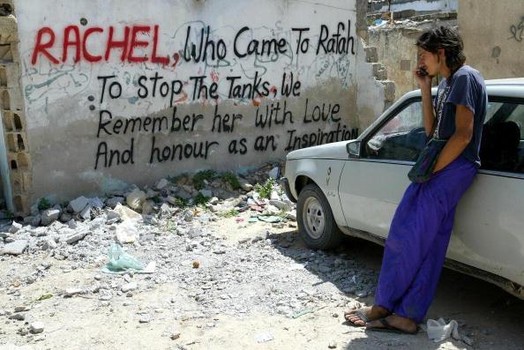
Fourteen years ago today, an Israeli soldier driving a bulldozer ran over and killed American peace activist Rachel Corrie who was in the Gaza Strip protecting a Palestinian home from demolition.
The Palestinian prisoner rights group Samidoun reports novelist Khalida Ghosheh was released on bail on Saturday. Still, she faces charges over her fictional book about Palestinians collaborators for Israel. Samidoun writes, Ghosheh said while in jail “the interrogators claimed that her novel poses a threat to collaborators working with the occupation, saying that the novel reflects her own experiences and aims to warn young people about ways [the Israeli authorities] may attempt to compel them to become collaborators.”
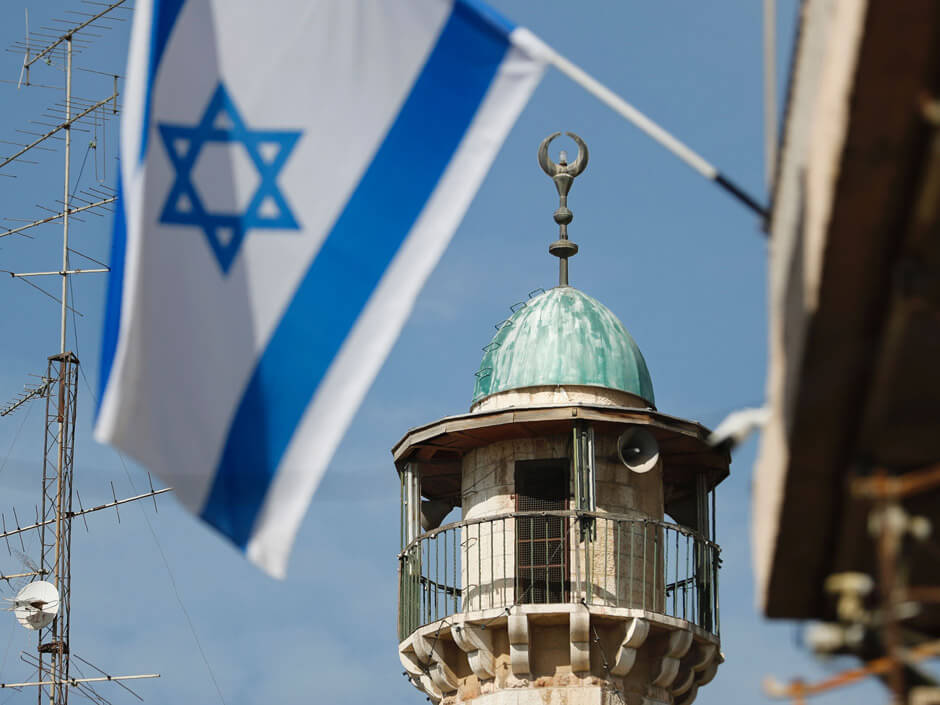
In a hotly contested session of Knesset, Israeli lawmakers passed the first reading of a bill to ban the Muslim call to prayer, sparking Arab representatives to walk-out mid-session. Al Jazeera reports, “A law to muffle mosques’ amplified calls to prayer in Israel and occupied East Jerusalem won preliminary approval on Wednesday in a charged parliamentary session where Palestinian legislators denounced the measure as racist. The bill passed a preliminary reading with 55 votes in favour and 48 against as the assembly broke out into chaotic arguments.”