Gazans return to shattered homes under a fragile ceasefire, Netanyahu meets Trump in Washington, and the U.S. sanctions the ICC after it issues warrants for Israeli leaders.


Gazans return to shattered homes under a fragile ceasefire, Netanyahu meets Trump in Washington, and the U.S. sanctions the ICC after it issues warrants for Israeli leaders.
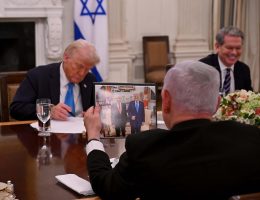
As shocking as Donald Trump’s call for the U.S. to “own” Gaza may be, his policies can be seen as a continuation of the previous administration. Trump’s strategies might be different, but his objectives remain largely the same.

Democrats blocked a GOP effort to impose sanctions on the ICC, but they made it clear they support the Republicans’ overall goal of punishing the court for prosecuting Israeli officials.

A fragile ceasefire in Gaza holds, freeing Israeli captives and Palestinian prisoners. Trump targets pro-Palestine voices in the U.S., urges Jordan and Egypt to take Gazan refugees to “clean out that whole thing.”

The ADL’s reaction to Elon Musk’s “awkward gesture” proves that they’re not concerned with antisemitism. The group exists to defend Israel.

After 15 brutal months in Gaza, a ceasefire begins with prisoner exchanges. Netanyahu claims victory despite unmet goals, Biden’s strategy falters, and Trump forces a deal. Amid political maneuvers, the Palestinian struggle for liberation remains steadfast.

A recent 60 Minutes report featured State Department officials exposing the horrors of Biden’s policy in Gaza. Why did they wait until he was leaving office to run it?

Israel’s genocide in Gaza has failed because although it destroyed Gaza’s infrastructure, it couldn’t destroy Gaza itself; it couldn’t destroy the people. Just as Israel has been unable to destroy Palestine after 76 years of trying.
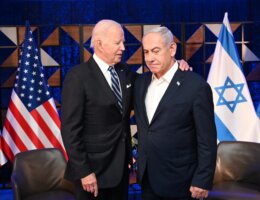
Joe Biden sends Israel $8 billion in military equipment to fuel its Gaza genocide, while Trump prepares to return to the White House.

The New York Times ran a lengthy exit interview with Secretary of State Antony Blinken, reflecting on the last four years. As usual, he comes off as a man gripped by delusion.