Israel has committed a new massacre in Jabalia as it continues its siege on northern Gaza.

Israel has committed a new massacre in Jabalia as it continues its siege on northern Gaza.

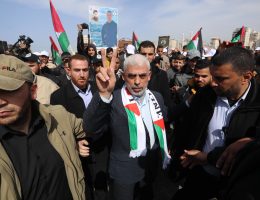
The Israeli army said on Thursday that Hamas chief Yahya Sinwar had been killed in combat during an armed confrontation with an Israeli army patrol in Rafah.
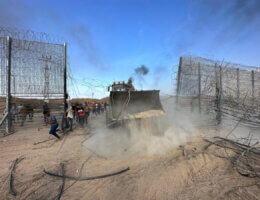
In an exclusive interview with Mondoweiss, senior Hamas leader Mousa Abu Marzouk discusses Operation Al-Aqsa Flood’s goals and accomplishments, international Palestine solidarity, and what comes next after a year of Israeli genocide in Gaza.

Media sources have misunderstood how the leadership of Hamas operates, drawing simplistic binaries between the “moderate” Ismail Haniyeh and the “extremist” Yahya Sinwar. In reality, Hamas decision-making is far more institutionalized.

Watching the Gaza genocide from Beirut’s Shatila refugee camp brings back painful memories to Palestinians who lived through siege and war, but it is also providing inspiration to a new generation with hope of a liberated Palestine.

Hamas demands a plan to implement the original ceasefire deal proposed by the U.S. last July ahead of a new round of negotiations set to start this week.

Israel’s assassination of Hamas and Hezbollah leaders doesn’t aim to weaken the resistance. Its real motive is to restore the image of military and intelligence superiority in the eyes of the Israeli public.

White House officials denied involvement in the Israeli assassinations of Hezbollah commander Fouad Shukr and Hamas politburo chief Ismail Haniyeh while also pledging an “unwavering commitment” to Israel if it faces retaliatory strikes.

Yumna Patel talks to Qassam Muaddi and Abdeljawad Omar about the implications and impact of the Israeli assassinations of Hamas leader Ismail Haniyeh and Hezbollah senior commander Fouad Shukr.
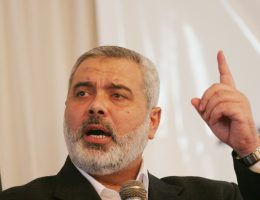
Israel assassinated Hamas politburo head Ismail Haniyeh in Tehran after a series of mounting regional tensions that included unprecedented Israeli attacks on the “Axis of Resistance,” including airstrikes on Beirut and Yemen.