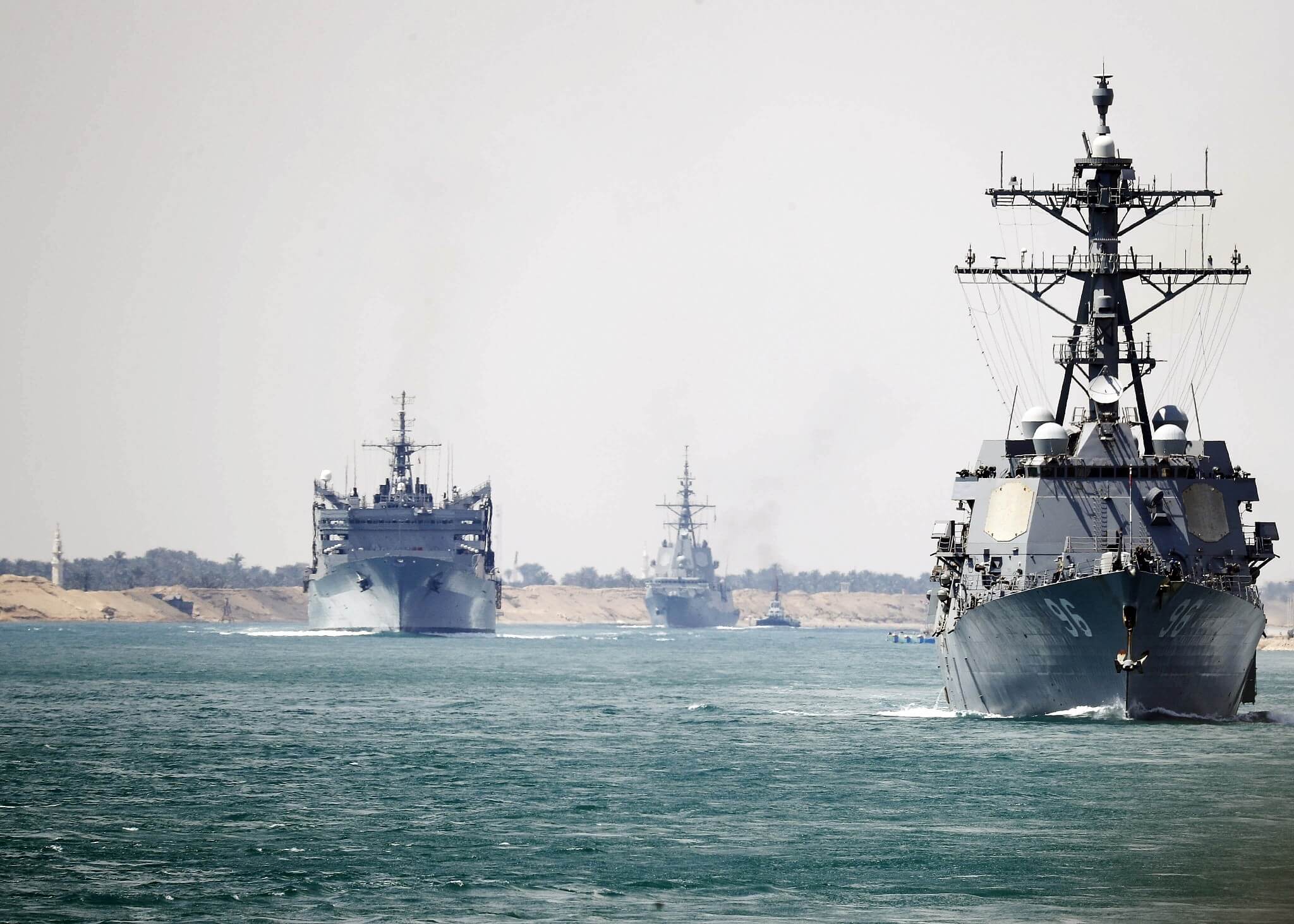
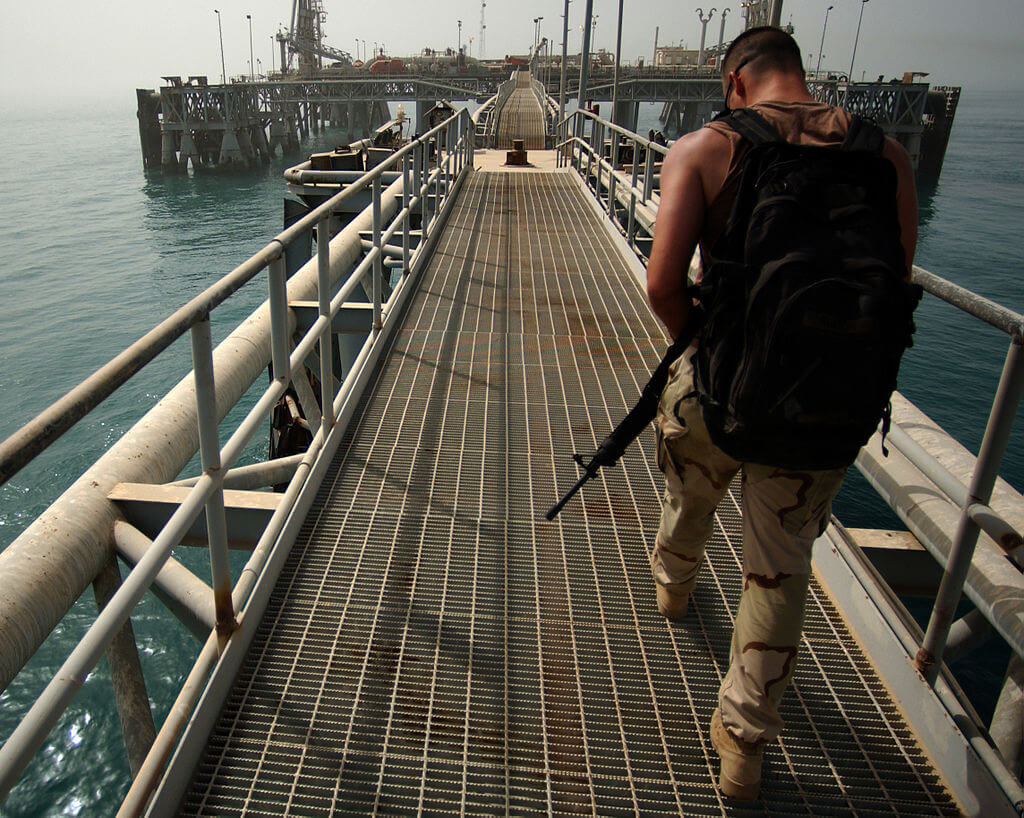
If the United States goes to war with Iran, you are unlikely to hear the word “oil” uttered by top Trump administration officials, but make no mistake: that three-letter word lies at the root of the present crisis, not to speak of the world’s long-term fate.
At a Christian Zionist conference in Washington, Secretary of State Mike Pompeo declares that Trump is an “immovable friend of Israel,” and “anti-Zionism is indeed anti-Semitism.” And National Security Adviser John Bolton referred to the “so-called state of Palestine.”
Senate Republicans were able to stop an amendment that would have required President Trump to seek congressional approval for an attack on Iran, despite the fact that the majority of votes were cast in support of the measure. Then Republicans passed a measure assuring that Trump’s hands would not be tied, as Sen. Mitt Romney put it, in taking on Iran.
Tom Engelhardt writes, “When it comes to Washington’s never-ending war on terror, I think I can say with reasonable confidence that, in the past, the present, and the future, the one phrase you’re not likely to find in such media coverage will be ‘American aggression.'”
Democratic candidates assail Trump’s Iran policy, while Miriam Adelson hails it in biblical terms at an Israeli conference alongside Netanyahu. But journalists never ask Trump whether his biggest donors, the Adelsons, are pushing war because they fear it will stoke anti-Semitism.
Leading Middle East and Islamic studies scholars call on President Trump immediately to pull back from the brink of a war with the Islamic Republic of Iran: “It is clear to us that the human, diplomatic, legal, political, and economic costs to both countries, the Persian Gulf and larger Middle East, the global economy and the global system of international humanitarian law of a US attack would be even more devastating than was the US invasion of Iraq sixteen years ago.”
Gil Maguire’s new novel, “The Exodus Betrayal,” imagines a US president siding with Iran after Israel attacks Iran, and it is intended to get Americans out of love with Israel, much as “Exodus” got us in love back in 1958. “I am trying to show how harmful our relationship with Israel has become and how the so-called special relationship is based on a myth of Israel’s importance,” Maguire says.
There were 473 readers’ comments on a NYT editorial about Iran, and they are universally against another war in the Middle East, and many oppose sanctions on Iran. Moreover, they see through the Times’s equivocations, and point out that the newspaper was the handmaiden of the Iraq disaster when it was credulous about government claims.
Hawks in the White House, led by National Security Advisor John Bolton, see a war aimed at eliminating Iran’s clerical leadership as a potentially big win for Washington. Many top officials in the U.S. military, however, see the matter quite differently. These days, the Pentagon is increasingly obsessed with preparations for another type of war in another locale entirely: a high-intensity conflict with China, possibly in the South China Sea.
An entire month has passed since the Trump administration started moving dangerously toward war with Iran — and Thomas Friedman, the leading foreign affairs columnist at the most influential newspaper in the world, has not published a single word about the crisis. Friedman, the star New York Times opinion writer, is demonstrating intellectual cowardice of the highest order.