Robert Fantina looks at the international political implications of Israeli Prime Minister Benjamin Netanyahu’s victory in Israel’s election and writes it may have come at a surprisingly high cost.
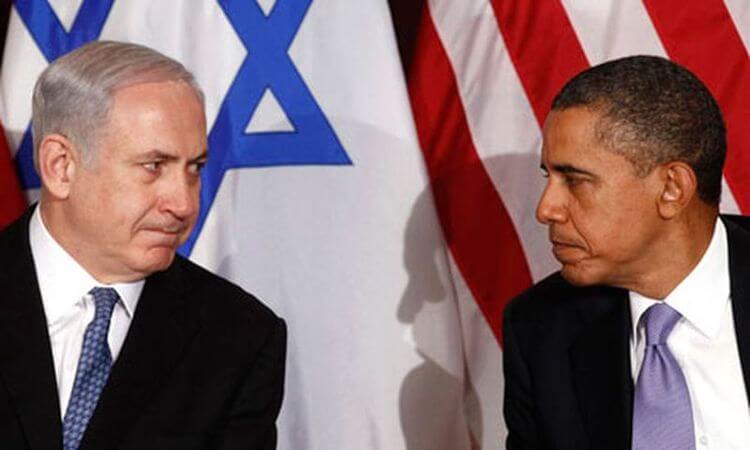

Robert Fantina looks at the international political implications of Israeli Prime Minister Benjamin Netanyahu’s victory in Israel’s election and writes it may have come at a surprisingly high cost.

Jeff Halper writes: No one can be happy when racism and oppression win the day. In a wider perspective, however, Netanyahu’s victory in the Israeli election may represent a positive game-changer. The realization that successive Israeli governments have created one state in all of the Land of Israel has finally become as irrefutable as it is irreversible. This is the game-changer of this election. Since Israel itself eliminated the two-state solution deliberately, consciously and systematically over the course of a half-century, and since it created with its own hands the single de facto state we have today, the way forward is clear. We must accept the ultimate “fact on the ground,” the single state imposed by Israel over the entire country, but not in its apartheid/prison form. Israel has left us with only one way out: to transform that state into a democratic state of equal rights for all of its citizens.

A historic moment was about to take place at campaign headquarters. An assistant for Ayman Odeh, head of Joint Arab List, a coalition of four parties running on one ticket for the first time, pulled me aside in the Nazareth convention hall and said with a smile, “we got 14 seats.” It was 8pm, there were still two hours to go before precincts would shut. Yet the Nazareth rally was abuzz over early the results. Israeli media had estimated their group would win enough seats in the next Knesset to become the third largest party in the country. It would become an unprecedented feat for the 20-percent Arab-Palestinian minority population. In this election another candidate, Avigdor Liberman, campaigned that they are a fifth column, to be expelled to the West Bank. Those signs, were plastered all over the entrances of Arab villages throughout the north of Israel throughout the past three months.

Months ago questions were raised if, at all, there would be any Arab representatives in the next Knesset. Then the groups unified under a single banner headed by Ayman Odeh, 41, a first time Knesset candidate from Haifa who started his career in public office at the age of 23 on Haifa’s city council. Now the long road is coming to and end and the Joint Arab List is the third largest party in the country with the potential, for the first time, to influence the outcome of elections.

Days away from elections in Israel on March 17th, Prime Minister Benjamin Netanyahu’s Likud party may not be able to recover from the dive it took in the polls this week. They are down—more than they have been since campaigning began in December. He is expected to get 21 seats while the Zionist Camp headed by Labour’s Issac Herzog and Hatuna’s Tzipi Livni, would get 24. However, Israeli elections are determined by voting blocs and not individual parties. And so even if Bibi loses, he can still win. And if that happens, it wouldn’t be the first time.

Palestinian leaders decided Thursday night they will “end all forms of security coordination with Israel,” a much-criticized practice of shared policing across the West Bank and a staple of Israeli-Palestinian relations over the last two decades. Still the announcement included one loophole where Israel could salvage the security arrangement, signaling the Palestinian leaders could be seeking to leverage Israel’s security concerns as a tactic for the release Palestinian VAT-taxes frozen during the winter after the Palestinians acceded to the Rome Statute, joining the International Criminal Court (ICC) where they can charge Israel with war crimes.

Israeli Prime Minister Benjamin Netanyahu’s speech to Congress on Tuesday elicited strong opinions from U.S. elected officials with rave reviews from Republicans and condemnation from several Democrats. But back home Israelis were nonplussed over the talk—if they watched at all.

On the eve of his departure to Washington DC to address Congress about the possible nuclear deal being brokered between the U.S. and Iran, Israeli Prime Minister Benjamin Netanyahu made one last stop to occupied East Jerusalem.

Plumes of teargas wafted up the terraced hillside of the West Bank village of Bil’in on Friday when over 1,000 demonstrators marked ten years of weekly protests against Israel’s separation wall and occupation, outside of Ramallah. Israelis drove in from Tel Aviv, and international activists and Palestinians from nearby towns flocked to march from the center of Bil’in, to the hamlet’s agricultural grounds. As with every Friday, clashes ensued once protesters reached the outskirts of town where olive orchards and patch vegetable farms buffer Israel’s concrete barrier and one of the most populated settlements, Modi’in Illit.

Katie Miranda imagines the scene at Netanyahu’s speech to Congress tomorrow.