The Israeli genocide on Gaza has made being a journalist a deadly job. But even the most mundane aspects of journalism, like tracking people down to interview, have become a monumental task in the face of mass displacement and mass destruction.
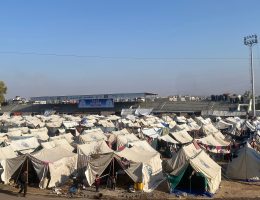

The Israeli genocide on Gaza has made being a journalist a deadly job. But even the most mundane aspects of journalism, like tracking people down to interview, have become a monumental task in the face of mass displacement and mass destruction.
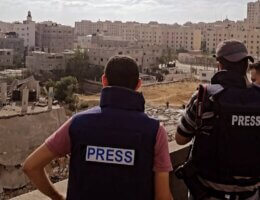
Ever since I could remember, I wanted to be a journalist. I wanted to practice journalism in Palestine, and about Palestine. I never doubted that through journalism I can help Palestine and the world be a better place, until last year.

A mainstream Israeli journalist recently blew up a house in Lebanon as part of a news report while embedded with the military. The broadcast shows how mainstream genocidal activity has become in Israeli society.

I resigned from CBC after voicing my concerns over their coverage of Palestine. I have since seen how the CBC’s policy on impartiality helped manufacture consent for genocide.
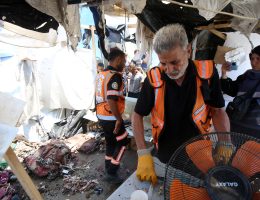
An Israeli strike targeted a tent inside the courtyard of a hospital in the central Gaza Strip, killing one Palestinian journalist. Eyewitnesses told Mondoweiss the strike was precise, hitting only the tent shelter that was clearly marked as ‘press’.
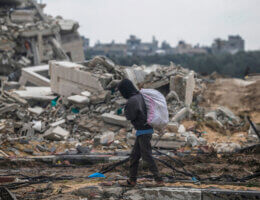
A person may feel great sadness following the Gaza war on television and social media, but experiencing the genocide first hand, researching it, knowing its victims, and listening to their stories, is something else entirely.
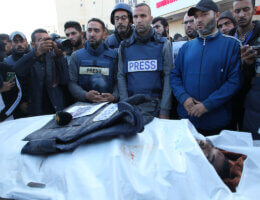
As Israel has murdered over 118 journalists during its genocidal war on Gaza, many journalists have been forced to stop reporting on the unfolding horror for fear of being deliberately targeted.

Al Jazeera cameraman Samer Abudaqa was killed after being hit by an Israeli airstrike. He was left to bleed out for hours after being targeted, with medics unable to reach him due to Israeli fire.
As journalists, we know that silencing a free press is a key tactic of authoritarian governments. Israel’s repression of Palestinian journalism shows us what is possible under the guise of “democracy.” Attacks on journalism are dangerous to us all.

Disrupting media corporations that act as bullhorns for our enemies is only part of the task—the challenge is engaging in journalism rooted in respect for one’s people.