Michael Arria speaks with expert Sina Toossi about the influence neoconservatives will hold in the new Trump administration and what this could mean for policy toward Iran and the broader Middle East.
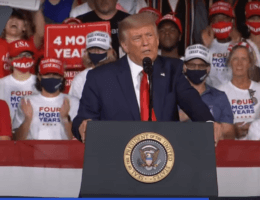

Michael Arria speaks with expert Sina Toossi about the influence neoconservatives will hold in the new Trump administration and what this could mean for policy toward Iran and the broader Middle East.

Joseph Aoun’s election this week as Lebanon’s new president reflects a new push toward a unified Lebanon. As the ceasefire time frame between Israel and Hezbollah ends there are signs Lebanon will be more capable of resisting Israeli aggression.

60 Minutes’s story on Israel’s pager attack that killed dozens and injured thousands of Lebanese featured no Lebanese voices and was told completely from the Israeli perspective. In the process, it justified war crimes in Lebanon and Gaza.

The expansive territorial ambitions of creating a “Greater Israel” once seemed only to be a right-wing Zionist fantasy. Today, current events in Gaza, Lebanon, and Syria show it might be closer than many ever thought possible.
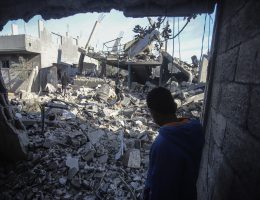
With the fall of Syria’s Bashar al-Assad, the truce between Hezbollah and Israel, and reports of progress in Gaza ceasefire talks in Cairo, Palestinians in the Strip are hopeful their reality may soon change.

On a certain level, the selection of the Lebanese American tycoon Massad Boulos as senior adviser on Arab and Middle Eastern affairs is vintage Trump. However, Boulos isn’t exactly your average Republican pick.
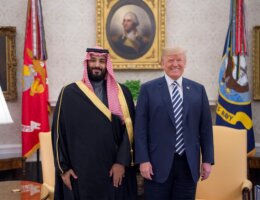
Mouin Rabbani discusses what Donald Trump’s return could mean for the Lebanese ceasefire, normalization efforts in the region, and the prospect of Israeli annexation of the West Bank.

Unpacking the ceasefire deal reached between Israel and Hezbollah and what it means for a potential regional war and the ongoing genocide in Gaza.

The ceasefire agreement between Hezbollah and Israel has accomplished Israel’s goal of decoupling Gaza from Lebanon. But while the future of the Axis of Resistance remains unclear, so does Israel’s own strategic path forward.

A ceasefire deal between Israel and Hezbollah took hold on Wednesday. As both sides halted their military operations, thousands of displaced Lebanese began returning to their homes and villages that had been under a months-long Israeli bombardment.