Israel’s conditions for a ceasefire in Lebanon include allowing Israel to operate inside Lebanese territory against Hezbollah and freedom of movement for Israel’s air force in Lebanon’s airspace.
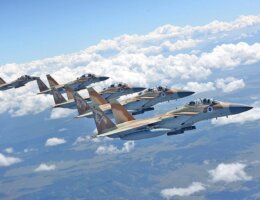

Israel’s conditions for a ceasefire in Lebanon include allowing Israel to operate inside Lebanese territory against Hezbollah and freedom of movement for Israel’s air force in Lebanon’s airspace.

Israel’s conditions for a ceasefire with Lebanon include allowing the Israeli army to continue operating in Lebanese territory. Meanwhile, Israel steps up its extermination campaign in northern Gaza, targeting its last remaining hospitals.
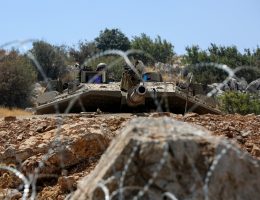
Israel is deepening Lebanese social rifts by bombing areas that have been considered historically “safe” from Israeli attacks, dissuading the residents of those areas from sheltering displaced people from the south.
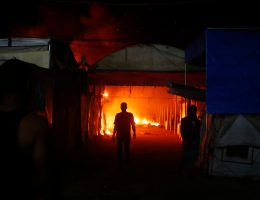
Israel bombed displacement shelters across Gaza and aid distribution points in Jabalia, while Hezbollah intensified its fire on Haifa and Tel Aviv amid Israel’s continued bombardment of southern Lebanese towns.
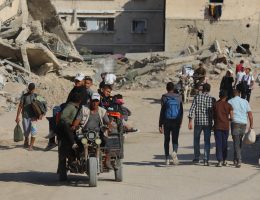
The Israeli ground invasion of southern Lebanon continues to face stiff resistance along the border one week on, while the Israeli army has renewed its assault on northern Gaza, laying siege to Jabalia refugee camp for the sixth time since October 7.
![Secretary of State Antony J. Blinken meets with Israeli Prime Minister Benjamin Netanyahu in Tel Aviv on October 16, 2023. [State Department photo by Chuck Kennedy]](https://mondoweiss.net/wp-content/uploads/2023/12/53265936689_6648951447_h-260x200.jpg "What are the Biden administration’s motivations in the Middle East?")
Mondoweiss spoke to analyst Mouin Rabbani about U.S. motivations in the Middle East and why the Biden administration fully supports Israel’s escalations against Lebanon and Iran.
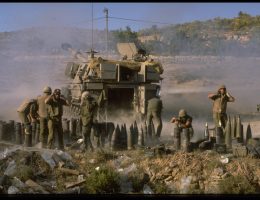
In Gaza and Lebanon, Israel is projecting its force while burrowing itself deeper into a quagmire. While it may achieve brief operational successes, it fails to extinguish the spirit of the resistance or coerce it into submission.
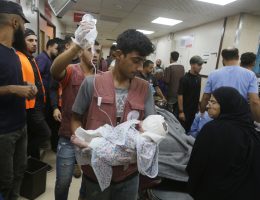
Israel has killed 150 people across Gaza since Iran launched its retaliatory ballistic missile attack against Israel. Meanwhile, Israeli airstrikes continue across Lebanon, with the death toll reaching into the thousands.

Iran announced that its barrage of ballistic missiles was in retaliation for the assassination of Ismail Haniyeh in Tehran and Hasan Nasrallah in Beirut.

Hezbollah’s Deputy Secretary General said Hezbollah’s military capacities remain intact, while Israel has reportedly informed the U.S. that an Israeli ground invasion of southern Lebanon is “imminent.”