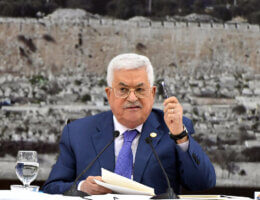
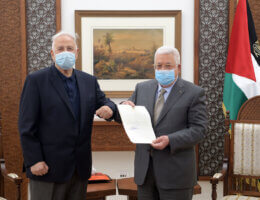
Palestinian Authority President Mahmoud Abbas’ April 30 decision to postpone elections, which would have been the first in 15 years, will deepen Palestinian division and could potentially signal the collapse of the Fatah movement, at least in its current form.
Gaza’s youngest voters hope Palestinian elections will move forward, amid reports saying the vote will be delayed due to disarray within the ruling Fatah party and a dispute with Israel around Jerusalem. “We are waiting for the elections to happen and want the local and international community to respect the results, to refute the argument of not having a unified Palestinian government,” Hind Judah tells Mondoweiss. The current division, she said, prevents “establishing the Palestinian state.”
The prospect of holding long awaited legislative elections in Palestine is quickly slipping away, as Palestinian president Mahmoud Abbas is expected to announce that the elections, which have been 15 years in the making, will be delayed. The move comes as internal rifts continue to grow within Abbas’ Fatah party, with multiple contenders challenging the official slate presented by Abbas and his inner circle.
Mouin Rabbani interviews Wafa Abdel-Rahman on the upcoming Palestinians elections, which she argues “reveals Fatah’s internal divisions in all their glory.”
As Palestinians gear up to cast ballots in presidential and legislative elections for the first time in 15 years, many in Gaza hope that a change in government will ease economic woes.
On January 15th Palestinian President Mahmoud Abbas announced that presidential and parliamentary elections would be held this spring and summer, 15 years after he was first elected for what was supposed to be a four-year term. Yumna Patel talks to Palestinians about their thoughts on the vote and many share the same concern — will they be a true chance to make their voices heard, or is it just another facade of democracy on part of the PA?
2020 may have been a devastating year for Palestine, but a closer look would allow us to see it as an opportunity for a whole new Palestinian political discourse.
Palestinian leadership bears responsibility for accumulated diplomatic failures. The public’s confidence cannot be restored without serious intervention, including dissolving the Palestinian Authority and reforming the PLO.
U.S. liberals opposed to annexation use Israel-centric and racist arguments, that it will hurt Israel or threaten a Jewish majority, Jim Zogby explains.
Rep. Ted Deutch shows imbalance of US government in mideast policy. He is “frustrated” with Palestinian leaders for not recognizing Israel as a Jewish state and for demanding that Jerusalem be the capital of a future Palestinian state. But as for criticizing Israel, Deutch says he raises “concern” about Netanyahu’s annexation plans out of “love” for Israel.