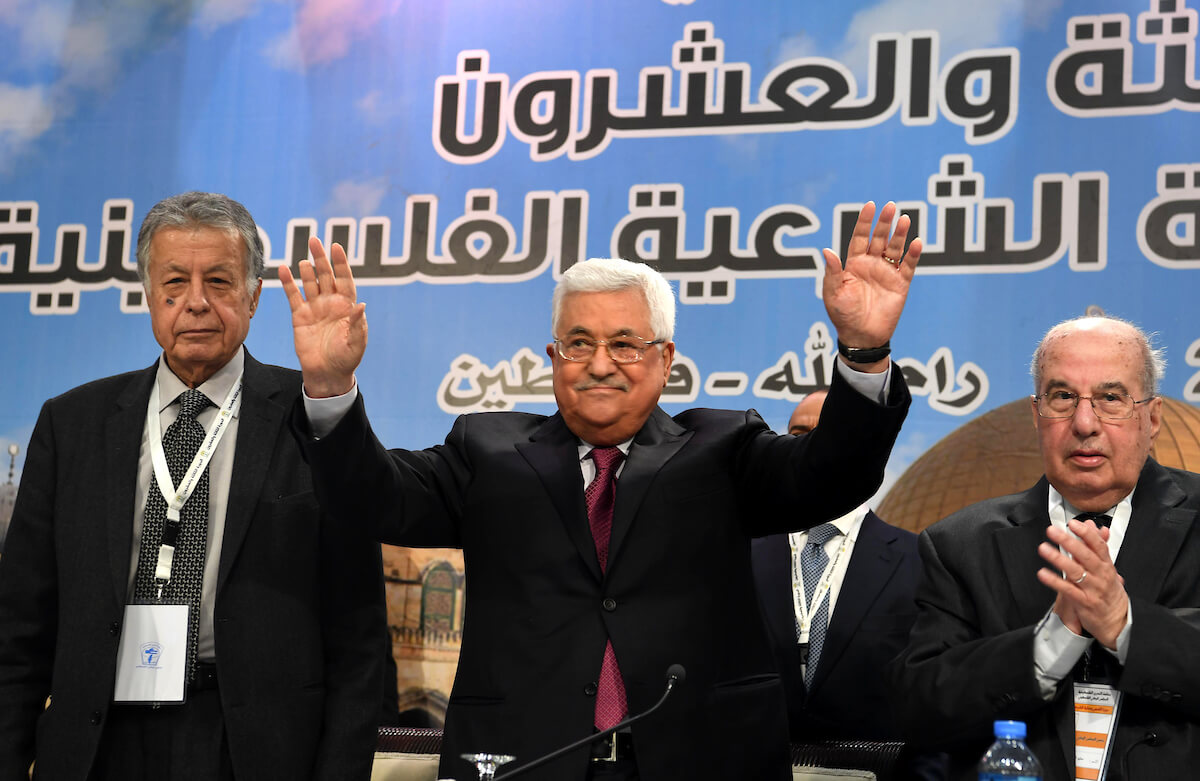
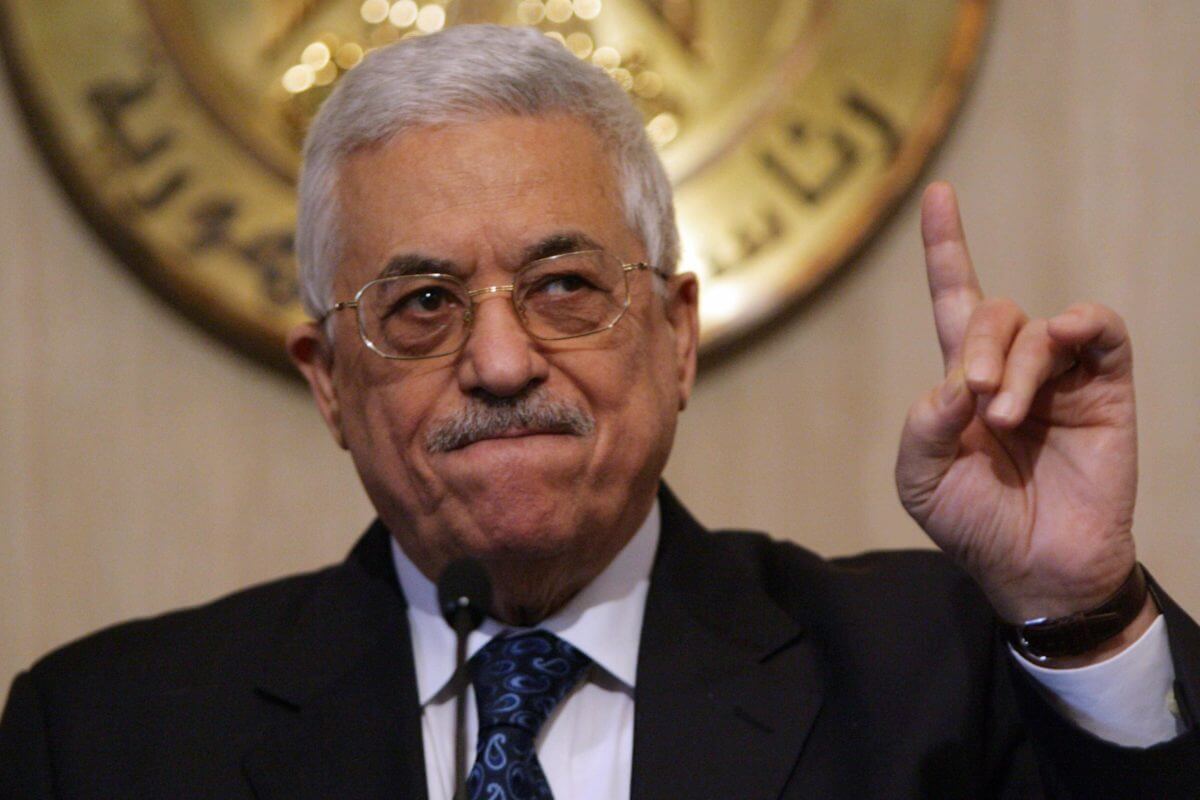
Every month, Israel collects some $190 million in customs duties on goods being imported into the Palestinian territory and transfers it to the PA. But recently it has been withholding $10 million per month, meant to represent the amount paid by the PA to the families of political prisoners and “martyrs” killed by Israel. Palestinian President Mahmoud Abbas is refusing to accept the reduced tax revenues, which has plunged the government into its worst financial crisis in years. This is leading Israel to start discussing a plan of action should the Palestinian Authority collapse completely.
Nadia Naser-Najjab writes that Mahmoud Abbas’s widely criticized speech on April 30th, that has since become known as his “anti-Semitic speech,” simply served to underline his own political irrelevance.
There was no end to the denunciation by Israelis of Palestinian President Mahmoud Abbas’s speech last Monday: “Laced with vile antisemitic conspiracy theories,” Abbas has “lost his marbles,” “disgraceful lies.” But Abbas’s crime, as Gideon Levy points out, is correctly identifying Zionism as a colonial project. That must not be said, and marks Abbas as an extremist.
This morning President Donald Trump called Palestinian President Mahmoud Abbas to notify him he of plans to move the U.S. embassy from Tel Aviv to Jerusalem, according to a spokesperson for President Abbas. Abbas responded and “warned of the dangerous repercussions of such step on the [long-stalled] peace process, security and stability in the region and the world,” his spokesperson Nabil Abu Rudeineh told the Palestinian outlet Wafa, adding that Abbas will seek out support from other governments “to prevent this rejected and unacceptable” action.
More than 80 world leaders attended Shimon Peres’ funeral today in Jerusalem with addresses from both President Barack Obama and Bill Clinton, both of whom spoke of the late president and prime minister’s work to achieve a lasting agreement with the Palestinians. Though hailed as Israel’s ambassador of peace, absent were Palestinian leaders in Israel’s government, detractors who remembered the statesman as the architect who “masterminded the occupation and settlement-building,” in the West Bank and Gaza.
Congress has passed provisions that immediately ends funding to the Palestinian Authority in the event of a unity government with Hamas, or a joint government where Hamas exercises “undue influence.” Though, there is one exception. If a supposed unity government recognizes Israel as a Jewish state, the aid will continue.
Late Monday evening Jordan submitted an updated version of a draft resolution seeking to end Israel’s occupation to the United Nations Security Council. The latest document maintains a 2017 deadline for an end to the Israeli occupation but contains a handful revisions, with substantive changes on the status of Jerusalem and Israel’s separation wall.
PLO official Dr. Mohammed Shtayyeh says the current Palestinian push at the UN Security Council comes “a serious junction in the history of Palestine.” Allison Deger reports that the proposed UN resolution marks a change in Palestinian strategy for the PLO. According to Dr. Shtayyeh the resolution is “not simply as part of a routine diplomatic issue. We are going to the Security Council because this is part of a strategic shift in the way that we are dealing with the struggle with the Israelis.” Although details of the resolution are not yet public, it appears this shift includes taking a harder line on Israeli settlement construction and looking toward Europe for leadership over the peace process instead of the United States.
The Palestinian Authority has announced it will seek a United Nations Security Council (UNSC) Resolution calling for an end of the Israeli occupation within a specific time period. The draft legislation gives Israel two years to remove its forces from lands occupied in June 1967 and reaffirms per-existing agreements for a framework of negotiations, said Ashraf Khatib a spokesperson for the Palestinian Liberation Organization (PLO) Negotiations Affairs Department via telephone to Mondoweiss. While the resolution makes no explicit mention of land swamps, it does support previous accords where the PLO granted Israel the possibility of territorial exchanges where up to 60% of settlers could remain in the West Bank.
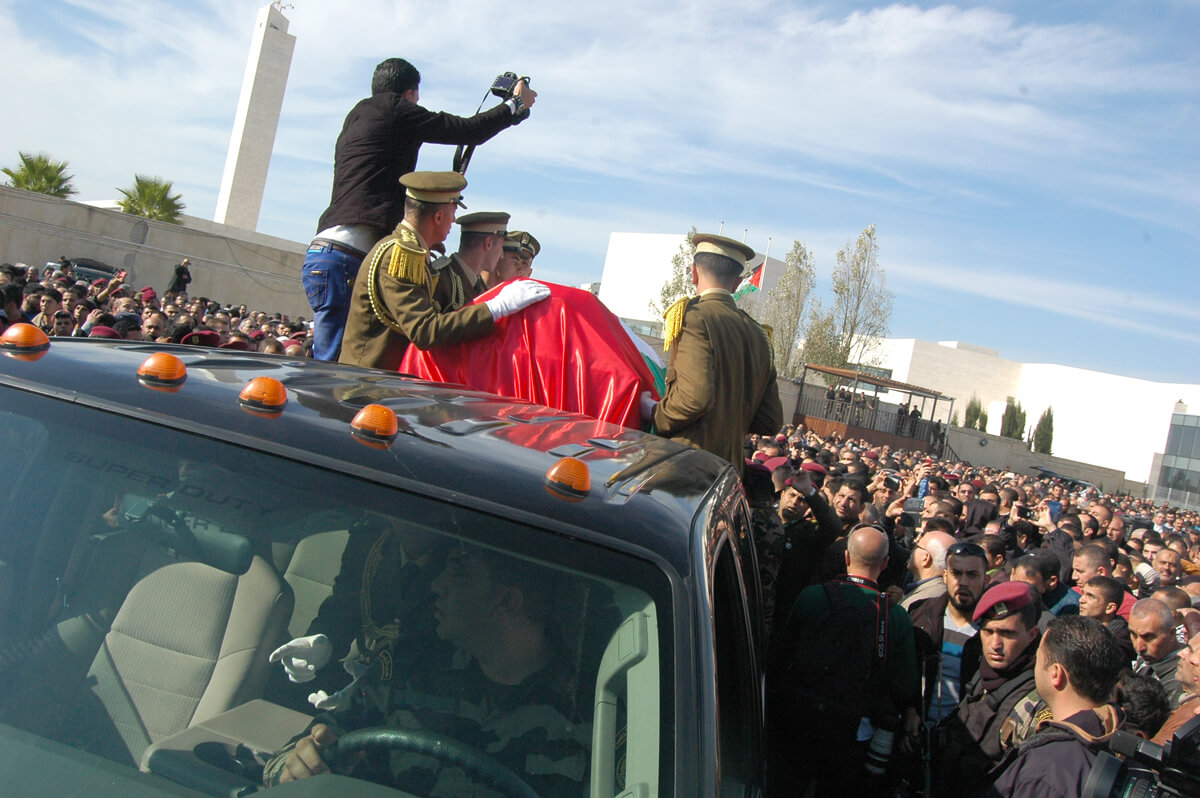
Shop windows in Ramallah were shuttered yesterday within hours of Minister Ziad Abu Ein’s death from a heart attack following an assault by Israeli soldiers in the West Bank village of Turmusaya. Thousands poured through the streets during a state funeral held today with a ceremony at the Muqataa, the seat of the Palestinian Authority and a procession to a nearby cemetery.