Palestinians and Arabs have been active agents of resistance against colonialism and imperialism since before the Nakba, and the legacy of this anti-colonial resistance lives on today.
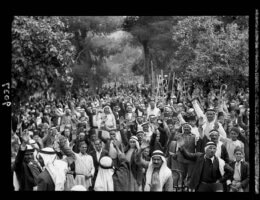

Palestinians and Arabs have been active agents of resistance against colonialism and imperialism since before the Nakba, and the legacy of this anti-colonial resistance lives on today.
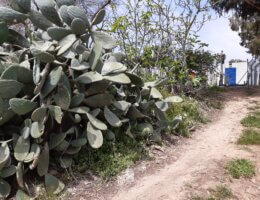
Jonathan Ofir grew up on a kibbutz and was never told of the destroyed Palestinian village upon which it was built. But some signs remain, like the cacti which Israelis have attempted to appropriate, but signify the deep Palestinian ties to the land.

Understanding Zionism, which seeks to create a Jewish state through the displacement of Palestine’s indigenous population, is essential to understanding the last 75 years of the ongoing Nakba.

Al Franken expresses anti-Palestinian views when he dismisses their experience of Zionism and overlooks the Nakba, when 750,000 were expelled from their homes.
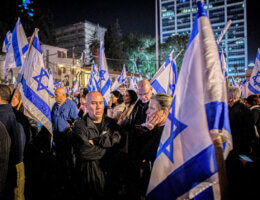
For the Palestinian people to achieve justice, Zionism must be dismantled. And for Jewish Israelis to achieve peace, we too must free ourselves from this project of Jewish supremacy.

Suarez provides an epic presentation of new and existing research, depicting a narrative of relentless Zionist aggression and arguing that the Nakba of 1948 was over before it started.
It is overwhelming to take in the spectacular violence, the extravagant lies and tricks, the exuberant intimidation, the gratuitous cruelty, and the absolute dedication of the Zionists over decades. But we should be overwhelmed if we are to get a sense of the bewilderment of the Palestinians, the British, the many non-Zionist Jews, and eventually much of the world, at the fevered advance and blood-drenched birth of Israel. The book pulls us along through wave after wave of deceptions, bombings, shootings, clever escapes, daring infiltrations, denials, accusations, obfuscations, demands, mad propaganda, and intimidation that break over the land. We see the Palestinians provoked into the doomed, desperate 1936-1939 revolt against the British and their Zionist clients. Next, the British are beaten down and terrorized until they give up. All this before the Nakba erupted.

Fida Jiriyis’s memoir is the product of her unique and multilayered experience of the different fragments of Palestinian existence — as an exile, in the diaspora, as a Palestinian citizen inside Israel, and in Occupied Palestine.
The book offers more than just a personal glimpse into each of these very distinct realities. It viscerally evokes the flavor of each modality, each moment, wedding the historical facts to the writer’s own impassioned feelings and unfettered impressions.

The Palestinian village of Ma’alul was destroyed during the Nabka in 1948. Rawan Bisharat discusses her connection to the village and how she and other descendants are practicing their return to the land despite Israeli laws prohibiting it.
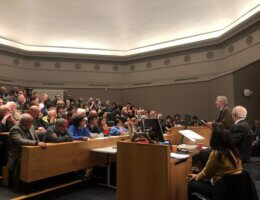
On November 8, 2022 Dr. Salman Abu Sitta spoke at the University of Edinburgh to commemorate the centenary of the British Mandate in Palestine. In his speech he addresses the disgraced British colonial servant Lord Arthur Balfour, and issues a call for repair and justice to the British government today.
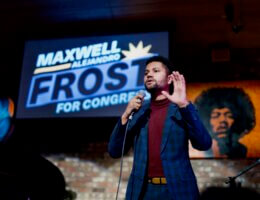
Gen Z Democratic candidate for Congress Maxwell Frost seems to be a progressive in every way imaginable — except for Palestine. The 25-year-old Florida politician presents a particularly distressing dilemma for progressive Palestine advocates. His politics are not just progressive, but almost revolutionary in mainstream politics. And he is being celebrated by prominent Democrats.