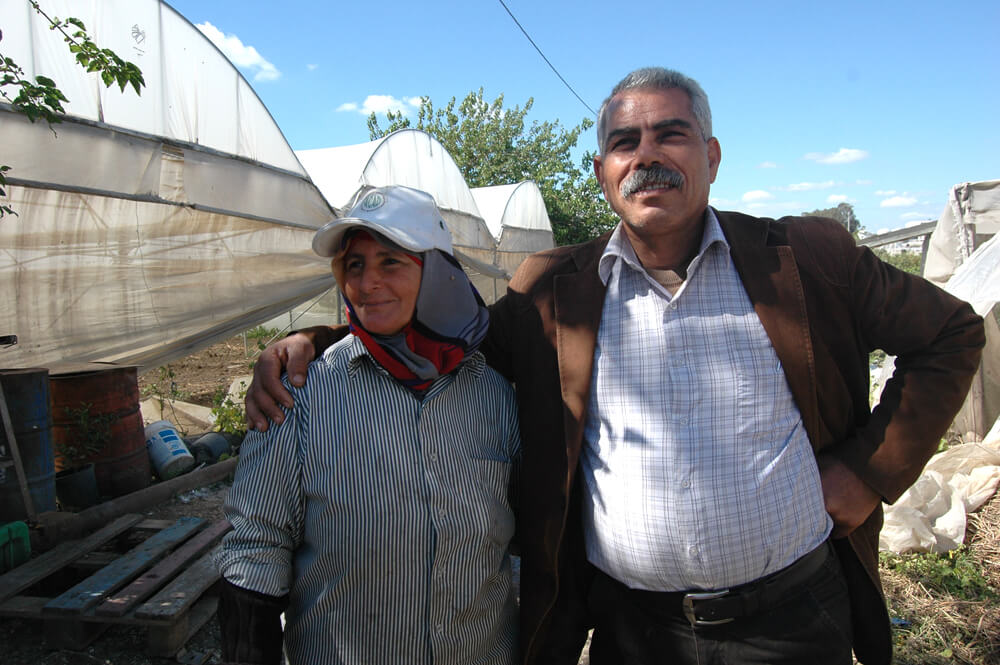
Fayez Tneeb marveled at his organically grown banana tree even though it is failing and rooted in a waste water stream. He and his wife Mona are proprietors of Hakoritana Farm in Tulkarm, located in the northern West Bank only 100 meters from Israel. For the Tneebs, harvesting pesticide-free agriculture that they take to a local market is a constant struggle. The couple’s plot of land is caught between an Israeli factory that manufactures fertilizers and agrochemicals, and Israel’s separation barrier.
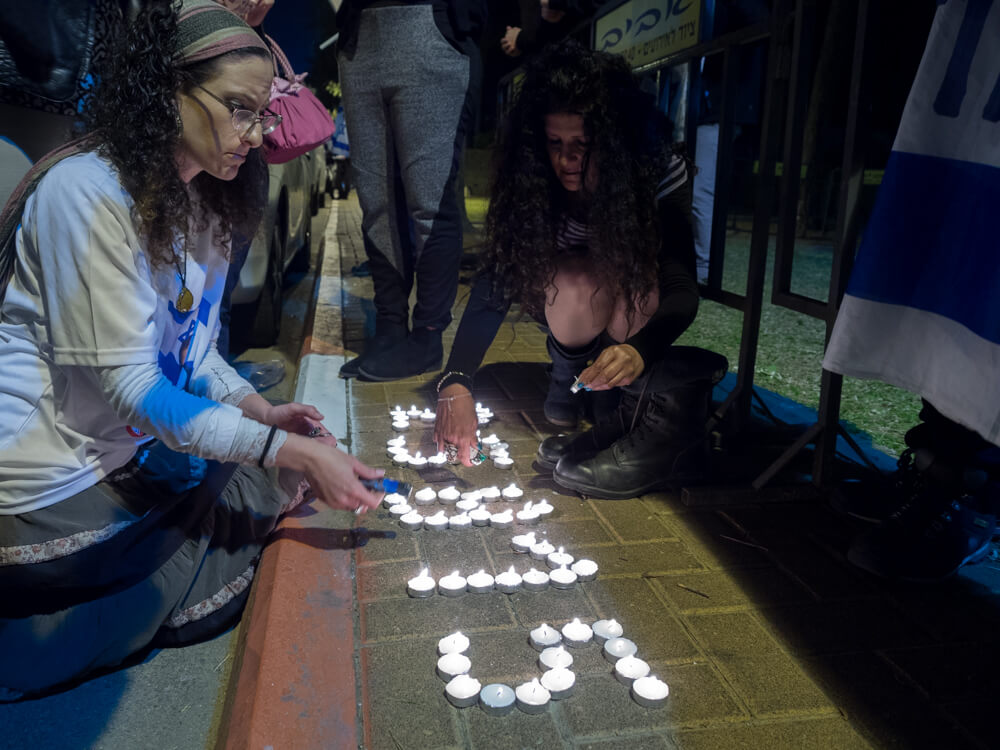
On Tuesday night, a busload of Palestinians from the West Bank and hundreds of Israeli Jews filed into the Tel Aviv Exhibition Grounds to attend a Combatants for Peace event billed as an “Israeli-Palestinian Memorial Day Ceremony: Honoring the Victims, Fighting for Peace.” Kahanist protesters had opposed Palestinian participation in the event and baited attendees as they entered. Dan Cohen reports on the proceedings and finds the Kahanists may be a bit more honest then their liberal Israeli counterparts.
Hiam al-Nawaja dreams to live in what she calls a “normal house.” The 23-year old mother of three small children and sheepherder manages in a cinder block frame insulated with a tarp a typical modest home in Susiya, a pastoral Palestinian village set in the rolling south Hebron Hills in the West Bank. Yet a few short decades ago Susiya’s residents had sturdy stone structures built over ancient caves on a hilltop one kilometer from where their town stands today. The former location, “old Susiya,” is close enough that al-Nawaja can see bulldozed remains from her kitchen window. It was destroyed in 1986 when Israel dismantled the town’s mosque to uncover an ancient Jewish synagogue dating back to the sixth century.
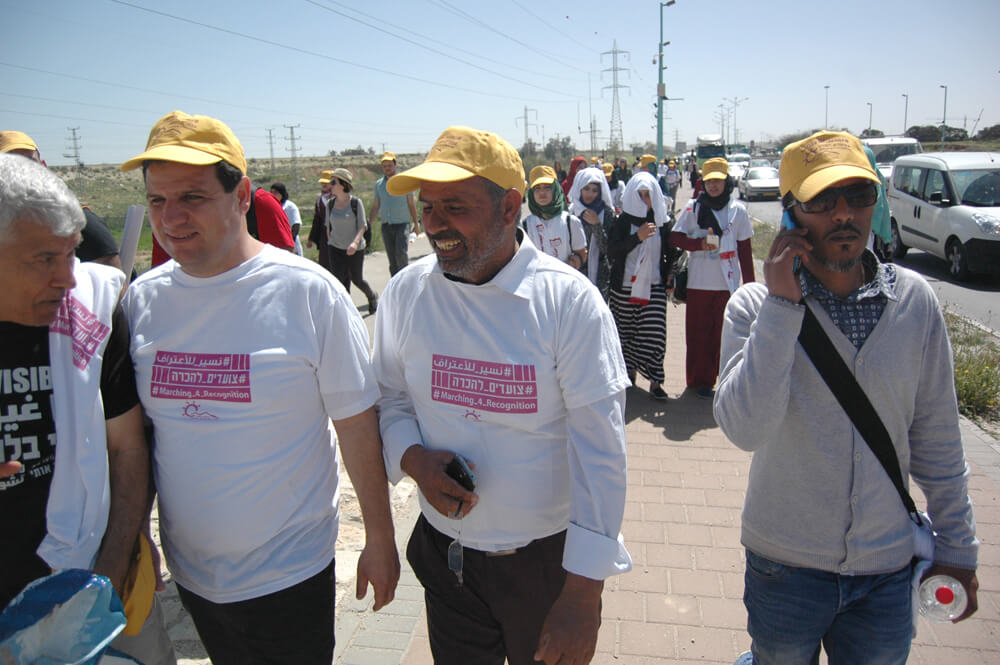
There are still a few weeks before head of the Joint List Ayman Odeh begins his first term in Israel’s parliament, yet he has already led a protest across the country. This past weekend Odeh led the “March for Recognition” with hundreds of Bedouins who live in unrecognized villages. The 130 kilometer trek from the southern Negev desert to Jerusalem officially ended on President Reuven Rivlin’s doorstep Sunday afternoon.
Today, March 30th Palestinians in Israel and the West Bank, including East Jerusalem, marched for Land Day, Yom al-Arda in Arabic, which commemorates protest in the Galilee in 1976 where six Palestinian citizens of Israel were killed.
While Israeli Prime Minister Benjamin Netanyahu is in the final hours of forming a ruling coalition to lead the country, the Joint List is organizing a mass march. Unrecognized villagers will camp and walk their way to Israel’s seat of government, all while their party’s leadership is tightening ties with presumed opposition heads in the Zionist Camp.
Months ago questions were raised if, at all, there would be any Arab representatives in the next Knesset. Then the groups unified under a single banner headed by Ayman Odeh, 41, a first time Knesset candidate from Haifa who started his career in public office at the age of 23 on Haifa’s city council. Now the long road is coming to and end and the Joint Arab List is the third largest party in the country with the potential, for the first time, to influence the outcome of elections.
Palestinian leaders decided Thursday night they will “end all forms of security coordination with Israel,” a much-criticized practice of shared policing across the West Bank and a staple of Israeli-Palestinian relations over the last two decades. Still the announcement included one loophole where Israel could salvage the security arrangement, signaling the Palestinian leaders could be seeking to leverage Israel’s security concerns as a tactic for the release Palestinian VAT-taxes frozen during the winter after the Palestinians acceded to the Rome Statute, joining the International Criminal Court (ICC) where they can charge Israel with war crimes.
Israeli Prime Minister Benjamin Netanyahu’s speech to Congress on Tuesday elicited strong opinions from U.S. elected officials with rave reviews from Republicans and condemnation from several Democrats. But back home Israelis were nonplussed over the talk—if they watched at all.
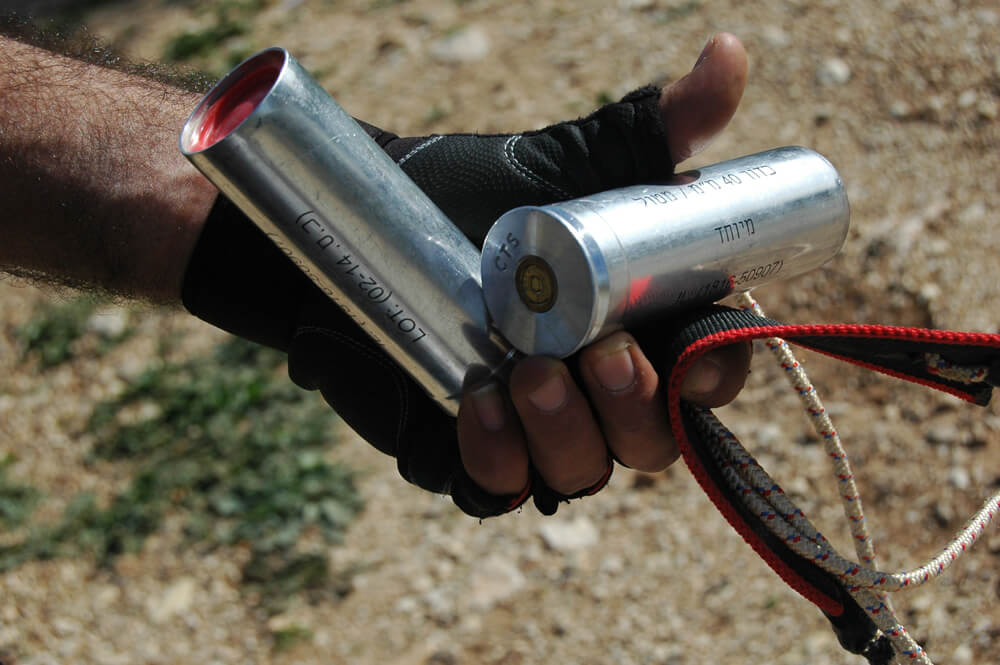
Plumes of teargas wafted up the terraced hillside of the West Bank village of Bil’in on Friday when over 1,000 demonstrators marked ten years of weekly protests against Israel’s separation wall and occupation, outside of Ramallah. Israelis drove in from Tel Aviv, and international activists and Palestinians from nearby towns flocked to march from the center of Bil’in, to the hamlet’s agricultural grounds. As with every Friday, clashes ensued once protesters reached the outskirts of town where olive orchards and patch vegetable farms buffer Israel’s concrete barrier and one of the most populated settlements, Modi’in Illit.