Ron DeSantis comes sputtering into the Republican presidential primary and has placed his unwavering commitment to Israel at the center of his foreign policy agenda.


Ron DeSantis comes sputtering into the Republican presidential primary and has placed his unwavering commitment to Israel at the center of his foreign policy agenda.
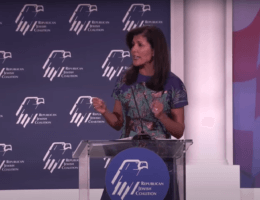
Nikki Haley was the first U.S. governor to sign anti-BDS legislation, and once criticized AIPAC for not being pro-Israel enough. Now, she is preparing to run for president.

Secretary of State Anthony Blinken visited Israel and things went exactly as one might expect. There were the usual public comments about the Biden administration’s ironclad support for the country, the standard denunciations of Palestine violence paired with tepid criticisms of Israeli state violence, and (of course) some references to the two-state solution. However, the context of the trip makes the same old song and dance seem a bit more ridiculous.

Despite pressure from pro-Israel groups, the U.S. Department of Education Office for Civil Rights has not embraced the controversial IHRA working definition of antisemitism.

Human rights groups are calling on the Biden administration to cancel plans to build a new US Embassy Compound on stolen Palestinian land in Jerusalem.

The phony antisemitism controversy at Berkeley’s School of Law continues.

Pro-Israel groups claim that recent incidents at the University of Vermont constitute antisemitism because for some Jewish students, “Zionism is integral to their Jewish ethnic identity.”

Mainstream voices say the Trump-Biden policy of normalizing relations between Israel and Arab monarchies so as to crush Palestinian hopes is working. “If you talk to the UAE leaders or Saudi Arabia leaders or even Egyptian leaders, they don’t want to hear now about the Palestinian issue, they don’t want to stick their fingers into this mess. Let Israel deal with it,” says Ehud Yaari an advocate for Israel at the Washington Institute.

Joe Biden is scheduled to make his first trip to Palestine as president in July. The visit will serve as yet another message to the Palestinian people that Israel is working hand in hand with the US, and whether a Democrat or a Republican is in the White House, that isn’t going to change.

Democratic lawmakers harshly criticized Republicans who denied the 2020 presidential election results. Now some of them are linked to these same election deniers via AIPAC.