By September 30, the White House plans to reclassify 50,000 federal workers and assign allies to key roles. This widespread expansion of Trump’s de facto political army will have brutal effects on the crackdown against Palestine in higher education.


By September 30, the White House plans to reclassify 50,000 federal workers and assign allies to key roles. This widespread expansion of Trump’s de facto political army will have brutal effects on the crackdown against Palestine in higher education.

We know that anti-Palestinian repression inevitably leads to wider crackdowns on the domestic population, but a new study breaks down the process.

Columbia University’s recent suspension and expulsion of more than 70 students for a Palestine demonstration is the latest sign the school’s crackdown on activism is not simply about campus conduct, but appeasing political pressure from Washington.
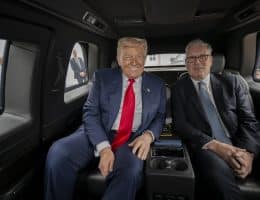
France, Great Britain, and Canada’s recognition of a Palestinian state might matter someday. But, as usual, the Palestinians won’t get any immediate help from Europe, much less from North America, in stopping the Gaza genocide now.
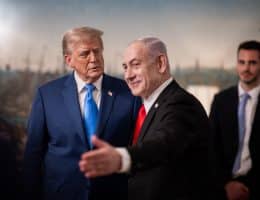
A common cliche used by American politicians to describe the U.S.-Israel relationship is that “there is no daylight between the two.” But this is clearly not true when it comes to Syria.
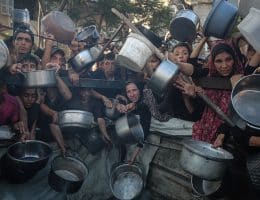
The head of the Mossad spy agency was recently in Washington to coordinate with the White House on plans to expel Palestinians from Gaza. The plan, along with the forced starvation and mass killing of Gazans, echoes the worst of the Nazi Holocaust.

The Trump administration is calling on Israel to investigate the killing of Sayfollah Musallet, but Israel rarely holds soldiers or settlers accountable for violence against Palestinians.
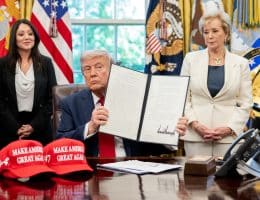
The Trump administration is attacking academia because it threatens existing power structures and dominant elites. This is seen most clearly when it comes to Palestine.
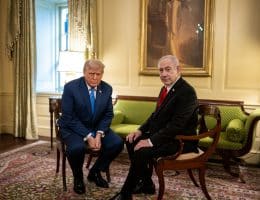
Benjamin Netanyahu visited Washington this week to meet with Trump administration officials following the countries’ joint attack on Iran. The lack of transparency about what was actually discussed could be a very dangerous sign.

Mahmoud Khalil is seeking $20 million in damages from the Trump administration, alleging that he was falsely imprisoned. Khalil says he would use the funds to assist others targeted by Trump’s crackdown.